I recently took a pleasurable walk through the Texas State Cemetery, a peaceful and respectful spot near my home in Austin. In addition to admiring the number of individuals who willingly devoted their lives or careers to public service, I was also struck by the large number of people who included their detailed resume on their monuments. While grateful for their service, I thought that some of these public servants might be overstating the significance of their contributions. For those who had requested that lines from their C.V. be etched into stone for posterity, though, these must have seemed crucial contributions that defined who they were.
We often read about how purpose-driven lives are the only ones worth living. Ideally, this emphasis on purpose can allow us to focus on goals that reinforce self-esteem and our personal values. I find, however, that chasing purpose can be a double-edged sword. Many of us are not content to define purpose for only ourselves, and too often impose our own definition on others. We might then spend more of our time evaluating others than improving ourselves.
The concept I find more useful in life is neither purpose nor meaning but relevance. Where the other two are more internal, relevance is more external and social: it relates to my connection to the rest of the world. If my thoughts, feelings, opinions, actions, and work are “relevant,” it means that they’re valued not only by me but by others — that we share the value of my efforts. Pursuing relevance thus challenges me to evaluate whether I am providing benefit to my professional and social network, merely taking up space and resources, or, worse, causing problems for others. It is not only a measure of my self-worth, but also an important element of wellness for me.
I am now in the final stage of my career. Throughout each of the preceding stages, my concept of relevance changed and grew. Below, I walk through what relevance meant to me at various times, and explain how fellow clinicians can seek out relevance as well, no matter their career stage.
Early Career
Early in my career, like many young doctors, I struggled to prove myself competent. I strongly desired to make meaningful contributions to my patients and to my field, and to justify my role as a compassionate caregiver.
To overcome feelings of impostor syndrome, I focused on the development of my skills, as measured by the outcomes my patients experienced. This led to an increasing sense of relevance, both to my patients and to my team. It mattered that I was there and that I could make decisions that helped people.
Mid-Career
As is the case with many physicians, my mid-career years were a time for reflection and reevaluation. I felt myself struggling with certain career decisions I had made up to this point, as they had left me with ways of working that didn’t feel right. During this time, I realized that my relevance was entirely my responsibility, and that I could only remain in contact with it by choosing paths that reinforced my value to patients rather than healthcare delivery systems. This required making intentional choices I couldn’t have made as a younger physician: Saying “no” to colleagues and administrators who insisted on rigid schedules. Working directly with patients, and making sure I followed them long-term. Taking financial risks to ensure I could practice in a way that was best for myself and my patients. Breaking free of commitments that others had made for me — and that limited my choice of patients or time with them or my family — was at times painful. Nevertheless, the changes I made (e.g., not accepting as many unassigned inpatients; restructuring my rounds schedule; doubling the length of my medication check appointments; adding more time for resident supervision) resulted in a happier and more satisfying professional and social life, and I was able to recapture the feelings of contribution and relevance that had become threatened.
Late Career
Decades later, as I began to prepare for the final stage of my professional life, I once again reevaluated my relevance to the world. In many ways, closing down or leaving a career is the time when we most want to appreciate our legacy, in our own minds and in the minds of others. I read that an important developmental task at this point is to consolidate what we have learned throughout our careers and begin to share it with younger generations. This made sense to me: I felt I had knowledge to offer that extended beyond case-by-case evaluations, and that would be valuable for younger practitioners.
When my wife, who ran my office, was ready to retire, I ended my rewarding years of direct patient care. Ever since, I have written, taught, lectured, and mentored. I have a journalistic background as well as a medical one, and always wanted to spend more time writing. I decided that summarizing my approach to clinical practice might be of value and that this was what I wanted to leave behind. I proposed such a book to my professional association publisher, who agreed to support me in the effort.
Seeking and maintaining relevance requires taking risks. Early in my career I turned down opportunities to enter academic medicine because I had always wanted to spend most of my time treating patients in a community. I spent over 30 years happily doing this, acquiring essential experience to supplement my ongoing scholarly review of the field. Now, at the end, I sought to reverse that decision and approach academia, though many doors were now closed to me. I would never, as I had been warned early on, be taken as a serious researcher or candidate for tenure track positions. Though I knew I had value to share, not everyone who had taken the other path appreciated that.
What helped me with this final transition was balancing a realistic appraisal of my opportunities and limitations with the courage to ask for chances to participate and contribute. As a result, I have just released my fourth book, authored four new peer-reviewed journal articles, and published a large number of general articles for our profession about scholarly practice. I serve as an associate editor of a professional journal and a national proficiency test. I have taught courses at three residency programs, I mentor medical students at my alma mater, and I speak at national and regional professional meetings. I remain active in national medical societies where I have a role in setting and upholding standards of practice. I continue to find ways to contribute to my profession, even though I have retired from direct patient contact.
While I am not universally known in my field, I have connected with those who appreciate what I have to offer. Now that I no longer work full-time, I have the chance to take on these extra-clinical tasks and still reserve time for family, friends, and a rich life in my community. This is more than enough for me to maintain a feeling of relevance to others, in many settings, during my final career and life stages. Whether or not this is a “purpose,” it is as satisfying to me as leaving behind a resume on a monument must have felt to others.
How do you seek and maintain relevance in medicine? Share in the comments!
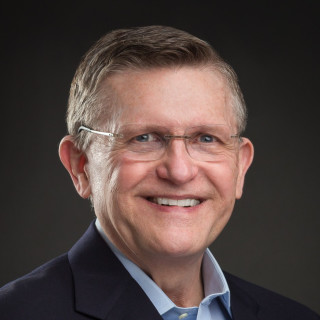
Dr. Putman, in Austin, TX, is the author of “Rational Psychopharmacology: A Book of Clinical Skills,” “Encountering Treatment Resistance: Solutions Through Reconceptualization,” and “Thinking Again: Reducing Cognitive Error in Psychiatric Practice.” He blogs at drpaulputman.com. Dr. Putman was a 2024–2025 Doximity Op-Med Fellow, and continues as a 2025–2026 Doximity Op-Med Fellow.
Image by Shutterstock