
I have been practicing medicine for 40 years, and I am happy to report that the medical community is more aware than ever of the interplay between emotional well-being and physical health. Reliable studies have shown that chemical messengers resulting from emotional distress can adversely affect immune and healing processes. But there remains much more to do in researching this connection. Mental health is no longer the exclusive domain of psychiatry and psychology. All of us who care for our patients’ physical health can learn to be more attuned to their mental health as well. Sometimes, it may be a matter of life and death.
Over the past five years, the COVID-19 pandemic and our reaction to it are a good case study in how physical and emotional well-being should be considered together and how we sometimes focus on one at the expense of the other.
In early 2020, my father-in-law was 90 years old, living alone in San Juan, Puerto Rico. By most measures, he was thriving despite his age. He was stubbornly independent, yet paradoxically highly social, almost pathologically so. He knew everyone at his local café, and they regarded him highly. He bought lottery tickets each week from the same street vendor, and he always lingered to talk about baseball or politics. At his favorite social club, the Circulo Cubano of San Juan, he could have been considered a regular hustler, cleaning up at weekly domino games.
He was also a man of both strength and kindness, having devoted 60 years of his life to a beautiful marriage with my mother-in-law. Their love was a shining example for our family.
Unfortunately, during the last years of her life, his wife lived in a nursing home, grappling with the challenges of late-stage Alzheimer’s disease. My father-in-law was her unwavering caregiver, devotedly attending to her needs, visiting her every day for hours on end. He fed her and often brought her trinkets or toys to keep her engaged. He also ensured that the nursing home staff remained attentive to her. His commitment was a source of strength and purpose for him.
For him, as for many people worldwide, the pandemic represented a seismic shift in his daily life. Social isolation became necessary to slow the virus’s spread. In many cases, the elderly were subject to especially harsh isolation protocols. In the early days, this was undeniably necessary, as a quarter of a million people over the age of 65 died of the virus in 2020 alone. However, the unintended consequences of these restrictions, particularly for the emotional well-being of older adults, quickly became a cause for concern.
During the pandemic, most nursing homes and assisted living facilities placed a complete moratorium on family visits. The virus was more contagious than any other virus in widespread circulation, and it could remain undetected during a long incubation period, when infectious carriers had no symptoms. It was feared, then, that allowing a single asymptomatic carrier into a nursing home for the elderly could result in the deaths of dozens of residents. Unfortunately, in some cases, these fears came true.
And for all these reasons, the elderly were mandated to remain practically in isolation. Large social gatherings, such as those at the Circulo Cubano, were suspended to prevent the spread of the virus. Dining at local cafés became a thing of the past. The coldness of distance replaced the warmth of human connection.
My father-in-law’s vibrant social life almost completely evaporated, and this added to the painful loss of access to his wife. He found himself unable to visit her, cut off from the warmth of their shared moments. Isolated to his home, the silence loomed large around him.
Tragically, my mother-in-law fell ill during this difficult time and passed away a few months into the pandemic. Her absence created a void that was impossible to fill. My father-in-law, heartbroken and alone, struggled with her passing. He had always taken care of her, and without her, he was lost. Each day without her was a poignant reminder of years spent together — memories that now hovered like shadows in an empty home. His despair was difficult to watch. This pain took a toll on his physical health as well.
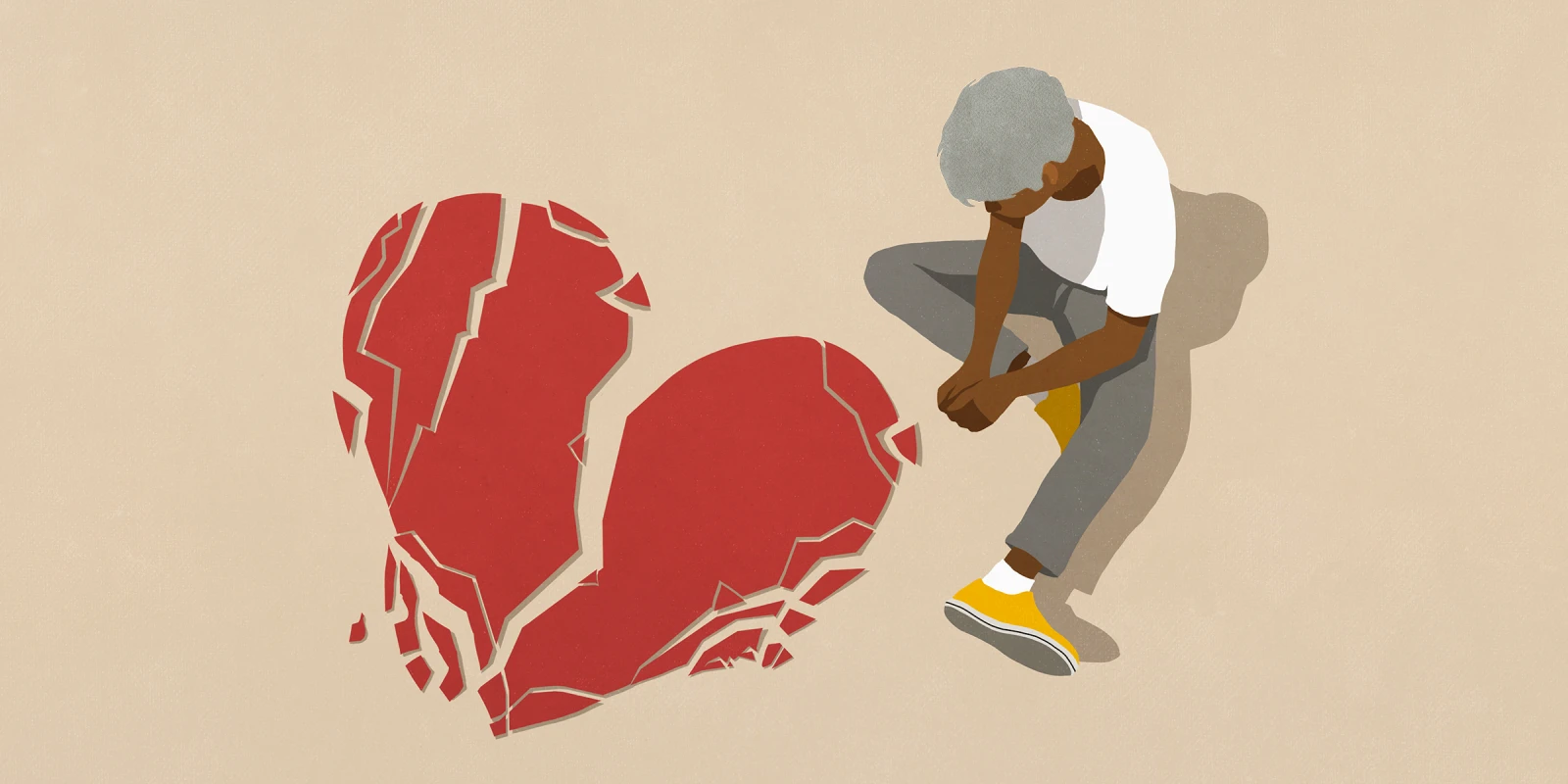
One potential acute medical manifestation of grief is Takotsubo cardiomyopathy. Sometimes described as “broken heart syndrome,” Takotsubo is a sudden weakening of the heart muscle, which can be caused by severe emotional distress. This weakening is so severe that the heart’s left ventricle visibly distends, resembling a pot used to trap octopuses in Japanese fishing tradition.
Takotsubo cardiomyopathy is transient and resolves when the stressor is removed. But during a particularly acute episode, this drastic weakening of the heart’s ability to pump blood can cause heart failure, cardiogenic shock, arrhythmia, stroke, and death — especially if it is not correctly diagnosed and treated. In extreme cases, we have seen the rupture of the left ventricle.
During the first year of the COVID-19 pandemic, hospital admissions for Takotsubo cardiomyopathy increased by almost 30%. Most of the patients seen with Takotsubo were elderly.
Sadly, though he was never diagnosed, I believe my father-in-law was one of Takotsubo’s victims. He was already 90 years old, so it was easy for doctors to attribute new symptoms to his age — shortness of breath, weakness, and altered levels of consciousness. But when I saw him behind the glass doors that we used to shield him from the possible contagion of COVID-19, it was hard not to feel as though there was real emotional distress behind his decline.
Less than a year after my mother-in-law’s death, my father-in-law joined her before he could see the world open back up again.
He had lived a full life, so it is easy to discount his passing as inevitable. After all, we can only pray for the good fortune of living mostly healthy lives into our 90s. But his story resonates with me as a clinician because it serves as a reminder that not all physical ailments can be treated exclusively with medical interventions.
The COVID-19 pandemic was fast-moving and unprecedented. Books will be written about the balance we strike between restrictions and risks. What I know for sure is that the pain of isolation and loss must be factored in when treating patients, no matter what physical ailments are presented. Emotional well-being plays an undeniable role in physical health. As medical professionals, we must be attuned to the fact that chest pain is not always chest pain.
How do you incorporate emotional context into treatment? Share in the comments.
Dr. Francisco M. Torres is an interventional physiatrist who specializes in pain medicine. He is also an avid writer, enjoys playing the violin, and has a deep affection for his seven grandchildren. Dr. Torres was a 2024–2025 Doximity Op-Med Fellow and continues as a 2025–2026 Doximity Op-Med Fellow. He can be reached on Instagram at Dr.tdropthefat.
Image by Malte Mueller / Getty Images