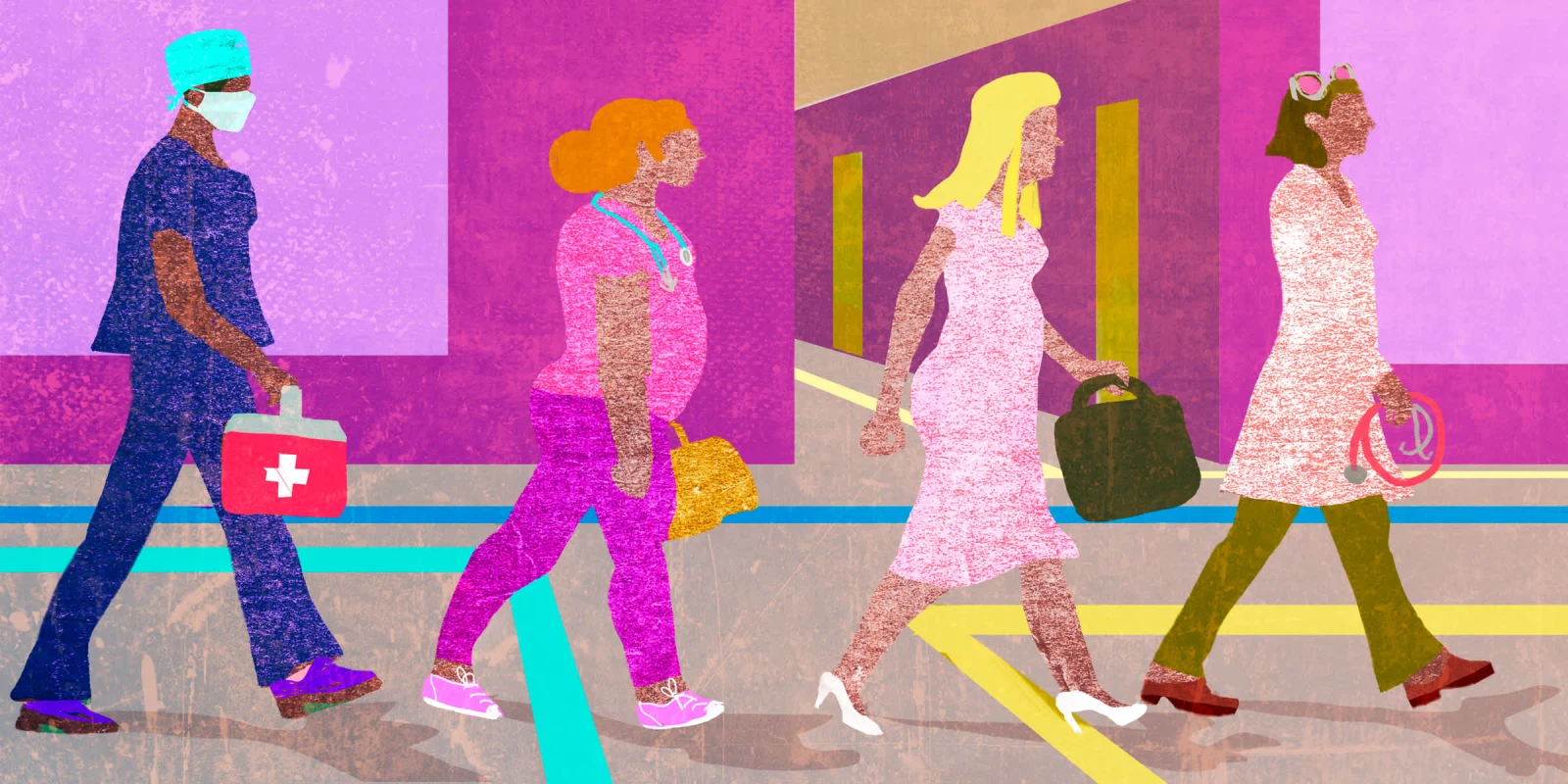

We all remember that scene in "Mean Girls": Regina George and the Plastics glide down the school hallway in slow motion — perfectly styled, perfectly confident, seemingly untouchable. “Pass the Dutch” by Missy Elliott plays in the background. From the outside, the message is unmistakable: this is what winning looks like. Eventually, Lindsay Lohan’s character, Cady, is left disappointed in and disillusioned with these mean girls. In medicine, many women spend years searching for a similar figure — the senior woman physician who appears to have it all: the thriving career, the respected title, the supportive partner, the children, and the work-life balance. We want her to exist because her existence would validate the sacrifices. It would mean the long hours and self-sacrifice were worth it.
So, when we finally encounter her, we want mentorship, guidance, protection. We want her to show us the path forward. And yet, too often, what follows is disillusionment. Instead of solidarity, there is distance. Instead of advocacy, silence. Instead of generosity, judgment. The myth fractures, and we are left wondering why the woman who seemed to have everything would not extend a hand. This experience is common, and it is not accidental. Medicine remains structured around a scarcity mindset for women. While entry into medical school has reached near parity, leadership, prestige, and institutional power remain disproportionately male. Women who rise often do so within systems that reward endurance, conformity, and emotional suppression. Many are taught — explicitly or implicitly — that survival requires being uncomplaining, unquestioning, self-sufficient, and aligned with male leadership.
When only a few seats at the table feel available, proximity to power becomes precious. Supporting another woman can feel, even unconsciously, like a threat to one’s own position. This mindset creates cultures where women are scrutinized more harshly than men, where ambition is policed, and where mistakes are remembered longer when made by the “wrong” person. These consequences are even more pronounced for women of color. This dynamic reflects internalized misogyny — the replication of a system’s biases by those who have managed to succeed within it. Women, particularly those who advanced at great personal cost, may unconsciously enforce the same standards they endured, mistaking hardship for a rite of passage rather than a design flaw. The unspoken logic becomes: I survived this. Why should you be spared?
Another dimension of this challenge is intersectionality. Women of color, LGBTQ+ women, and women with disabilities face compounded barriers. They must navigate not only gendered expectations but also racialized scrutiny, stereotypes, and microaggressions. These women often report fewer mentors who share their experiences, making guidance and advocacy even more critical. The scarcity of representation at the top perpetuates a cycle in which these physicians feel isolated and under-supported, reinforcing the myth that leadership is unattainable. Mentorship programs that fail to account for intersectionality risk reproducing the very inequities they aim to mitigate.
Talented women step away from academic medicine, leadership tracks, or medicine altogether not because they lack resilience or capability, but because isolation is unsustainable. For women navigating medicine now, the lesson is not to stop seeking mentors, but to seek them differently. Mentorship need not be confined to vertical relationships with senior leaders; lateral and peer mentorship can be equally transformative, providing emotional support, sharing strategies, and normalizing vulnerability. Look laterally as much as upward. When a door closes, resist the urge to internalize it as failure; it is often simply a signal that the structure itself is misaligned with your values. Protect your empathy, your ambition, and your sense of self. And when you do gain power, however small it feels, use it expansively. The future of women in medicine will not be secured by becoming the untouchable Plastics at the top, but by refusing the scarcity myth altogether and making room for those coming up behind us.
Make room for others: Shout out a great woman in medicine in the comments!
Dr. Santoshi Billakota is a board-certified neurologist and epileptologist who lives and works in Brooklyn NYC. She is currently a full-time locums physician. You can follow her on social media at @drbillakotamd (IG, TikTok) and she also co-hosts the Be Empowered Podcast (@empowermedlife on IG) where she and her co-host, Dr. Moghbel, discuss pertinent issues in health care, specifically concerning women.
Illustration by Jennifer Bogartz