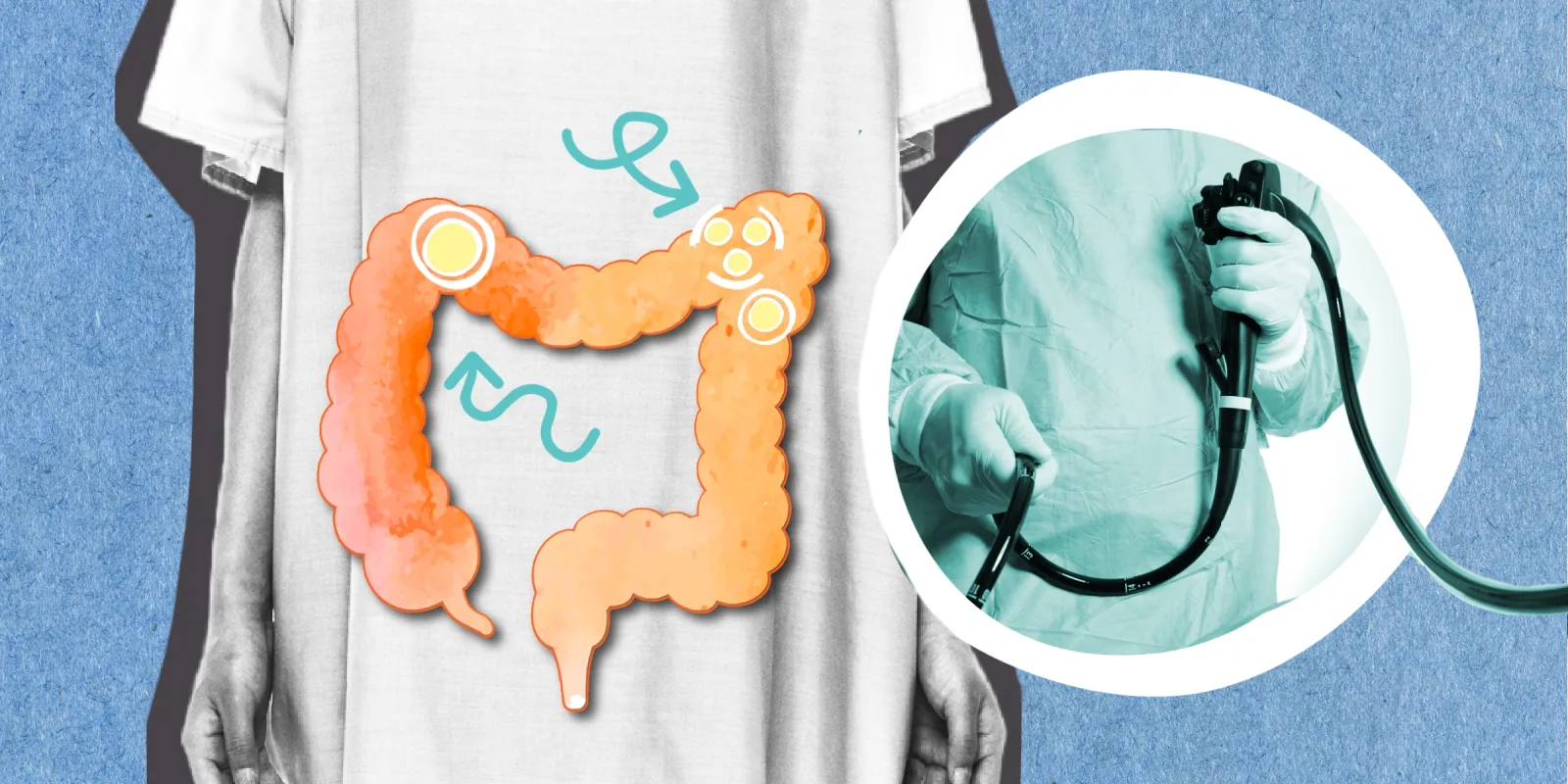

“Can I just get the blood test?”
I hear this question at least a few times a week when discussing the role of colonoscopy in colon cancer prevention with patients in office. For the past decade, stool DNA-FIT (Cologuard) was the trendy alternative to colonoscopy. Clever marketing (who doesn’t love the cute white box cartoon character?) and the ability to prevent cancer without having to choke down an unsavory prep solution or undergo sedation positioned Cologuard as an attractive option in the fight to prevent colorectal cancer.
At the same time, colorectal cancer rates are rising in adults younger than 50, prompting recommendations to lower the screening age to 45. That change alone added nearly 19 million Americans to an already backlogged screening pipeline. Meanwhile, almost 30% of adults over age 50 still have not undergone colorectal cancer screening. Despite advances in awareness and technology, colorectal cancer remains the second leading cause of cancer-related death in the U.S., accounting for more than 50,000 deaths annually.
Clearly, we need to do a better job.
Enter the newest kid on the block, a blood test called the Shield that is now poised to become the latest screening option that promises cancer prevention without the need for bowel preparation. FDA-approved in July 2024, Shield is the first in a line of “liquid biopsy” tests that detect circulating tumor DNA.
But how good are Shield and Cologuard, really? Is there truth to the oft-repeated phrase, “the best screening test is the one the patient is willing to do”? What if that test is inaccurate and lacks sensitivity? Could it provide a false sense of security?
The data
The primary purpose of colon cancer screening is to prevent cancer. That distinction — prevention versus detection — is essential to understanding these newer technologies.
Colonoscopy prevents cancer by identifying and removing precancerous polyps before they progress. Stool and blood-based tests, on the other hand, are primarily designed to detect cancer after it has already developed.
Cologuard detects approximately 94% of colorectal cancers. Shield has a reported sensitivity of 83%. More concerning, Shield misses roughly 35% of Stage 1 cancers — the very cancers most likely to be cured with surgery alone.
When it comes to detecting advanced precancerous polyps — arguably the most important aspect of cancer prevention — the differences become even more striking. Cologuard has a sensitivity of approximately 42%. Shield? Just 13%.
So how should we counsel our patients, especially those who are reluctant to pursue colonoscopy as their primary means of colon cancer prevention?
Given this data, would you want your sibling, parent, or child to settle for a lesser test? No. The guidelines can give us options. The FDA can approve tests. But ultimately, our job is to respectfully convey what we know to be the best choice for our patients.
We are not AI chatbots that regurgitate data. We need to personalize recommendations based on a patient’s colon cancer risk, comorbid conditions, and personal preferences. Importantly, we cannot place tests that differ significantly in effectiveness and lay them out on the same table for a patient to choose. We must clearly explain the risks and benefits of each test and make it known that colonoscopy is still the gold standard and that everything else is inferior.
Is a stool test or blood test better than nothing?
Sometimes, yes.
Less invasive tests have a role in the right patient — i.e., someone who is low-risk for colon cancer who, say, has previously undergone colonoscopies without significant findings and is now between the ages of 75–85.
But what about a young, healthy patient with an indefinite life expectancy? Finding and removing precancerous polyps is paramount.
A negative stool test or blood test may provide false reassurance, causing patients to delay medical care if they develop symptoms like a change in bowel habits or blood in the stool. These tests also must be repeated to maintain effectiveness — every three years for Cologuard, for example.
Ultimately, conversations about colon cancer screening should remain exactly that: conversations. Thoughtful dialogue between patient and physician that balances risks, benefits, patient preferences, and the best available evidence.
Part of this discussion must also address barriers to colonoscopy itself. Why is the patient reluctant? Sometimes, a brief conversation that provides reassurance and emphasizes the safety of the procedure can go a long way. Colonoscopy is not a one-size-fits-all process — sedation options and bowel preparation regimens can often be tailored to align with a patient’s preferences.
These nuanced, evidence-based discussions are what distinguish personalized medical care from the increasingly generic health information available online. Patients will continue to rely on us, not chatbots, to help them navigate complex decisions.
Let’s make sure we do not let them down.
How do you determine which colon cancer screening test to offer your patient? Share in the comments.
Anish A. Sheth, MD, is chief of gastroenterology at Penn Medicine Princeton Health and is the author of several books on gut health including the bestseller, "What's Your Poo Telling You?" He is a mid-career physician who loves practicing medicine and is looking for ways to keep the fire burning! Dr. Sheth is a 2025–2026 Doximity Op-Med Fellow.
Collage by Jennifer Bogartz / Shutterstock