
In August 2024, at the start of my fourth year of medical school, my life was turned upside down when an EM doctor looked at me and said, “It does look like this may be cancer.” In the days that followed, I underwent multiple pokes and prods before receiving the final diagnosis: advanced esophageal adenocarcinoma. I don’t remember much of the conversations that followed, except for words like “aggressive” and “poor prognosis.” Suddenly, I was no longer providing medical care; I was a patient.
The next few weeks and months were the hardest of my life thus far. I started chemotherapy and struggled to manage the nausea and fatigue that came with it. I lost my hair and had dramatic changes in my weight. I experienced what the cancer community refers to as “scanxiety” during the days and hours leading up to follow-up CT scans. I lost fellow cancer patients that I had grown close to during my treatment. I began the process of “getting my affairs in order.”
After responding quite well to treatment and deciding that I was bored with my newfound hobbies of reading comic books and caring for my fish tank, I started to have conversations with my family and medical school about resuming my education. There were several logistical challenges to returning. I was, and still am, undergoing chemotherapy and would need days off for treatment and recovery. One of the treatments I had received left me with some residual neuropathy, which made typing difficult. I also had not opened a medical textbook in approximately a year and was quite rusty in the clinical environment. Despite all of this, I was determined to return to medicine and to bring what I had learned over the past several months with me.
You see, cancer was not what made me a patient for the first time. In fact, I have lived with that label for most of my life. At the age of 12, I was diagnosed with Marfan syndrome and learned what it was like to live with a chronic illness. I was followed by several different specialists, underwent yearly cardiac MRIs to monitor the size of my aortic root, and was restricted from participating in certain sports and physical activities. These experiences were what developed my passion for medicine and molded me as a future physician, but it was not something that I opened up to others about, certainly not in a professional setting. There was a patient hidden inside of me that was denied the opportunity to connect with others. Being a cancer patient has given me a new perspective.
There is a strong bond between cancer patients that is established by the shared experience alone. Meeting someone who can understand what it is like to struggle through this terrible disease brings healing in its own way. This is why you seem to find flyers for support groups posted around every corner of cancer centers. One of my therapists, who specializes in caring for the mental health of cancer patients and spent much of her career working with veterans, compares it to the bond that is forged between fellow soldiers in war. For these relationships to be formed, though, patients must learn to open up with one another, allow their true emotions to be shown, and ask for help when they need it. If this level of vulnerability unlocks such a special bond between patients, why is it that, as clinicians, we often choose to hide away these parts of ourselves in the name of “professionalism”?
In medicine, we are both consciously and subconsciously taught to put forth the most polished version of ourselves to our patients and colleagues. We often believe that, as physicians, we must portray strength and confidence above all else while hiding away any signs of vulnerability. I would like to make the argument that this culture is causing many of us to miss out on making profound connections with our patients.
For example, after I was told in my local ER that I likely had cancer, I was transferred to a nearby large academic hospital for further workup. This hospital happened to be where I did most of my rotations as a third-year medical student. I was scheduled for an upper endoscopy, and one of the gastroenterology fellows came up to my room to explain the procedure to me. I instantly recognized him as the physician with whom I had just rotated during my internal medicine rotation and had even shared lunch with on a few occasions. He took one look at me, and tears filled his eyes. I remember him saying, “I just want to make sure we take really good care of you.” That really stuck with me. How lucky was I to have a physician who cared so much for my well-being that he was brought to tears. A few days later, I received a message from him in my patient portal apologizing for getting emotional. The very same vulnerability that made me feel so cared for and hopeful made him feel the need to apologize.
I do not want to suggest that strength and confidence are not important to our patients; they obviously are, but I do not believe that sharing our own vulnerabilities and emotions detracts from these traits. Instead, sharing allows our patients to see our humanity. It shows that we can truly empathize with what they are going through. It bonds us with our patients and provides them with a safe space to open up to us in ways they may not have otherwise. This is a powerful opportunity to care for the whole person rather than just their disease.
Therefore, I have decided to return to medicine by embracing my vulnerabilities and my label as a patient. I wear the scar under my right clavicle from my port as a badge of honor, and I share what I am going through with my patients and colleagues whenever the opportunity presents itself. Sometimes this is as simple as asking my cancer patients where they get their treatment and letting them know that I may see them next time they are there. Other times, I may share my experience with certain procedures or therapies with my patients that are scheduled to undergo something similar. I have also begun giving a talk to my colleagues about Marfan syndrome, in which I discuss my own case and the perspective that I bring as a patient. These simple actions have already given me the chance to connect with patients and other team members in a way that I never have before. I invite all clinicians to join me in this endeavor. If you share a similar diagnosis or struggle with your patients, I encourage you to reveal this to them. Be vulnerable and show them you are empathetic to their pain in a way that reaches beyond understanding the pathology and logistics of the disease. No two patient experiences are the same, but there is comfort and healing that comes from connecting with a fellow survivor.
So, share your vulnerabilities, embrace your humanity, and reveal the hidden patient inside you.
Hunter Bohon is a fourth-year medical student at the University of South Carolina School of Medicine who plans to pursue a career in family medicine. His experiences as a patient with Marfan syndrome and, more recently, cancer, have inspired his passion for improving the patient experience. You can follow his journey on Facebook at Hunter Bohon or on Instagram at @boh_time.
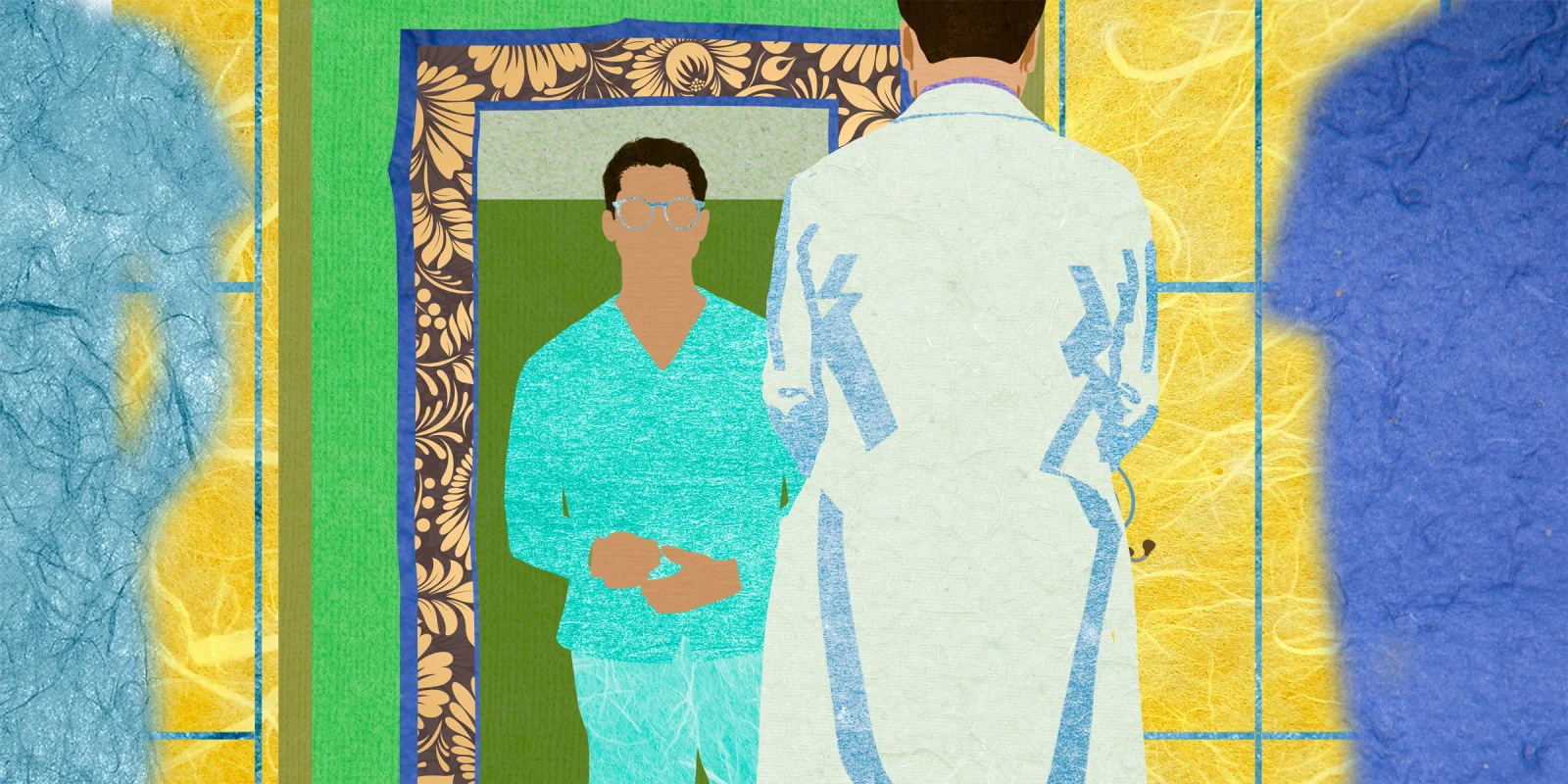
Illustration by Jennifer Bogartz