
Too often, hard-won triumphs are muted by a prevailing sense of disillusionment. It is widely recognized that the American health care system underperforms. Our country’s high rates of chronic diseases, lower life expectancy relative to other developed nations, and excessive costs are the common focus of headlines, research initiatives, and political agendas. Yet these shortcomings, while undeniable, often steal the narrative from the very real progress and breakthroughs that have redefined what is possible in medicine. From transformative therapies to lifesaving technologies, our field has achieved victories that not only deserve attention, but also offer a roadmap for what is still to come. Many of these advances have emerged from the productive tension between standardization and personalization: standardized protocols that make care safer and more reliable and personalized approaches that adapt those protocols to the unique needs of each patient. Together, these forces have driven some of medicine’s most extraordinary gains.
As human beings, we often anchor our understanding of progress not in data or headlines, but in the experiences of those we love. For me, as a pediatric intensivist, that perspective is inseparable from my own family’s story across recent generations. Before my parents moved me and my brother from a small mining town in Ontario, Canada, to our new home in the U.S., my father’s parents had already made a far greater leap, leaving behind the authoritarian regime of the former Yugoslavia for the promise of work in a steel mill town in Southern Ontario. In Canada, my father and his siblings spoke Slovenian as their first language, farmed in the traditions of the old country, and navigated the often-difficult path of assimilation that marks the immigrant journey. In 1968, my father’s 8-year-old brother, an uncle I would never get to meet, was diagnosed with leukemia and ultimately died at Princess Margaret Hospital in Toronto. While the death of a child is the most profound of human losses, for immigrant families its hardship is often magnified by separation from homeland, the demands of assimilation, and thinner community ties. That loss did not end with my uncle’s passing. It rippled across generations, shaping my father’s instinct to protect, casting a shadow on family memory, and leaving an absence I could still feel decades later. And yet, the very disease that stole my uncle’s future has become one of modern medicine’s most extraordinary victories. Today, children diagnosed with acute lymphoblastic leukemia (ALL) not only survive, but often grow up and thrive.
The progress in pediatric ALL survival epitomizes both the best of American health care and the role of pediatricians in alleviating suffering. When my uncle died in the 1960s, multiagent chemotherapy was only beginning, propelled by Sidney Farber’s pioneering work with the folate antagonist aminopterin. Survival had risen from zero to something measurable, though still below 10%. Over the next decades, outcomes improved dramatically, driven by systematic learning through clinical trials that shaped the standard of care. By the 2000s, protocolized regimens refined in successive trials were routine across North America, and survival surpassed 80%. In 2000, major pediatric oncology groups merged to form the Children’s Oncology Group, recognizing the gains achieved through collaboration and pursuing even better outcomes. Today, pediatric oncology arguably leads medicine in combining standardized regimens with highly personalized therapies, showing that progress is possible when science, collaboration, and compassion converge.
Extraordinary gains in pediatric oncology were not accidental; they were the product of intentional collaboration, brilliant science, and a deep respect for the physician’s role in translating evidence into care at the bedside. Yet today, across much of pediatrics, these same foundations are at risk. The growing corporatization of health care threatens to strip medicine of the very elements that enabled such progress by dampening morale, constraining resources, and eroding the professional agency that allows physicians to act as advocates for children and families. If pediatric oncology demonstrates what is possible when systematic learning and physician leadership align, the broader system risks showing us the opposite: what is lost when efficiency is pursued at the expense of humanity. It is important, then, to not allow disillusionment to dispel our accomplishments. The very clouds gathering over health care may actually be lined by silver.
The idea that the dualities of capitalist health care and clinician-centered medicine can be simultaneously leveraged for patients’ benefit is not new. In the 1980s, Barry Johnson introduced the concept of polarity mapping to managerial improvement science, which is the notion that pairs of interdependent opposites, like standardization versus personalization or stability versus change, might together create mutually reinforcing strengths. Pediatric oncologists advanced their field by standardizing what worked so they could study protocol modifications that now include highly advanced, personalized treatments. Modern clinical trials rely on a backbone of a fixed experimental design that increasingly incorporates adaptive elements, enabling both the rigor of standardization and the flexibility of personalization to coexist in service of better outcomes. Similarly, we are already seeing the early advantages of integrated information technology networks in modern corporate health care environments to better detect impending deterioration, and the commercial technology sector has shown us that economies of scale can actually lead to even more innovation when the gains of efficiency are reinvested to promote progress. The pandemic proved that large health systems can operate as real-world laboratories, with innovative trials like RECOVERY, REMAP-CAP, and ACTIV enrolling tens of thousands of patients and producing rapid, practice-changing results. These successes showed that when systems are designed to learn, physicians can turn shared crisis into collective progress. By stepping back, we can begin to see how looming threats like corporatization or constrained funding might be reframed as opportunities for innovation.
Alongside the system-level learning of the pandemic, an equally powerful lesson came from front-line clinicians, whose professionalism and intrinsic motivation demonstrated the enduring strength of physician agency. As J. Michael McWilliams, the Warren Alpert Foundation Professor of Health Care Policy at Harvard Medical School, has argued, the pandemic revealed that our greatest untapped resource for improving care is not more measures or payment incentives, but the professionalism and intrinsic motivation of physicians acting as true agents on behalf of their patients. So much attention is given to the flaws and perils of American health care that we risk losing sight of the many tremendous accomplishments that have been absorbed into routine. Our future will be shaped by how well we protect this balance: standardized systems that learn and improve and clinicians empowered to adapt those protocols to the lived needs of patients. If we preserve both, health care can move beyond disillusionment toward real progress.
How can physicians balance both system needs and patient individuality? Share in the comments.
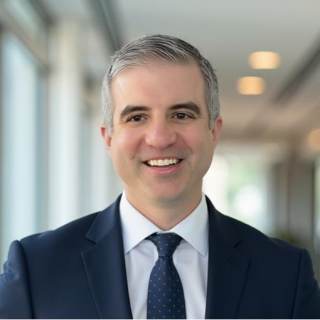
Dr. Chris Horvat is a pediatric intensivist, clinical informatician, and learning health systems researcher in Pittsburgh, PA. His path to medicine began as a contractor in the high-purity quartz mines of western North Carolina, likely making him the only informatician who once helped extract the raw materials powering today’s digital workflows in health care. Dr. Horvat is a 2025–2026 Doximity Op-Med Fellow.
Illustration by April Brust