“If you come in, please introduce yourself.”
The sign taped to a hospital room door stopped me mid-rounds.
It was a simple request. Not for better food. Not for faster care — just an introduction. Yet it exposed an uncomfortable truth: how easily the most basic social norms dissolve inside hospital walls. A supercut of rushed visits — nights when I wasn’t at my best, running between the 60 patients I carried as the overnight resident — flashed through my mind.
Do staff really enter rooms without acknowledging the person inside? Or do we assume patients can track the dozens of faces cycling through at all hours — white coats, colored scrubs, badges turned backward, names half-mumbled while typing?
In the hospital, illness supersedes identity. Medical culture often exacerbates this issue, distilling a life into a single sentence: age, gender, chronic conditions, and a chief complaint.
By the end of my second year of internal medicine residency, I was conditioned to the ER’s sensory soundtrack — monitor alarms, IV pumps chirping, stretchers squeaking down fluorescent hallways. I knew the fastest routes in and out, back upstairs to my admitted patients.
Then I found myself lying in hallway bed 77.
From a gurney, the hospital looks different. Every clinician seemed 10 feet tall, speaking down at me while I stared at the ceiling tiles. Privacy evaporated. Conversations about me happened around me. Twenty minutes after pressing the call button and receiving no response, I disconnected my telemetry leads to use the restroom. I avoided eye contact with colleagues passing by. Embarrassment kept me from asking for favors — to jump the line for a room with a door, or even settle for a curtain.
At that moment, my professional identity didn’t protect me. I wasn’t a physician; I was bed 77H. A 29-year-old woman with asthma and anaphylaxis, presenting with an allergic reaction. My mind drifted back to the sign. If I had a door separating me from the chaos of the ER, what would I want my sign to say?
“If you need to ask sensitive questions, please lower your voice.”
“If you untie my gown to listen to my lungs, please tie it back up when you’re done.”
Dehumanization in hospitals may be common, but that doesn’t mean it’s inevitable. It’s the product of norms we’ve stopped questioning. Take the hospital gown: the shapeless, open-backed, one-size-fits-no-one uniform. Seeing a patient in their own clothes can feel oddly subversive, as if they’re breaking protocol. But outside of the OR or frequent, extensive physical exams, gowns are rarely medically necessary.
What are we preserving — sterility or tradition? Clothing restores agency.
It says, "I may be sick, but I am still myself." This instinct shows up in end-of-life care. We tell families to bring their favorite blankets and photographs. We dim the lights. We make space for ritual, recognizing that the environment shapes dignity. Why don’t we extend this privilege to other patients?
During training, I once heard an attending respond to a patient frustrated by repeated nighttime awakenings from diuretics: “This is a hospital, not a hotel.” An objectively true statement, with a lingering subtext: you are in our house, and you will follow our rules.
Of course, hospitals are not hotels. They are complex systems balancing safety, urgency, and limited resources. But when we default to that framing, we prioritize efficiency over empathy. We risk conflating medical necessity with institutional convenience. Certainly, there are patient frustrations we cannot fix — OR delays, staffing shortages, and the unpredictability of acute illness. We are not responsible for eliminating every discomfort.
But some indignities are optional. Introducing ourselves every time we walk into a patient’s room restores identity. Sitting at eye level softens hierarchy and power differentials. Retiming medications when clinically safe, so a patient can sleep, respects the basic human need for rest.
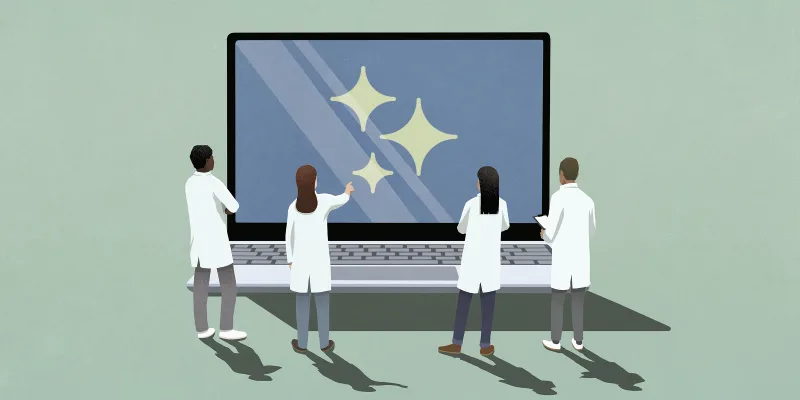
We’ve embraced the belief that artificial intelligence is the key to humanizing healthcare by reducing documentation burden and freeing us to look patients in the eye again. Perhaps it will help. But if we need technological innovation and reminders to introduce ourselves to our patients, the problem was never the EMR.
Humanizing care doesn’t require software. It begins with awareness of our power and presence — how tall we look from a hospital bed. It begins with protecting the agency where we can — allowing for person-centered care over antiquated protocols. We can restore identity to our workspaces, which are too easily stripped away.
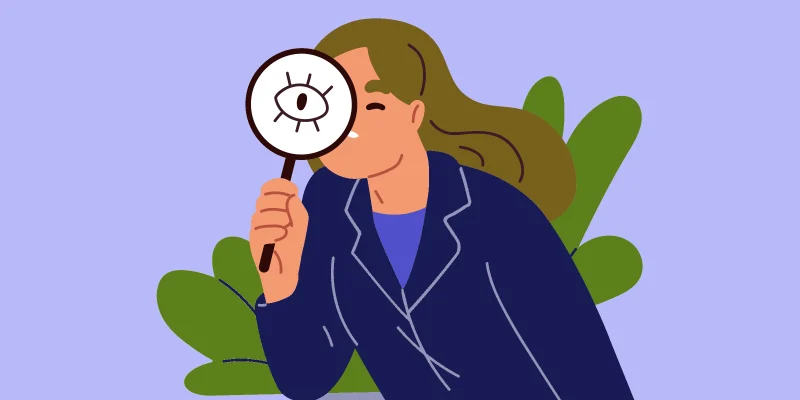
The sign on that door wasn’t asking for VIP treatment. It was asking to be seen. And unlike so many other aspects of modern healthcare, seeing someone is still entirely within our control.
What small habits do you always make sure to practice to keep healthcare human? Share in the comments!
Lindsey Ulin is a palliative care physician in Dallas, TX. She enjoys writing in indie coffee shops and bookstores and spoiling her dog Winston. She tweets at @LindseyUlin. Dr. Ulin is a 2025-2026 Doximity Op-Med Fellow.
Illustration by Diana Connolly