
The table was spread with savory food — creamed salmon, tea sandwiches, fresh fruit, and vegetables — but my attention kept drifting back to a chocolate cake so dark it was nearly black. There were the usual retirement-party accoutrements: a large bouquet, an expensive watch, and a card the size of a small television, crammed with well-wishes. The room was beyond capacity, with late arrivals peering in from the doorway.
This was my retirement party. I wasn’t 67, the expected retirement age for someone in my demographic. I was a full decade early. How does that happen?
Not through brilliance. Through observation.
Over the years, I learned from three surgeons — lessons they never intended to teach. They showed me that a successful career isn’t just about caring for patients or earning a paycheck. It’s also about preparing for the day you can no longer do the work.
Don’t Delay the Inevitable
During residency, there was an older surgeon still practicing a decade after he began collecting Social Security. His schedule was light, his case list narrow. He was gentlemanly, but clearly past his prime. Two senior surgeons told me his story.
After training, Dr. H built a successful solo practice. He enjoyed the rewards: travel, a beautiful home, new cars, and good food. He lived well. But about 10 years before he hoped to retire, he realized he hadn’t saved enough. He tried to catch up. A financial planner promised outsized returns. It sounded too good to be true, and it was. The planner prospered. Dr. H did not. He reached retirement age without the means to retire, and without time to recover. He worked until he died.
The lesson was simple: don’t wait. The idea that you’ll “save more later” is seductive and almost always wrong. Later rarely comes in the way you expect. My approach was unremarkable: save consistently from every paycheck and invest in low-cost, broadly diversified funds. It wasn’t exciting, but it worked.
Beware Lifestyle Lock-In
The hospital hired an ambitious cardiothoracic surgeon fresh out of fellowship. After years of scraping by, he was ready to live the life he believed he had earned. He bought a house, one of the largest in town, in a gated community before that became a thing. It had a dedicated room for a grand piano, which he hoped his children would someday play. Technically, he was solid. But surgery doesn’t always follow protocols. When a young trauma patient required deviation from standard practice, he struggled to adapt. The patient died. Drama followed, and the hospital exercised its option to terminate his contract.
He had options. His training pedigree was excellent. But he couldn’t leave. The house anchored him. It was too expensive to carry without income, too specialized to sell quickly, and he had little equity. What had been a symbol of success became a constraint.
Watching this unfold shaped my own choices. When I bought my first home, my realtor encouraged me to spend two to three times my salary. She had a list of large, impressive homes in desirable neighborhoods, where other physicians lived. We didn’t see any of them. Instead, we bought a modest home in a working-class neighborhood. Our neighbors worked in a manufacturing plant and volunteered at the fire department. They were practical, generous, and grounded, the kind of people you could rely on. The house cost about one year’s salary. Within a year, my student loans were gone. It wasn’t glamorous. It was liberating.
Your Career Has a Shelf Life, Whether You Admit It or Not
Surgeons take pride in precision. Straight incisions, steady hands, controlled movements. So when Dr. A’s hands began to tremble, it was more than concerning. He worked in a pediatric subspecialty, operating on the smallest patients, cases requiring extraordinary precision. The tremor made that increasingly difficult. The harder he concentrated, the worse it became. A neurologist reassured him: no Parkinson’s, no malignant condition, just a benign intention tremor. But for a surgeon, no tremor is benign.
To his credit, Dr. A recognized the reality. He transitioned into an academic role, teaching and writing. It wasn’t the career he had envisioned, but he adapted. What I took from his experience was this: you cannot assume a long clinical career. Skill, health, institutional politics — any number of factors can end it early. So I planned accordingly. I structured my finances so that I could stop working at 50 if I had to. Not because I intended to retire then, but because I wanted protection against the unexpected.
Here’s the interesting part: When I reached 50, I realized I was closer than I thought. By 55, I had the option to retire comfortably. I didn’t leave immediately. I took a few more years to prepare and think through what I would do with the time, to make sure I was ready psychologically. Two years later, I was standing at that retirement party, listening to kind words, holding a slice of that rich chocolate cake.
I didn’t retire early because I was exceptional. I retired early because I paid attention.
Four lessons stand out.
First, start now. There is no better time to save for the future. Waiting for a moment when it feels easier is a losing strategy. Consistency matters more than timing or brilliance.
Second, avoid the lure of outsized returns. The investment world is filled with people far more experienced than you. Competing with them on their terms is not a good bet. Slow, steady investing works because it avoids catastrophic mistakes.
Third, live below your means, especially early on. Large, fixed expenses reduce your flexibility. That impressive house doesn’t just cost money; it limits your options. Modesty early on buys freedom later.
Fourth, accept that your career may end sooner than you expect. Health changes. Skills fade. Circumstances shift. Plan so that an early exit, voluntary or not, doesn’t become a crisis. Disability insurance is only part of that plan.
You may not want to retire early. That’s fine. But having the option changes how you experience your career. It shifts work from obligation to choice. That distinction matters more than most people realize. So, I raise my dark, rich slice of cake to you and wish you the best in whatever path you choose.
If you've retired already, what lessons would you add to this list? Share in the comments.
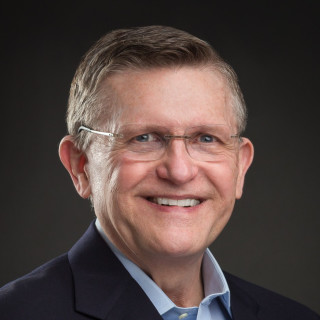
Charles Black, MD, is a general surgeon and former Op-Med Fellow who writes on the philosophical dimensions of a life, often drawing on lessons learned from three decades in medicine. His work can be found on Medium.com at https://medium.com/@chuckbphilosophy
Image by dane_mark / Getty Images