
I've often joked that I suffer from a rare but highly productive condition called “Oppositional Achievement Syndrome.” Tell me I can't do something — or even politely suggest that I probably shouldn't — and I become irrationally committed to proving you wrong. I call it my career plan. In many ways, it's the same psychological principle that underlies motivational interviewing: the more someone lectures us about what we shouldn't do, the more likely we are to dig in our heels and do it. I learned that lesson firsthand long before I ever used it to help patients navigate substance use disorders.
I grew up in rural South Carolina in the '80s and '90s, where I was informed — by what felt like every adult within a 50-mile radius — that I was going to make a great nurse. At that time, women represented only about one-quarter of practicing physicians in the U.S. In many communities, particularly throughout the South, the number was even lower. The physician most children imagined was still overwhelmingly male, and overwhelmingly white.
As a teenager, I started looking for opportunities to get involved in healthcare, and I became a candy striper at the nearby community hospital. If you were born after the Clinton administration, candy striping was what hospital volunteering was called before we upgraded it to a much more sophisticated title. We wore red-and-white striped pinafores that made us resemble peppermint sticks with name badges. We delivered flowers, transported patients, restocked supplies, ran lab slips, refilled water bottles, and more.
Despite the nearly hour-long drive to the hospital each day, I absolutely loved it. Hospitals fascinated me. Every monitor, IV pump, physician making rounds, and conversation about a mysterious diagnosis was fodder for my interest. While my friends were shopping at the mall, I was genuinely excited to spend a Saturday afternoon watching medicine happen. I knew exactly what I wanted to become.
But everyone else at the hospital had different plans for me.
"Oh, honey, you're going to make such a wonderful nurse."
Then another volunteer.
"Oh, you'd make the sweetest nurse."
Then a patient.
"You remind me of my favorite nurse."
Then another.
"What nursing school are you planning to attend?"
Everyone seemed thrilled — everyone except the one person whose career they were planning. The funny part is that no one was trying to discourage me. Quite the opposite. Every single person at the hospital meant it as a genuine compliment. Nursing is one of the noblest professions in medicine. Any physician who has practiced for more than a week understands that outstanding nurses save lives every single day. The people encouraging me were pointing me toward a meaningful, respected career. The problem was that they couldn't imagine another one.
Eventually, every "You're going to make a wonderful nurse" became another log on my motivational fire. Before long, my internal dialogue had become remarkably simple: “I'll show you.” Fortunately, it turned out to be a surprisingly effective strategy.
There was one notable exception to my nursing fan crowd: my parents. Not once did either of them suggest I should become a nurse. Not because they thought nursing was somehow "less than." They deeply respected nurses. They simply believed I could become whatever I dreamed of becoming — not the person someone else had already imagined for me.
Looking back, I don't think they realized what a remarkable gift they were giving me. Everyone else predicted my future, while my parents assumed I got to choose it. That tiny difference changed the entire trajectory of my life.
Today's story of women in healthcare looks very different. Since 2019, women have made up the majority of U.S. medical students. That's a remarkable cultural shift in just one generation. And yet, culture doesn't always evolve as quickly as admissions statistics. Women still comprise only about 38% of practicing physicians. They remain underrepresented in senior leadership positions, and studies consistently show they're more likely than male physicians to be mistaken for nurses or other healthcare professionals.
Despite my college advisor’s suggestion to pursue teaching, I took all the pre-med science classes, attended all the pre-med student interest group meetings, did well on the MCAT, and got into both state medical schools, with a scholarship to each. The dream had arrived. One of our pink class T-shirts proudly proclaimed, 'Be the doctor your parents always wanted you to marry.'
It remains my favorite memento from medical school.
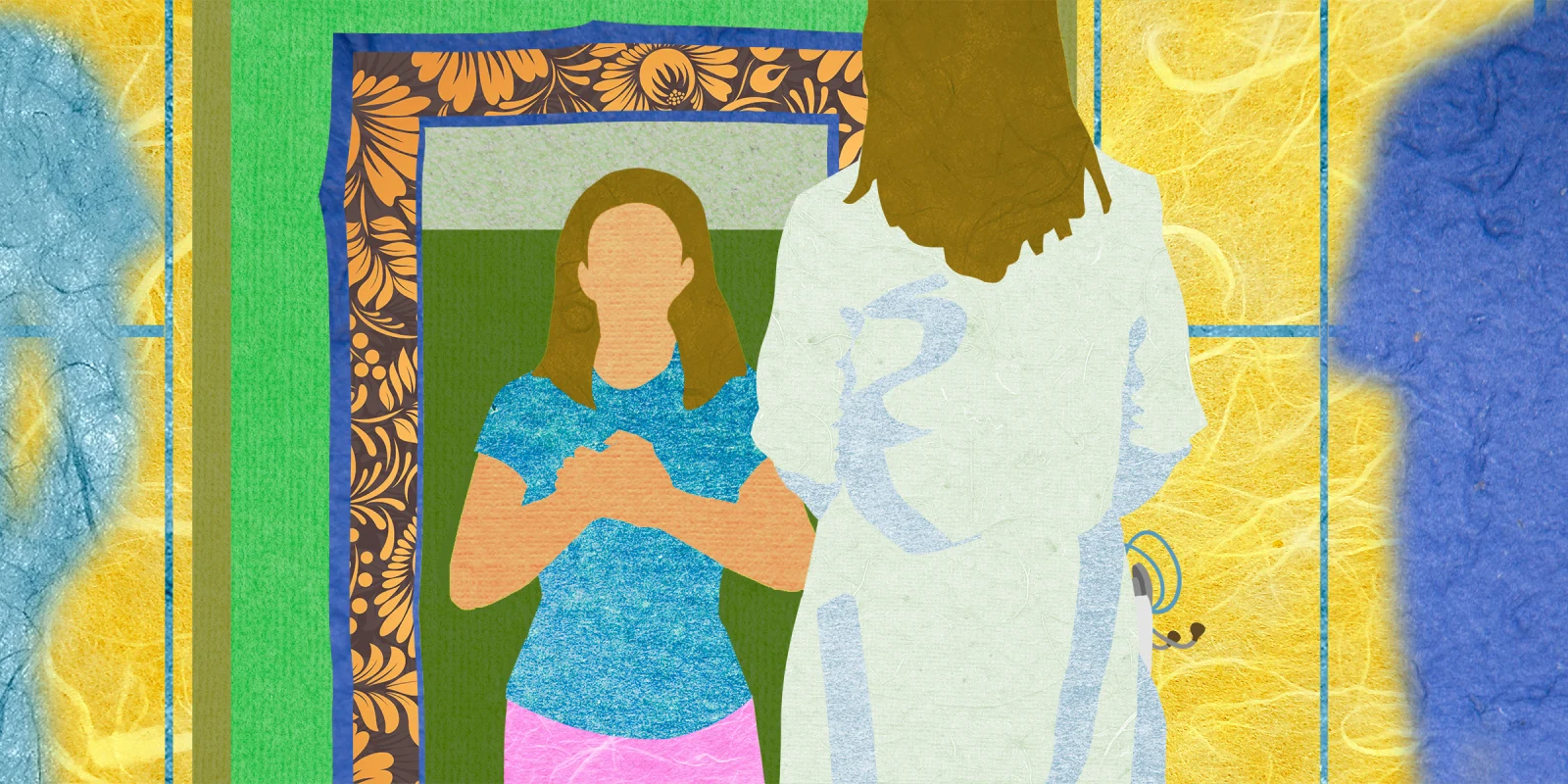
After all those years of training, surprisingly little has changed. Patients still occasionally introduce me as the nurse. I've walked into patient rooms immediately after a male medical student only to have patients assume he was the physician with me there to assist him. Four years of medical school, five years of residency and fellowship, board certifications, and approximately enough student loan debt to finance a small Caribbean island still aren't always enough evidence that I might, in fact, be the doctor.
Honestly? Now it mostly makes me laugh.
Looking back, I don't resent the people who kept telling me I'd make a wonderful nurse. They weren't intentionally trying to limit me. They were trying to encourage me using the world they understood. Their imaginations hadn't caught up with my ambitions.
They were probably right. I think I would have made a wonderful nurse. But they were asking the wrong question. Instead of asking, "Would she make a great nurse?" I wish they had asked, "Why can't she be a great doctor?"
These days, whenever I meet a young girl who tells me she wants to become a physician, I don't tell her she'd make a wonderful nurse. I don't suggest she consider teaching. I smile and say,
"I think you're going to make an amazing doctor."
Then I make sure she hears something even more important:
"Don't let anyone else decide your dream for you."
Maybe she'll become a physician. Maybe she'll become a nurse. Maybe she'll become an engineer, a Supreme Court justice, an astronaut, or the scientist who finally cures Alzheimer's disease. Maybe she'll invent a career that doesn't even exist yet. My job isn't to choose her future. It's to leave enough room for her imagination to choose it herself — and help her believe in it even when the people around her can't quite see it yet.
And perhaps that's the greatest gift any of us can give the next generation — not choosing their dreams for them. But believing in them long enough that they learn to believe in themselves.