
The summer after I graduated from college, I was hopeful, energetic, and hard-pressed to piece together enough cash to purchase an engagement ring. Among other things, I started working late nights at an incredible restaurant in my busy city. It was a great spot; upscale with wine as expensive as my utility bill, but still approachable and lively enough to attract a young crowd stopping in for small plates. The staff was diverse. Medical school was still on the distant horizon, and while I had worked in a hospital for a year before, I know now that I learned more about life in medicine in those months at the restaurant than perhaps any other time in my life.
Anyone who has worked in restaurants knows the familiar sights, sounds, and habits of the work: deli cups of cold water tucked into convenient corners by thirsty staff, the rush of hot oil in saucepans, the chatter of knives in prep, the muted silence inside the freezer. I remember learning to placate a frustrated patron who was dissatisfied with seemingly every aspect of their dining experience. I recall the exacting standards of the chef, whose insistence on consistency and thoroughness extended to polishing silverware to a perfect shine. One night, our industrial dishwasher broke, and staff from every corner, including the manager herself, rotated to pitch in with handwashing. Servers hustled hard, cooks sweated through their aprons, and I rushed to keep up.
A symphony comes out of a restaurant’s bedlam, the rhythm of which mirrors the hospital. First, there's an early quiet before the day's chaos. Review overnight labs and imaging, prepare ingredients, set tablecloths. Upon opening, the tune steps off at a methodical pace. Round, greet new faces, discuss options, place orders, review charts. Soon, though, the tempo swells, and anxiety often begins to peek through.
Before long, the pace is breakneck, and the staff swirls to keep up — crashing patients, a broken dish, a frustrated consultant, an angry patron, a shortage of patient beds, spoiled ingredients. The whole enterprise seems like it might topple. Staff flexes to cover in areas they may not have expected. Hopefully, this fourth movement relents, and all returns to a consistent hum.
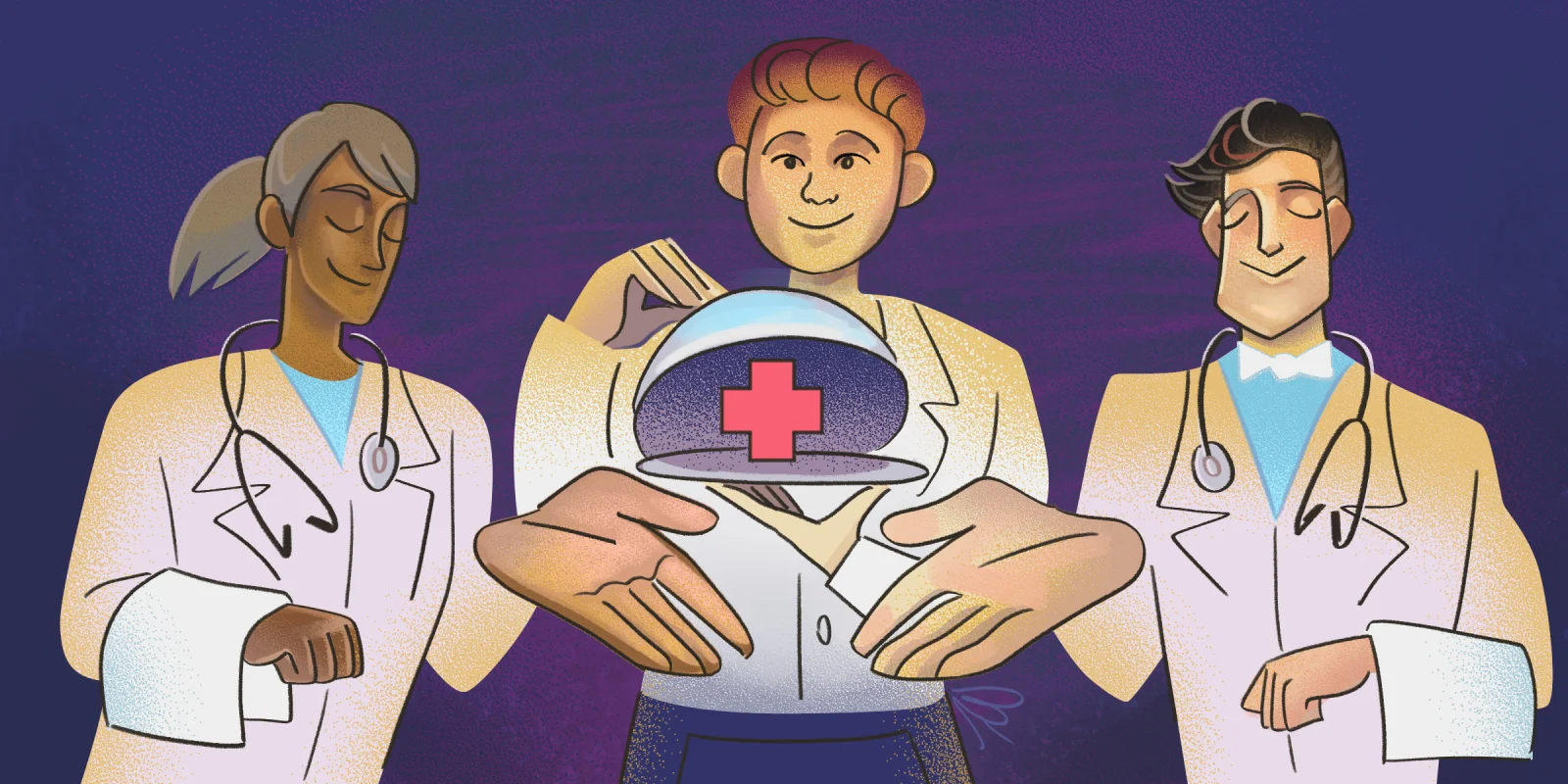
Both the hospital and restaurant revolve around the people at their center. Without patients or patrons, all this work is hollow. More importantly, focusing on the disease (or dish) to the point of neglecting the needs of the person you’re serving undermines the very good work you’re trying to accomplish. If you nail the diagnosis or wine pairing, but they leave feeling unheard and frustrated, they may never come back, and you’ve lost the plot.
I’m no longer spending my nights running around the kitchen and dining floor, but sometimes hospital life feels like it. But what I am glad to still be doing is spending my days engaging new people. As a third-year medical student, I’ve had the chance to join the clinical teams at a large tertiary referral center, a downtown safety net hospital, an outpatient clinic in a prosperous neighborhood, a free clinic serving mostly rural-living migrant workers, a VA regional center, and a psychiatric hospital attracting patients from all backgrounds.
In the span of the last month alone, I’ve interviewed a patient with paranoid psychosis fearing for her life, a young man wrestling with how to process the damage to his lungs from a gunshot wound that’s long since healed, and a man stunned and disheartened with a new diabetes diagnosis. They’ve each required a different approach from their physicians, and I’ve learned by watching the masters at work and providing support wherever possible
Fine attention to detail, flexibility, and tailoring communication styles to your audience are all important. If and when the specifics of medicine are unclear or beyond my ability, I can fall back on experience: jump in where needed, talk to the person in front of me, and don’t forget the team.
Many of my excellent classmates have similar non-medical experiences, such as the service industry, athletics, or the military, that they fall back on when things become challenging. The house of medicine is complex and, at times, chaotic. Drawing on these prior experiences and remembering the patient at the center of the enterprise helps. I’m thankful that I was able to navigate some of this in a restaurant and consider it another site in my clinical training. Patrons all eventually become patients too, and learning to engage with them has paid dividends every day.
What lessons did you learn outside of medical school that prepared you for clinical life? Share below!
A. Hayes Chatham is a medical student in Gainesville, Florida. He is a 2025–2026 Doximity Op-Med Fellow.
Illustration by April Brust