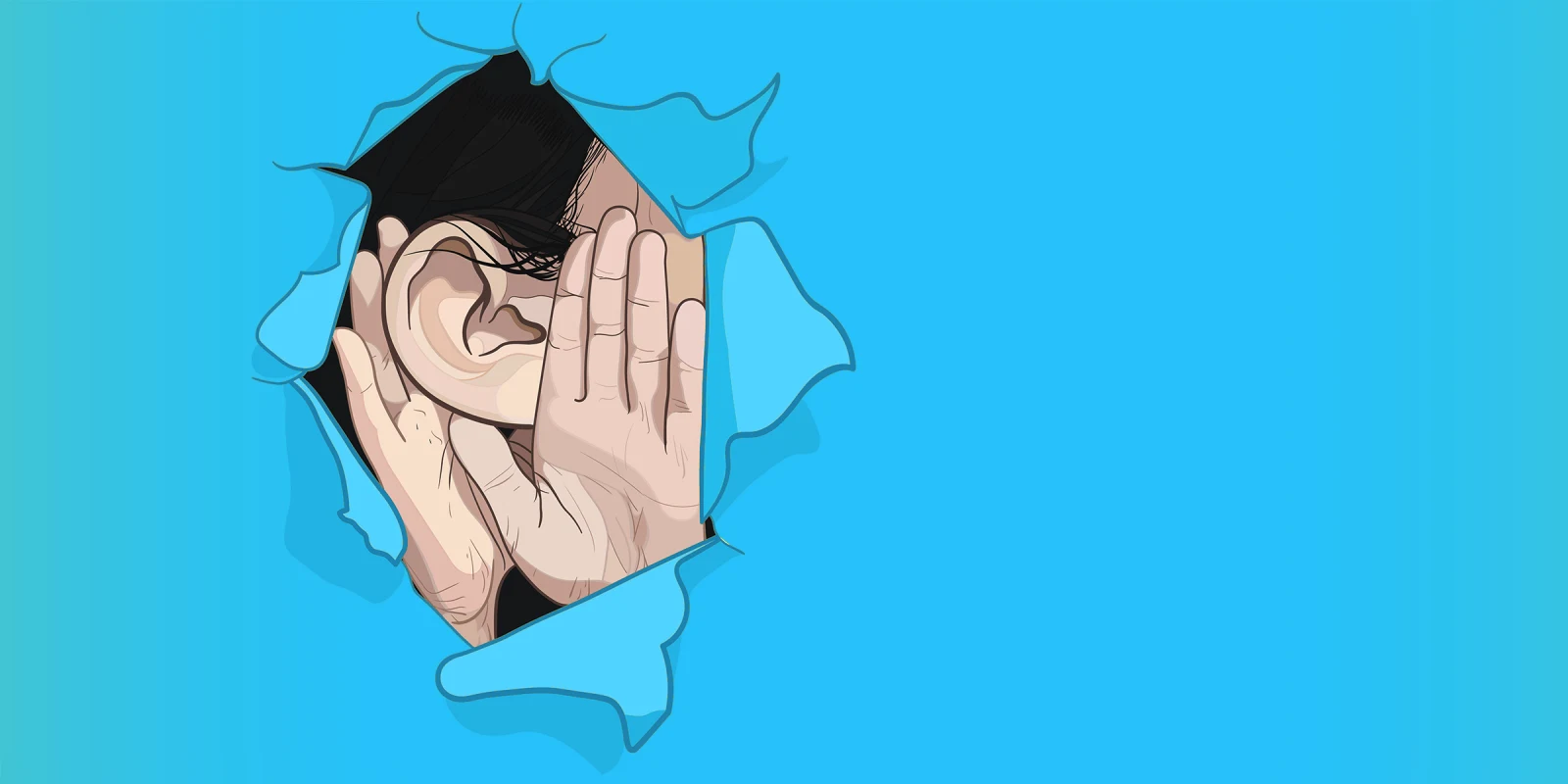

Doctors care for patients with disabilities every day, yet many medical schools still treat disability as an afterthought. Despite one in four people in the U.S. being identified as having a disability, it is something to accommodate only when “necessary,” rather than a fundamental part of training competent physicians. This mindset hurts not only disabled trainees but also the patients they will one day serve. Disability inclusion is not charity or exception; rather, it is preparation for reality.
When I entered medical school as a profoundly hard of hearing student, I quickly realized that accessibility was not the norm. From lectures without captions to instructors who were facing away from me when they spoke, even the smallest interactions required me to advocate for myself constantly. In clinical settings, where communication is quite literally the foundation of care, these gaps became difficult. Every day was a balancing act between learning medicine and fighting for access.
The problem runs deeper than logistics. Medicine still clings to an outdated view of disability as a defect. Historically, physicians have played a central role in pathologizing disabled lives rather than supporting them. Aristotle once wrote that the deaf were “incapable of reason.” Centuries later, deaf people were sterilized or institutionalized, their humanity stripped away under the guise of “mercy.” While those horrors feel distant, the biases underpinning them still shape medical culture today. Many disabled students are quietly advised against pursuing medicine at all. Others are told they’ll “struggle to keep up” or be “too much work to accommodate.” If they make it into medical school, they are often left behind, forced to navigate barriers on their own.
But what happens when disabled people are excluded from medicine? Patients lose doctors who understand them. Deaf patients, for example, face severe disparities in health access, not because their conditions are inherently complex, but because too few clinicians can communicate effectively with them. Interpreters are often unavailable and lip reading is expected to bridge the gap, even though only about 30% of English is visible on the lips. And while some deaf people use cochlear implants or hearing aids, those devices are expensive and not universally effective. To call them a “fix” is to misunderstand deafness entirely.
When medical schools fail to train students in disability competence, or worse, fail to support disabled students themselves, they perpetuate this inequity. In medicine, disability is often defined through a list of diagnoses, deficits, and problems to be “fixed.” This framing sees disability as something that needs treatment or a cure. Conversely, disability scholars and activists view it as a social and political identity shaped by the environment, not just the body. They argue that people are disabled not by their conditions, but by inaccessible systems, attitudes, and structures.
This holistic approach benefits everyone. And what’s more, clinicians with disabilities bring insight that no textbook can teach — insight that won’t get transmitted if disabled people are shut out of medical training. When I sit with a patient who has a new disability diagnosis, for instance, I know how to relate to and counsel them. When I converse with patients who communicate differently or even need assistance with translations, I understand what it’s like to navigate a world that is incredibly different from your own.
Some institutions are starting to recognize the importance of this. In 2019, the University of Michigan Medical School launched a comprehensive Disability Inclusion initiative that reviews curricula, accessibility policies, and student support structures. UM is integrating disability awareness into ethics, communication, and clinical education. Similarly, at UCSF, there is an Office of Disability Access that partners directly with medical educators to ensure accommodations are built into training rather than requested as exceptions. And at Harvard Medical School, disability studies content has been added into the health equity curriculum, with the understanding that disability, just like race, gender, and class, shapes every aspect of care. What these schools recognize is that true reform means designing medical education for everyone from the start. That means captioned lectures, accessible simulation labs, and disability-inclusive curricula that prepares all trainees to treat disabled patients with competence and respect. It means recruiting disabled students not despite their disabilities, but because their perspectives are vital to a profession built on empathy and care. Finally, it means training faculty to see access not as extra work, but as good medicine.
Ultimately, the question is not whether disabled people can be doctors. The question is whether medical education will evolve to fully include them. Disability inclusion isn’t about lowering standards; it’s about redefining medicine to include accessibility, empathy, and lived experience.
When I stand in a patient’s room, with a stethoscope around my neck, I bring more than medical knowledge. I bring an understanding of what it feels like to be misunderstood, underestimated, and unseen. That awareness makes me a better listener and, ultimately, a better doctor. I’ve learned to speak up when others stay silent, to make space where none exists, and to see barriers not as proof that I don’t belong, but as reminders of why I’m here.
We don’t need more “inspirational” stories of disabled people beating the odds. We need systems that stop making us beat them in the first place. Medical schools must move beyond compliance and toward a culture that treats disability inclusion not as a side issue, but as a pillar of medical education. Accessibility is not optional. It’s the foundation of equitable, compassionate care.
Sidhvi Reddy is a fourth-year medical student in Birmingham, AL. She enjoys reading, traveling, cooking, and trying out new restaurants. Sidhvi is a 2025–2026 Doximity Op-Med Fellow.
Image by Oleksandr Shchus / Getty Images