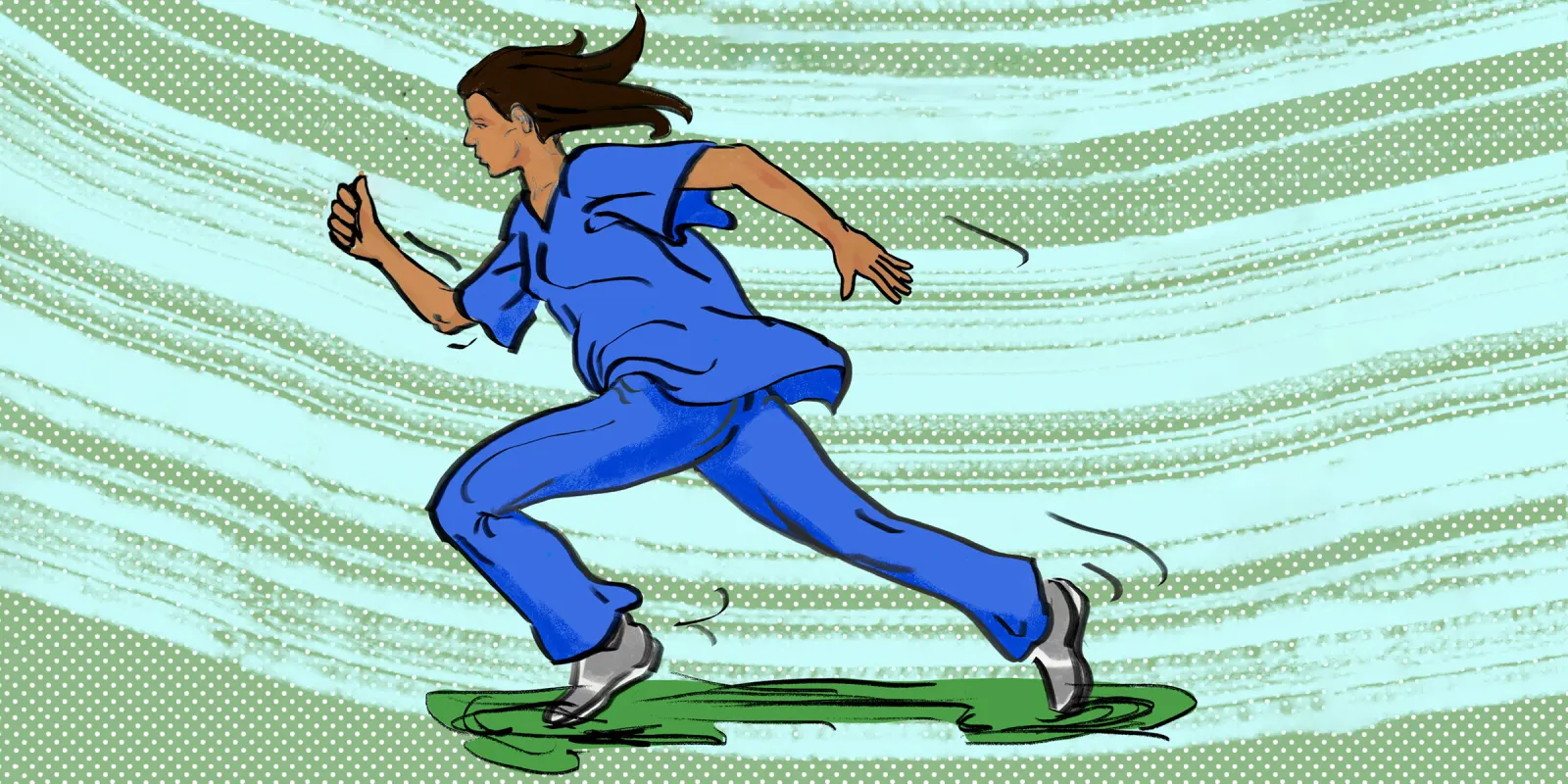

On one particularly angsty day in my first year of medical school, I set out on foot, mounting glacial paces and breathless pauses every minute. I was the type of child who was bottom of the barrel in gym class, often telling my teacher about a perpetual painful period that precluded me from advancing in my physical fitness. Mr. Nathan had no further questions. Thus, my adult running journey had its genesis: slow, effortful, and at times, torturous.
I first read Haruki Murakami’s book, "What I Talk About When I Talk About Running," and closed it with the resigned conclusion that this man’s masochistic tendencies have pushed him to a life of blisters. Moreover, I balked at the claim that his famed writing could have ever been achieved by the futile endeavor of running as hard as possible to return to the same place where he started.
I only started running consistently during my first year of residency. I am not fast; my strides are clumsy with an uncanny likeliness to the ducks that fearlessly litter my path along the Baltimore harbor. But I run as hard as I can. The victory of finally being a doctor, of trying to create goodness, is rivaled by the loss of patients, the lows of human suffering, the Sisyphean toll of working in a system fraught with injustice. After a patient I grew to care for passed away, I laced up my shoes as a great torrent clouded my eyes. Filled with pride after a particularly good shift, I reflected on my growth jogging to a joyous playlist. Running is a source of welcomed catharsis, an outlet to work through convoluted questions while getting lost in the rhythmic exercise of putting one foot in front of the other.
I run with my head down, counting my footsteps. Running, for me, is a solo venture. Company is scarce when the hours of residency require a short 9 p.m. jog before bed or a desperate run that ends before dawn rises. It has beguiled me into a stubborn sense of focusing on myself. I work on my breath, begging my lungs to stay in control and activate my muscles, willing them for one more push uphill. This sport, without me knowing it, has espoused in me a growth mindset that is unequivocally focused on my own journey. It has taught me the discipline of bringing my strongest self to my job, to do my best, and to persevere even when respite is far. It stopped me from comparing myself to others and instead to focus my energy on finding the second, third, and fourth wind that residency demands. Running, in all its solitude, has taught me the paramount lesson of putting my head down, counting my footsteps.
Now in my second year of residency, my long days are interspersed with longer runs, a good day of work is marked by an easy jog, and the bad days culminate with a grueling sprint. There is an eyeroll-inducing dogma that residency is a marathon; the origin of which dates to ancient Greece when Pheidippides ran 26 miles to deliver a message. He died. It is not the most inspiring allegory of residency, but I appreciate the sentiment.
Running offers a safe space to reclaim autonomy over our time, our emotions, and our bodies. It should not be mistaken as a cure for burnout but a way to practice endurance, find joy in difficulty, and invest in growth. If they are able, I recommend running to all of my co-residents and interns. Whether it is for a few minutes or a few miles, running is for our sanity, our health, our strength, and our innate stubbornness to conquer what we find grueling. Take it from me: residency is a marathon, and I have been training since day one.
Bhavya Ancha is a second-year internal medicine resident at the Johns Hopkins Hospital. She loves her job and is moved by the goal of making medicine better for everyone: patients and trainees.
Illustration by Jennifer Bogartz