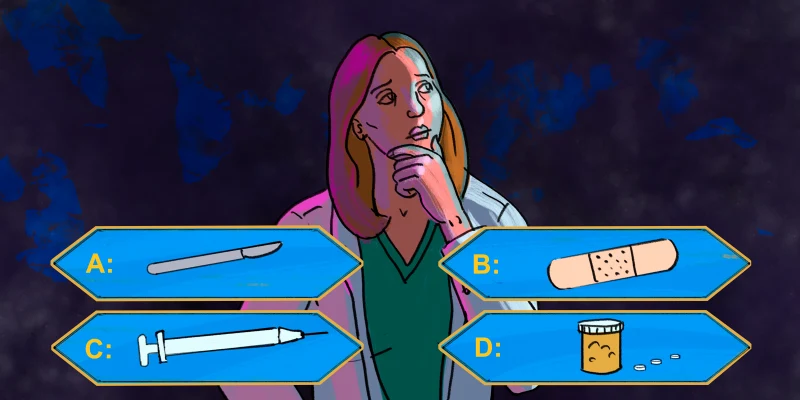

“To err is human …”
– Alexander Pope, “An Essay on Criticism”
I have no doubt made mistakes during my years of clinical practice; some I am even aware of. I once confused one patient’s history with another’s, referring (therapeutically, I had hoped) to his previous lack of adherence to a plan that I had actually not prescribed for him. Prior to that he had been very pleased with my care, even promoting it in online reviews. This error proved unrecoverable, however. He was offended that I had temporarily confused him with a similar patient, and no amount of apology or exploration of his feelings was able to repair our doctor-patient relationship.
While open to my own human frailty, I nonetheless felt badly about my carelessness and how it interrupted what appeared to be a promising recovery for the patient. When we accept responsibility for a patient’s improvement, we experience hope and optimism. The honorable character of most clinicians, therefore, often results in moral distress when we recognize our errors and we lose these reinforcing motivations. Unaddressed, this distress is a risk factor for burnout and impairment, and may have a negative impact on our work environments.
How, then, can we ensure that we are addressing the distress, given that to err is human? The first step is to acknowledge, apologize for, and compensate for our errors. Ideally, these actions will enable patients and their families to forgive us and continue treatment, but this is never guaranteed, as my personal example illustrates. In some cases, our therapeutic alliance will remain ruptured. We must always view our doctor-patient relationships and therapeutic alliances from the patient’s perspective, and their feelings must come first. They may well request repentance, i.e., actions that compensate for the impact of an error. Offering their forgiveness is one strategy they may use for managing the harm they have experienced, and signals that they consider adequate compensation has occurred.
Should forgiveness be granted by a patient and their family, we then have a path for recovering our identity as a healer, which had been damaged by our mistake. In cases where forgiveness is withheld by the injured, clinicians can comfort themselves by knowing that they directly addressed the harm the patient suffered above their own distress, and by fully adhering to standards of care and medical ethics.
Fortunately, medicine as a culture has a rulebook of procedures in response to error. There is a prospective responsibility to disclose, discuss and analyze our mistakes and thereby improve our practices. For example, surgeons and internists (particularly) review autopsy reports, and hospital committees review deaths and seek Quality Assurance and Continuous Quality Improvement. Leaning on this procedural culture can not only prompt self-reflection, increase clinical knowledge, and improve our future performance, it can facilitate moral maturation — as maturity results when we realize we can safely admit our shortcomings to ourselves and learn from them.
Peer and outside support are also crucial for reducing stress and burnout, maintaining our well-being, and for optimal performance. It is therefore important that we also stay attuned to our colleagues, prepared to offer support as well as seek it. Being able to safely share doubts and errors with others, without fear of professional, legal, or economic repercussions, is very important in our profession.
A reflective journal is another useful tool practitioners may utilize to explore errors, strengths, and weaknesses; i.e., managing our feelings through writing. Learning needs can be identified and recorded, as well as plans for addressing them. Follow-up, feedback, and self and external evaluations can be recorded and reviewed, just as you would in a patient’s chart.
The possibility of feeling regret has been identified as an important factor in developing better decision-making. Reflection offers the time and space to explore feelings and processes, in writing or mentally. Acknowledging our mistakes and becoming aware that some choices are suboptimal is an important sign we may need to change our approach. Repressing or denying them eliminates the opportunity. In my case, I had been relying on memory before addressing past events with patients, rather than always checking my patients’ charts. Since the incident I mentioned above, I routinely review charts before referring to a patient’s past behavior.
Finally, clinicians can mitigate moral distress in the face of mistakes by building resilience before events even occur. Cultivating and maintaining psychological flexibility, along with positivity, hope, optimism, and happiness, improves empathy, clinical reasoning, and treatment outcomes. We achieve this by remaining fully present and conscious, which allows us to shift mindsets and modify our responses, maintaining or altering decisions and our behavior as needed. Ultimately, admitting and facing moral distress is a sign of clinical maturity, fostering further growth in our clinical skills and personal and professional development.
How did you approach your most recent mistake? Share in the comments!