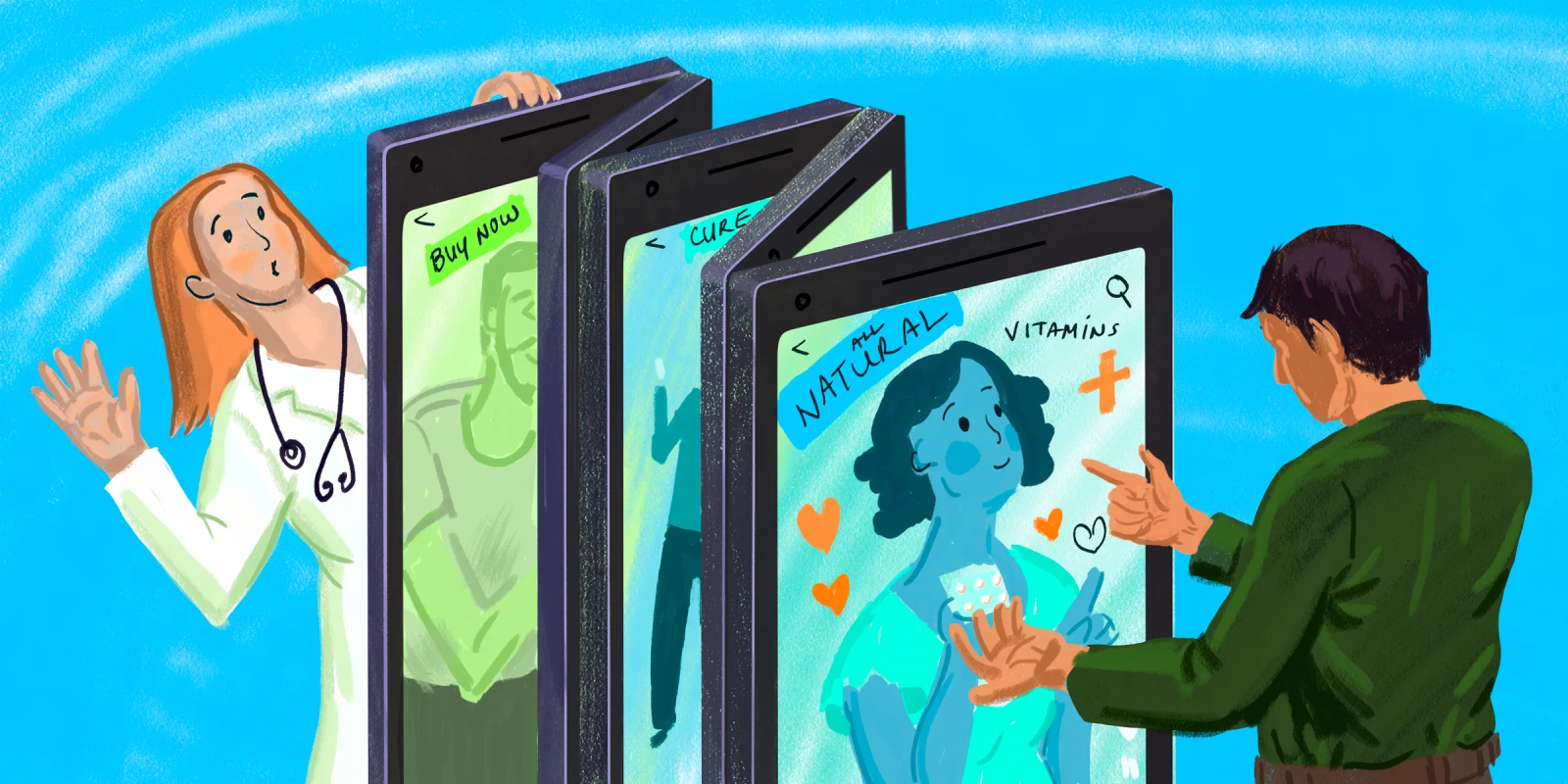

New fear unlocked: waking up to a viral TikTok of “me,” gushing about a probiotic nasal spray that cures chronic sinus infections.
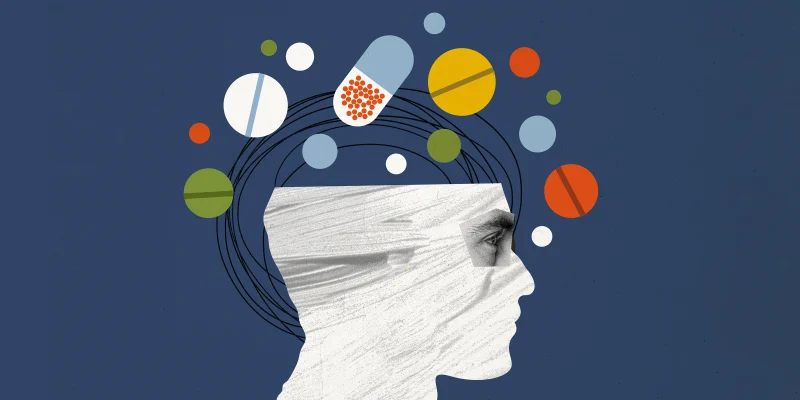
As a board-certified otolaryngologist, I’ve been considering creating a TikTok or Instagram account to combat the misinformation on social media. Before I even made an account, the American Medical Association reported on recent scams involving AI-generated deepfakes of influential doctors peddling unproven supplements on TikTok. A woman spent $300 on a cream to treat her lipedema because it was in a manipulated advertisement featuring her own surgeon.
Similar scams have become rampant of late because they prey on two key human vulnerabilities: trust in authority and the need for hope. These despicable scams exploit the trust the general population places in doctors, and patients’ desperate need for answers and a cure.
After scrolling through these ads myself, I realized that their appeal is based on a consistent theme: Whether it’s an unvalidated diagnostic test or a miracle cure, the pitch always promises certainty. The certainty in these claims becomes especially enticing when juxtaposed with the ambiguity and imperfect nature of real medicine.
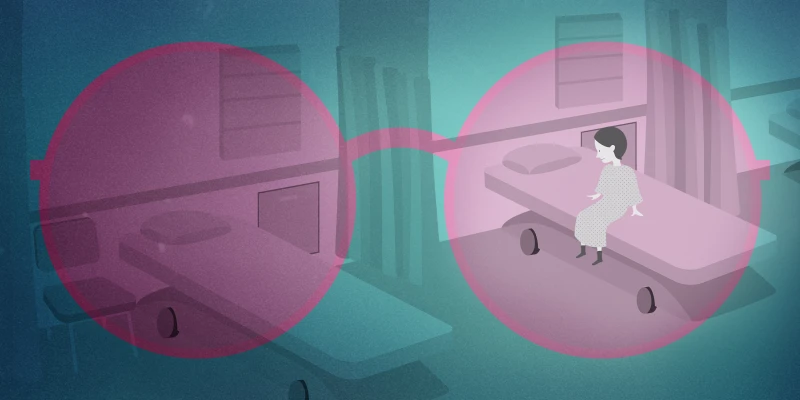
After years in practice, I’ve realized that medicine, more often than not, lives in the gray zone. What we know of the human condition and its ailments is a small fraction of its true vastness. Every day, I see conditions that should behave a certain way but deviate from the textbook, mysterious illnesses that evade all lab tests but continue to torment the people living with them, and patients who deteriorate despite every targeted treatment.
Take my patient. She had persistent tonsillitis for months despite multiple rounds of antibiotics. Out of desperation, she had tried all-natural tonsil rinses made of witch hazel and licorice and even contemplated a ketogenic diet. By the time I saw her in my office during an acute flare-up, this mom of three was sitting on my exam chair, drooling uncontrollably like a teething infant. She had been referred to me for the drainage of a peritonsillar abscess.
However, when I examined her, something was off. The tonsil should have had a soft texture, and hers was firm. The age-old medical aphorism says, “If you hear hoofbeats, think of horses, not zebras.” In an ENT’s office — serving humans — you rarely see either, but the logic holds: common things occur commonly. Still, I couldn't ignore the alarm bell, however quiet, going off in my mind, and I decided to take a biopsy of the tonsil.
Although I was suspicious of a cancerous lesion, that was not a definitive diagnosis. More than worry, the uncertainty infuriated her, rightfully so. People crave certainty in the face of fear. She wanted to know exactly what she had: a devastating cancer or strep throat. She wanted to be either warned against catastrophe or reassured that her life would remain the same. Of course, she found the ambiguous chaos of the middle unacceptable.
Being a mother with young children myself, I recognized the fear and anxiety behind her anger. But I still could not offer her a definitive diagnosis, without proof. I offered her empathetic words landing somewhere between reassurance and vigilance, and we parted ways with plans to see each other the next week.
Of course, I wish to offer my patients slam-dunk diagnoses and curative treatments every time, but that is not possible. I do, however, believe a doctor who says “I’m not sure” is far more promising than any advertisement with false certainty.
A clinician who never says “I don’t know” or who makes grand guarantees can be a dangerous person. Patients these days are bombarded with targeted advertisements, social media campaigns, and straight-up scams aimed at manipulating them into buying magical treatments that claim to heal and transform their bodies.
In comparison, a doctor who humbly confesses, “I don’t know what’s going on,” can seem inept and frustrating. But the truth is that when doctors hedge, we are not making excuses; we are balancing the science and art of medicine, threading the needle between false positives and false negatives, and trying to have an honest dialogue with patients. For there to be honesty, both parties have to recognize their respective vulnerabilities — patients of medicine’s limitations, and doctors of the patient’s justified anxiety and need for answers.
I often tell my patients in challenging cases, “We don’t have an exact answer yet, but I think you’re completely valid to be worried and frustrated. And I’m with you every step of the way until we figure this out.” These words are not as flashy as a bull’s-eye diagnosis, but they are a declaration of sorts that says, “In this imperfect situation, I’m here with you,” because while I cannot promise perfect answers, I can promise commitment. It will take a leap of faith for the patients, but that is how trust is built between the sacred doctor-patient duo.
There is still a large regulatory void and lack of platform accountability when it comes to AI misuse in the context of medical scams, so it becomes incumbent on patients to seek the truth from their real doctors, even if their doctors don’t have the answers right away.
Whether it’s horses or zebras when it comes to making a diagnosis, sometimes it starts with admitting that we just can’t tell yet based on the hoofbeats.
Months later, my patient with the “tonsil abscess” sent me a letter: “From the bottom of my now cancer-free heart, I wanted to thank you … even though I was terrified not knowing what was going on, something in your tone told me that it was going to be OK because one way or the other, you were going to figure it out and take care of me.”