
Another Monday, another sprint. I actually wake up excited — new grad energy hasn’t completely died yet — which is good, because the week was already stacked. I’m a fresh attending gastroenterologist at a big academic center, and my mornings usually start in the endoscopy suite.
First case of the day: 41-year-old woman booked for an upper scope. On paper we get 30 minutes door-to-door: wheel her in, sedate, snake the scope down to the duodenum, wake her up, write the note, prep the next chart. Thirty minutes sounds generous until you realize any hiccup ripples through the whole day for the nurses, techs, anesthesia, and the fasting, nervous patients in the waiting room.
Before I walk in, I at least try to look like I know why she’s here. Takes a minute or two when the referral is decent. This one was internal — our own primary care doc — so I figured it would be clean. Nope.
Open Epic, click the referral tab, and the indication field just says “heartburn.” That’s it. One word.
Heartburn can be legit, but in a younger patient, you want alarm features — weight loss, anemia, dysphagia, family history of cancer, something. So, I start digging.
The problem list has 23 entries. Half of them are nonsense someone forgot to delete: “fell going downstairs 2017,” “BP check,” “patient declined flu shot 2019,” “leaflet given about hypertension.” Actual GERD? Nowhere to be found.
Med list is the same graveyard — every med she’s touched in the last decade, active or not.
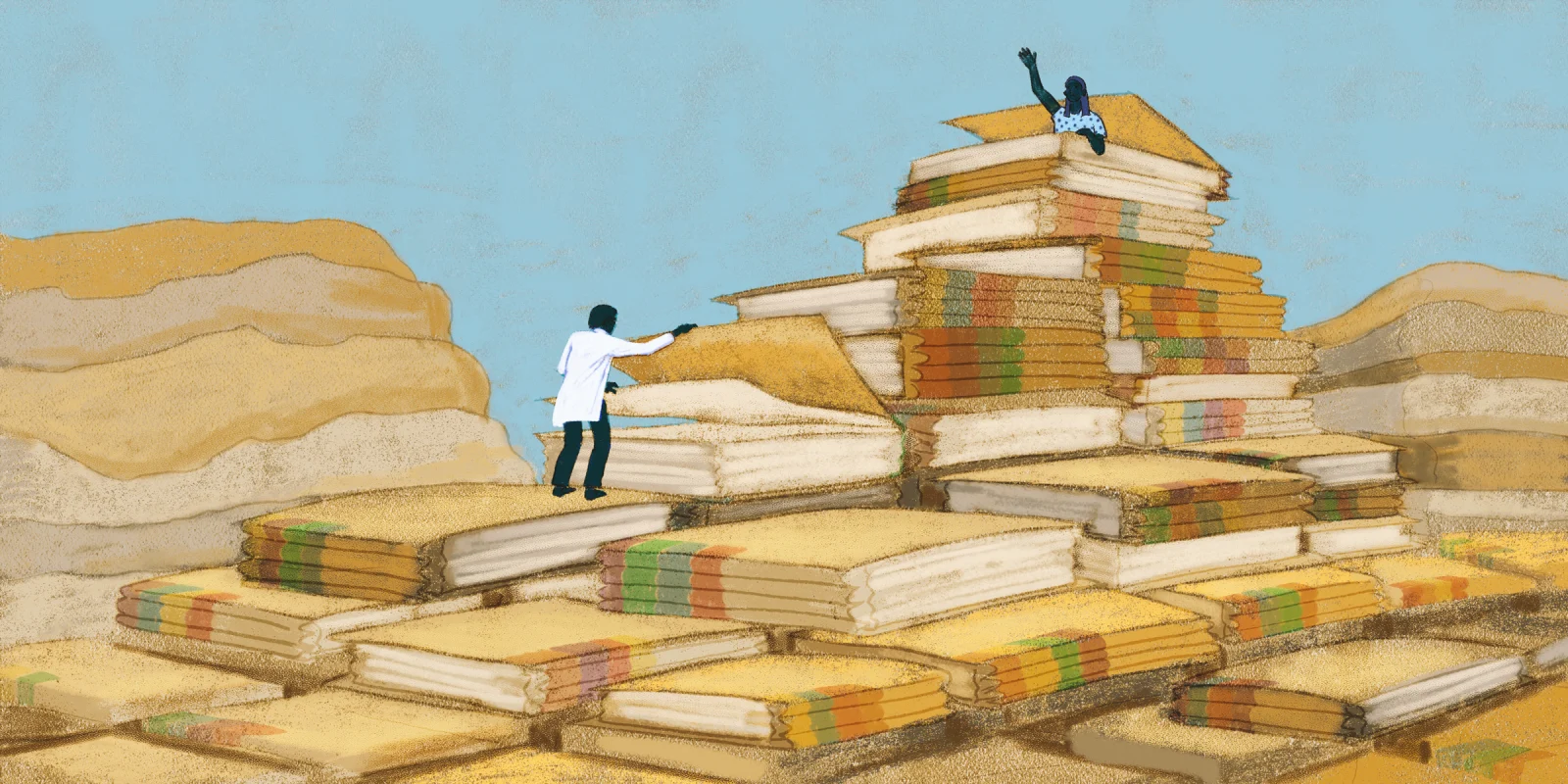
I’m clicking through note after note, each one longer than the last because somebody copy-pasted the previous novel and tacked on two extra sentences. Eight months back, I finally find the golden nugget: “dyspepsia, no improvement with lifestyle changes.” That’s what we’re scoping her for. Took me a solid eight minutes to locate 12 words.
I still asked her myself when I went in for consent — because, of course, I did — but I hate walking in blind.
Then there’s the irony: After the case, I’m required to write a small book myself. Procedure note, findings, recommendations, quality metrics, a dozen checkboxes so billing doesn’t reject it. I always stick a one-paragraph, plain-English summary at the top so the next human isn’t cursed to repeat my archaeology project, but the note still balloons to four pages of auto-text garbage. I’m part of the problem the second I hit “sign.”
The next patient after her was an open-access colonoscopy from an outside doc. Records came over as a 114-page faxed PDF that somehow contained everything except the reason for the scope and the last three colonoscopy reports. Back to square one — ask the patient, hope their memory is good.
Rinse and repeat all day.
Some days the stars align and the indication is clear in 10 seconds. Most days, I’m already tired before the first scope because I’ve spent half an hour playing detective across three different EHR tabs and a blurry PDF.
Every single one of us is doing this to each other. My consult notes going back to primary care are just as bloated because the system demands it. We’re all drowning in duplicated labs, social history from 2009, and immunization refusals from three practice changes ago.
The EHR is miraculous when it works and soul-crushing when it doesn’t. All that unbillable chart biopsy time adds up — easily a couple hours a day — straight into the burnout furnace.
My friends in other specialties say the exact same thing. We jokingly call it “chart bloat syndrome.” Not in the ICD-10 yet, but it should be.
I keep hoping AI is going to swoop in and fix this mess. So far, the AI notes I’ve seen are longer and more flowery than anything I could write on my worst day. The summarization tools are getting better, but I still break out in a cold sweat imagining some critical detail disappearing because an algorithm decided it was “low yield.”
Until we all commit to writing shorter, smarter notes — and the system stops punishing us for it — this is just the job now. Less noise, more signal. That’s all we want. A couple fewer clicks and a little less redundancy would feel like a week of vacation.
Honestly, some days I miss paper charts. At least you could flip straight to the last progress note.
What’s your strategy for surviving documentation overload? Share in the comments.
Dr. Nishant Tripathi is an internal medicine specialist with a subspecialty in gastroenterology, located in Lexington, KY. He graduated from Rajshahi Medical College in 2009 and has experience in gastroenterology, hepatology, and therapeutic endoscopy. Dr. Tripathi has contributed to several publications, including studies on immunization adverse events, vascular bands on esophageal manometry, venous aberration, cinnamon supplementation for glycemic control, and low advanced glycation end products diet and its impact on metabolic risk factors. His work has been cited multiple times in other scholarly articles. He is a 2025–2026 Doximity Op-Med Fellow.
Illustration by Jennifer Bogartz