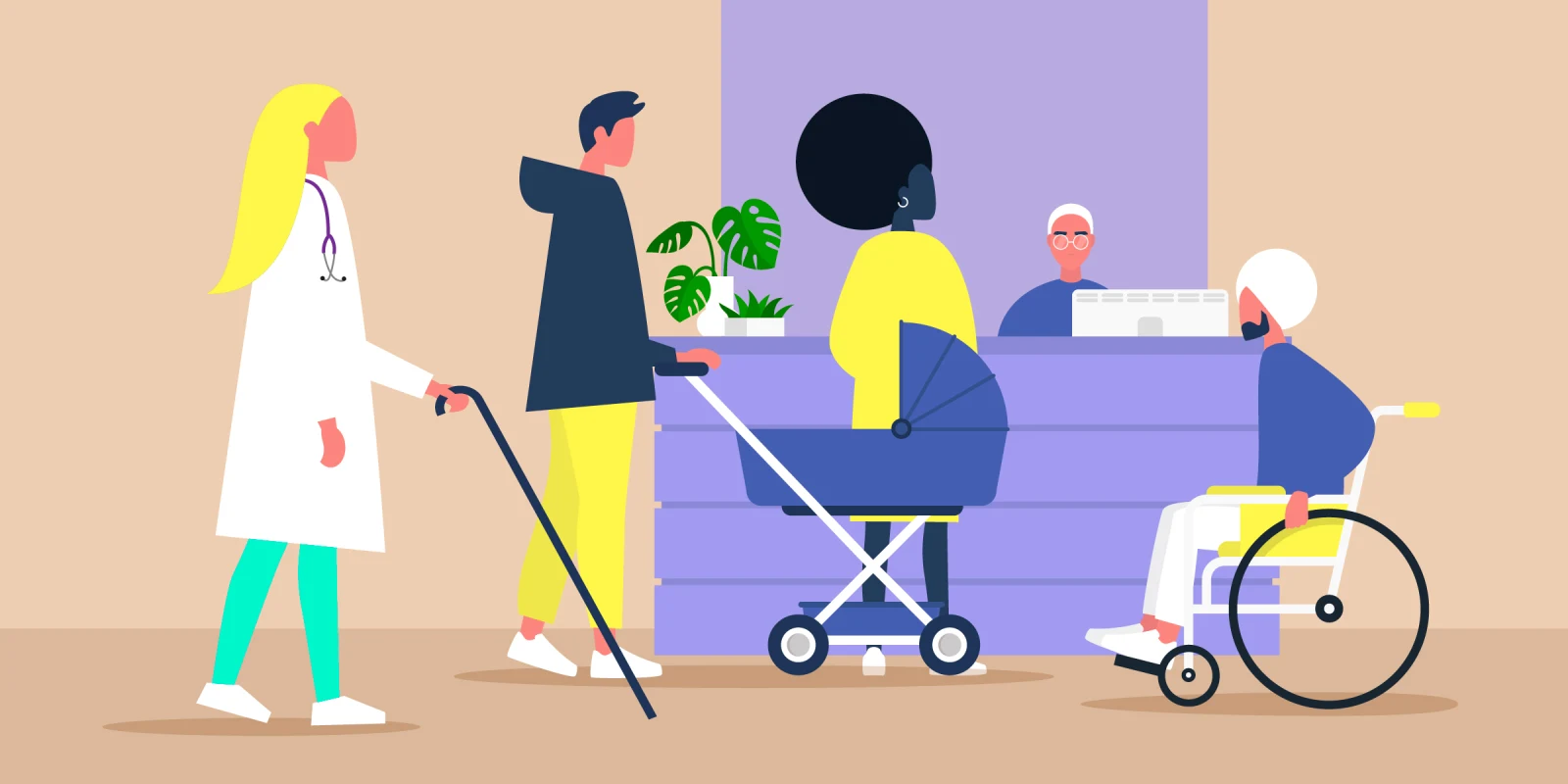

I embrace a specific label, but you can’t tell by looking at me. At first glance, I’m a tall, blonde woman who wears teal, boxy scrubs and a colorful cap every day. I don’t limp. I speak clearly. I don’t even use my cane anymore. But I’m disabled.
I was 28 – invincible, in the perfect career, my whole “normal” life ahead. As clinicians, we are viewed by others as the strongest of the herd with the superpowers to treat others in their time of need. And just like so many of our patients tell us, all of that can change in an instant.
To sum up an eight-year struggle, my left ear sustained severe burns, leaving me with a necrotic tympanic membrane. My hearing was dead. Many surgeries and complications followed, with a slipped graft resulting in a perilymph fluid leak, continued hearing loss, and the additional problems of extreme vertigo, balance issues, and tinnitus. I was a new member of the healthcare system, this time as a patient. I embraced every new procedure — and there were many — with cautious optimism, always hoping that maybe this time it would work. And every time, I was met with a new disappointment, a new obstacle. I can see how our patients feel frustrated every day.
As a newly disabled clinician, I learned to adapt to previously quotidian workday encounters. I position myself so that the conversation in the hallway or patient room is toward my good ear. I tilt my head to optimize my hearing. Small adjustments that most won’t even notice are part of my new routine. Ordinary work is harder. It’s difficult to hear in an OR with loud suction, chattering voices, machines beeping, and surgeons mumbling. In a healthcare setting, masks are highly effective for curbing the spread of disease, but make it impossible for me to read lips.
There is still a fear that exists with wearing a label of disability as a clinician. When we re-credential in the hospital system, we are asked about any disabilities. Will we be treated differently if we click "yes"? Will my job be impacted? My disability does not affect my ability to care for and treat patients. Yet, I feel weaker and less capable every time I need to check that box. Clinicians are supposed to have superpowers; be unbreakable and unstoppable. We provide a vision of structure, strength, and stability. No one would likely readily admit it; however, they would not want a disabled clinician.
But there is a positive to this experience. Being a clinician in need of healthcare yourself changes the way you think, interact, and relate to your patients. Like many of my patients, I knew what it was like to have my self-confidence and sense of identity destroyed. I found myself grappling with some of the very same questions my patients would ask of me: “Why did this happen to me?” This is the one question I dread. And the one question I have never been able to answer – not even for myself.
When I see a patient struggling to embrace a new hurdle they need to overcome, I have become more confident in sharing my personal journey. For years, I cautiously limped through explaining the hoops I jumped through to make the progress that got me to where I am today, partly afraid to relive it in my mind and partly out of fear of embarrassment and judgment. However, now I freely share how I understand the pain and frustration of having to attend rehab to relearn a skill you once easily possessed, or how, to this day, I keep a cane in the trunk of my car for whenever I experience vertigo. I show them that it can be done if you put in the work. I explain there will be setbacks, painful days, easy days, big gains, and acceptance.
Clinicians are not exempt from needing healthcare, even though we might wish it were true. While we may have superior medical knowledge compared to the everyday patient, when it comes to caring for ourselves, the old adage “doctors make the worst patients” holds true. I always felt I needed someone with me at post-op appointments to process all the information and ensure I did not miss anything important. It was difficult to realize I needed help full-time after my hospitalization. To depend on others to help me regain mobility, complete my ADLs alone, when I was supposed to be the one helping others. I was truly vulnerable. I was finally on “the other side,” and I did not enjoy it. And this is exactly what patients need to hear. I may be a clinician, but I’m also human. I can attest to the struggles I know a patient will face — and can overcome.
My disability has given me a new appreciation for the little things in life, for healthcare, and for being a patient. My new coping skills are wonderful, but even better is how I interact with patients. One of my passions for hairwashing in the OR partially stems from my own experience of having hair shaved for ear surgery and going home with matted blood and a head wrap to wear for three days. I know the disgust a patient feels, and being able to spare just one person that negativity heals me a bit.
My conversations may sound different from the typical clinician — more familiar. I have told many patients that I know what it’s like to be afraid, to lose some autonomy for a length of time, to worry about my job, and to need to fight for recovery. Exposing my own vulnerabilities and weaknesses has actually strengthened my patient relationships and allowed for more meaningful connections. Knowing someone who has faced an uphill battle can make you feel more powerful as a patient.
I will keep wearing my disability label for my patients, as their advocate and their clinician. My disability did not diminish my ability to care for patients; it transformed it. I may no longer be invincible, but I learned that the strongest clinicians are not the ones who never break. They are the ones who embrace the challenges we face, turning their experiences into empathy, resilience, and healing. This is my new superpower.