
A great morning at the clinic starts with a single name on my schedule: Martin*. Soon, the name multiplies — the parents, their adult daughters, their spouses. Caring for an entire family offers more than just relational warmth; it’s a window into the social determinants that shape health, providing data that can’t be found in a lab report. It’s the closest we get to understanding how life experiences shape illness, and how a support system can be the most potent prescription of all.
The Martins are your typical American mid-size family. They include the parents, two of their adult daughters with their spouses, and their young adult children. They are fun-loving and wholesome. They are highly successful in many aspects of life. The patriarch, John*, is retired from the military. He is driven, disciplined, and jovial. His personality is indicative of how he treats his Type 2 diabetes. He runs regularly, despite his lower-back pain. He adjusts his carbs in moderation. His smile extends to his eyes.
The matriarch, Joan*, is a woman in charge. She is strong, intelligent, a bit cheeky, and hypertensive. She jokes with a twinkle in her eyes that makes me smile and shake my head at the same time. She asks about my family at every visit and genuinely wants to know. She worries about me. We have gotten her blood pressure management down to a science. It is generally lower in the spring and summer when she can love on her vegetable garden, except in 2020 when it wasn’t. When I gently probed for a cause, I expected an answer related to the pandemic. Instead, she paused, the twinkle in her eye extinguished. She looked away. “George Floyd’s murder is getting to me.” She didn’t use the sterile term “death,” and the distinction hung in the air between us.
I leaned in as she shared her angst. As people of color born in the ’50s in the South, they have navigated life on the receiving end of systematic exclusion. They don’t dwell on the hardship, but comments will occasionally escape, giving me a glimpse into their family’s stressors. As a first-generation Asian American who benefited from the activism of their predecessors, I don’t take those stressors lightly. The Martins would rather focus on the joys of life, but the inherited and lived anxieties of being Black in the South are never far away. Within the safe confines of my clinic room, when I step back from the EMR, they will occasionally let me into their lives, like Joan did that day.
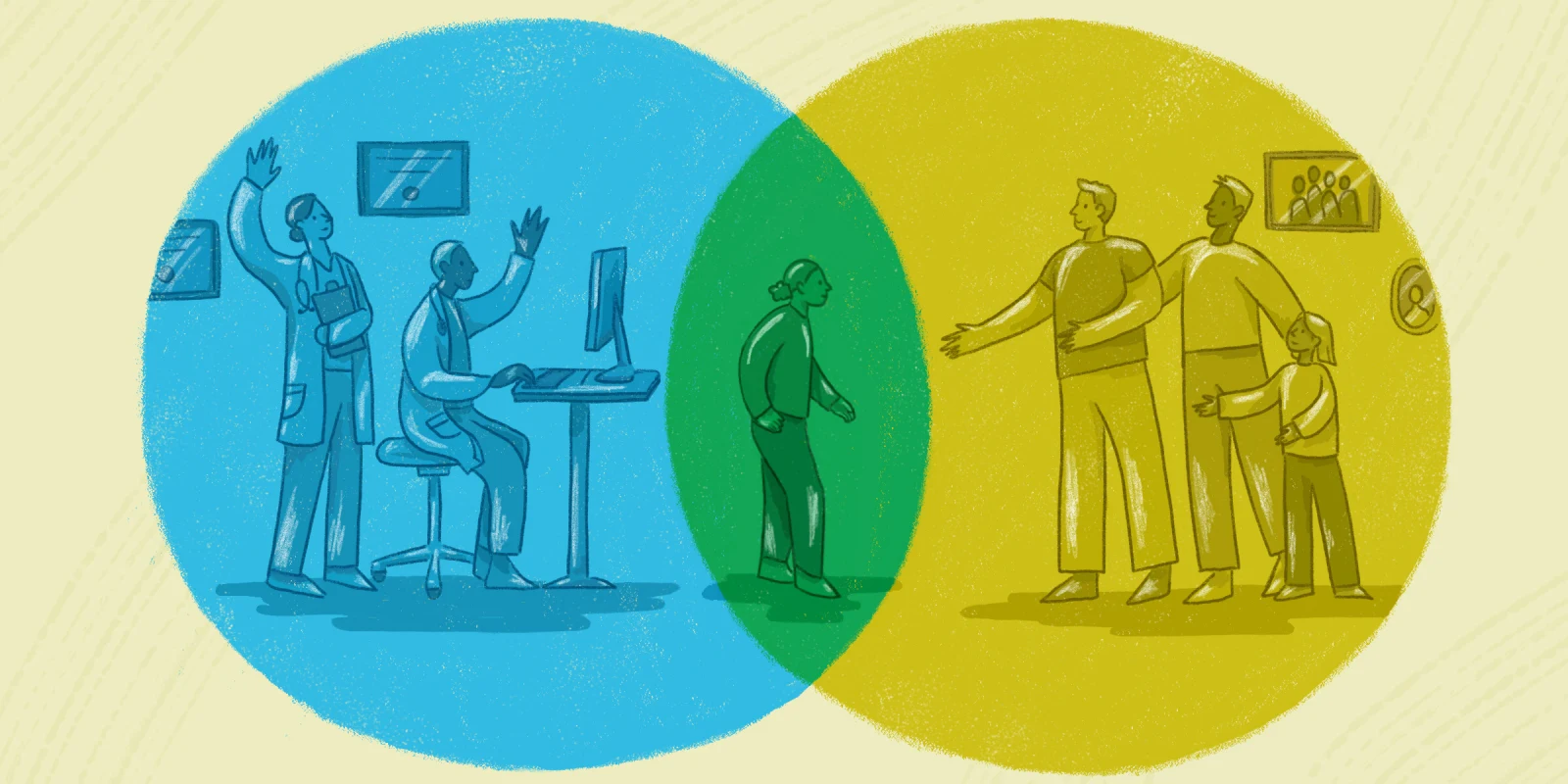
One of the antidotes to their lived chronic stress is their collective relationship. This family shares a deep sense of faith. They worry about each other. They help each other. The whole family, including the two sons-in-law, seems to enjoy each other’s company. All six of them prefer to schedule their appointments with me on the same day, with two goals in mind: 1) They all fast for labs and then go out to brunch together. 2) They trash talk across the clinic rooms.
They are boisterous. They will poke their heads out of the doors and make jabs at each other while waiting for me, competing over whose blood pressure is lower that day. I readily admit that I want to be invited to their family brunch. These interactions provide information for me. Their tight family bonds provide an anchor as they navigate their chronic illnesses. The daughters work out together and discuss healthy food options. They lovingly check in on their father’s carb intake. Joan helps with the kids so her daughters can exercise after work. They cook and share vegetables from their gardens. They push each other to get healthier, and I firmly believe this culture of support improves their health outcomes. When we address their medical challenges, we discuss how the family can support them in overcoming their health issues.
From the Martins, I’ve learned that while medication provides the biochemical fix, relationships are the catalyst for healing. No apology can erase the racism they’ve faced, but I hope the sanctuary of my clinic room offers a small measure of peace. In these moments, I see their true medicine: their laughter. It’s contagious, rumbling up from deep in their bellies, a sound that reminds the world that they take up space. In an epidemic of loneliness, their togetherness is a triumph. Their love is an act of resistance.
What have your patients taught you about the power of community? Share in the comments.
Sara Tariq, MD, is an internal medicine physician at Northern Virginia Family Practice with over two decades of clinical experience. Dr. Tariq is a dedicated advocate for systemic transformation within health care, passionately addressing inequities and fostering cultural shifts through relationship-centered care, leadership development, and active community engagement.
*Names were changed to protect patient identities.
Illustration by Diana Connolly