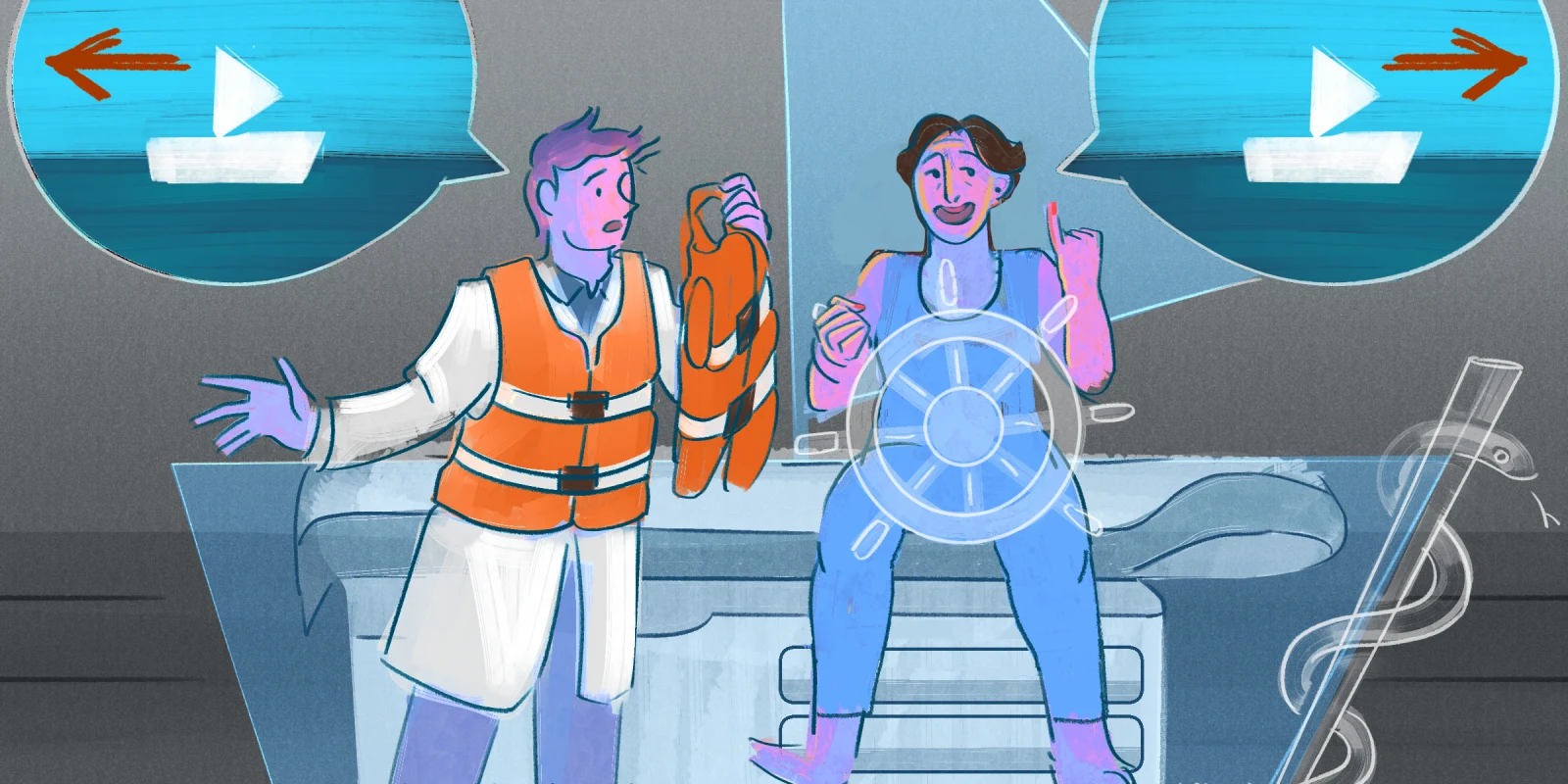

In modern day medicine, we generally think of the physician-patient relationship as a partnership. Partnerships require input from both sides and take into account the opinions, feelings, and goals of both sides to move forward together. Gone is the paternalistic relationship that only accounted for the input of one side. This is certainly a positive — as with anything in life, the more buy-in or “skin in the game” we have, the more involved and responsible we will be. Nevertheless, this shift toward a partnership brings about unique challenges for physicians. We are taught to listen, observe, examine, diagnose, treat, and heal. But what happens when our goals, recommendations, or desired treatment plan conflicts with a patient’s desires?
One of the biggest lessons I learned in medical school was “patients are allowed to make bad decisions.” I tell this to most medical students I work with as a resident because it is key to understanding the power structure of the physician-patient relationship. As physicians, we listen to and strive to understand the goals of our patients; we make medical recommendations based on our training, knowledge, and evaluation; and then, together, we come to agreement on a path forward. Of course, the partnership is not equal — both sides bring vastly different experiences to the table. We have extensive training in anatomy, physiology, pathophysiology, and pharmacology. Through our training we have repeatedly seen “bread-and-butter” cases with many “zebras” along the way. We have developed treatment frameworks and picked up on prognostic indicators over years of caring for countless patients. Our patients, on the other hand, bring an array of different experiences that we typically have little expertise in, often but not always outside of the medical realm. They generally know their own body and history better than we ever will. And at times, our goals or plans may differ — and that’s OK.
Not accepting that patients can make what we may consider to be bad decisions — from declining a recommended medication to opting against further workup of an undifferentiated issue — is a surefire way to burnout. If physicians don’t accept this, they will constantly be working against the grain to change the mind of someone who often already has theirs made up. Additionally, there are negatives to not respecting a decision, such as eroding trust of the patient and subsequent hesitancy surrounding future recommendations, diminished patient autonomy, and the provision of care that doesn’t align with the patient’s values.
That being said, physician-patient relationships are a fluid partnership just like any other. At times, we rely on one side more than the other and the specific situation at hand often dictates how we come to an agreement on a proposed course of action. For instance, I once had a patient ask “Can’t we just repeat the scan later and monitor it?” in regard to a large, concerning pancreatic mass. He received much stronger and sterner advice from me than he would have for a more trivial or less concerning issue. “It’s always your choice, but trust me, we need to get you referred for a biopsy — this isn’t something you want to wait on.” He then agreed with moving forward with my recommendations despite his initial hesitancy. My patients know they have a large say in their care — and I believe they trust and appreciate this amount of autonomy. At the same time, they also know I don’t lecture them or push them on every single issue, but if I truly feel that they are making a decision that is bad for their health, I will tell them. Honesty, truth, and openness will always benefit relationships, and the same goes for that of the physician and patient.
To have a substance powerful enough to successfully treat an ailment, there’s always a risk of that same component causing harm. The same goes for the physician-patient relationship and the choices we have to make. Autonomy means truly having a choice, and when choices vastly differ, so will the outcomes. We should not only encourage patient participation and autonomy when they agree with our recommendations, but all of the time. Of course, this is assuming an oriented patient with capacity and all the components that it entails: understanding, making a choice, appreciation, and reasoning. Assuming this is true, patients are certainly allowed to have different priorities, goals, and ultimately different choices than we would make or recommend. There are a myriad of reasons patients may make different choices — such as goals of care, religious beliefs, cost and affordability, willingness or ability to travel, or even different risk tolerance, among others. All of these reasons can contribute to a patient choosing (or forgoing) a treatment option, screening test, or workup that is not preferred in a perfect scenario.
At the end of the day, we make recommendations and do our best to educate our patients on the effects and consequences of the choices at hand. As a physician, my most rewarding experiences have been those where my patient and I worked together to reach a shared goal — and it hasn’t always been how I would’ve done it myself. Sometimes, I feel they are making “bad” choices despite my recommendations, but then I remember they aren’t my sole decisions to make.
How do you approach patients who make choices you wouldn’t? Share in the comments!
Dr. Del Carter is a family medicine resident physician in Tallahassee, FL. He enjoys traveling, watching Florida Gators sports, working on cars and motorcycles, and spending time with friends and family. He can be found on Instagram and X at @DelCarterMD. Dr. Carter was a 2024–2025 Doximity Op-Med Fellow, and continues as a 2025–2026 Doximity Op-Med Fellow.
Illustration by April Brust