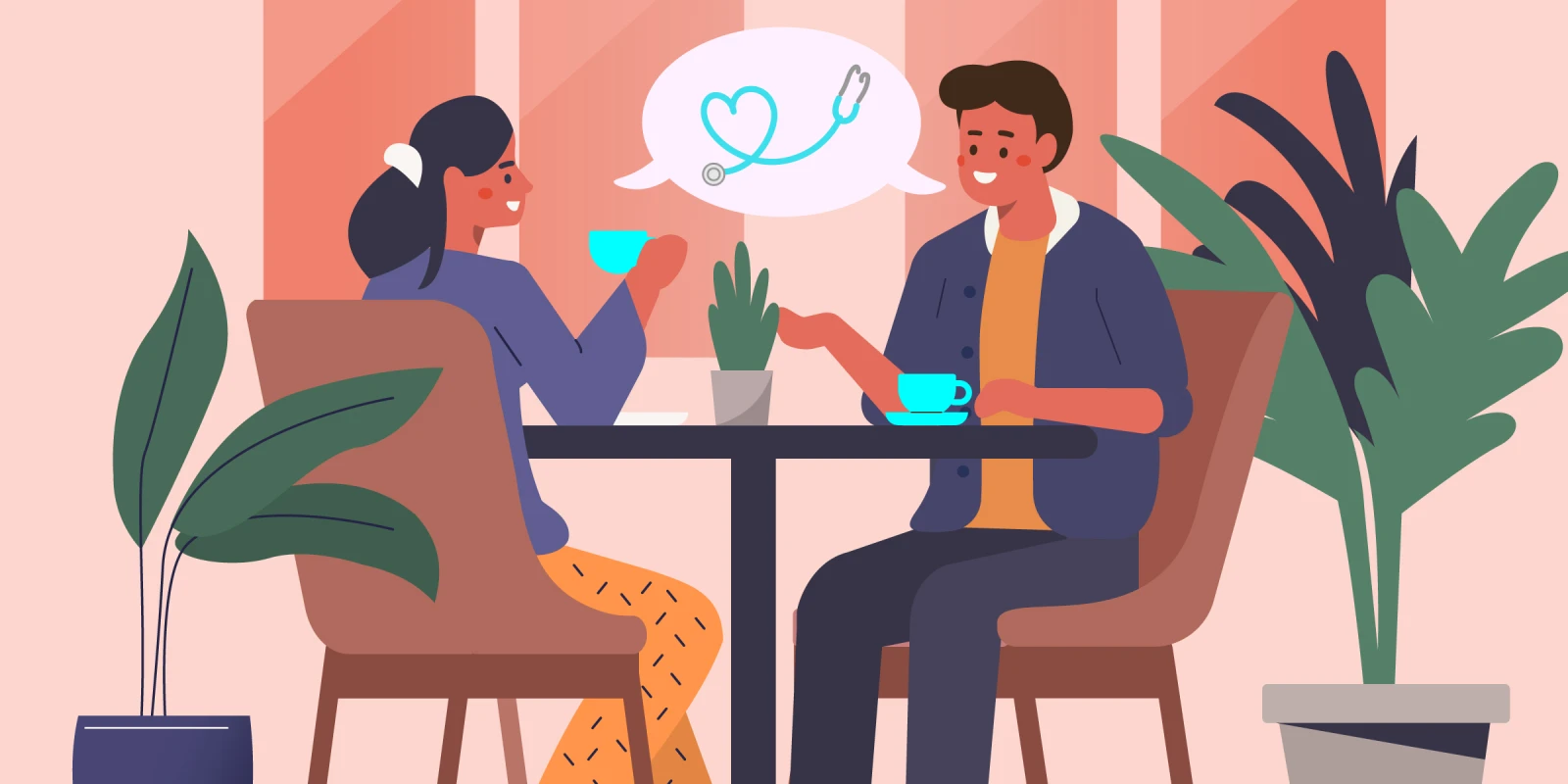
I came into family medicine expecting to know my patients — their illnesses, their coping strategies, their support networks. What I didn’t expect was how much of my work would involve getting to know the complexities of their personal and romantic lives. Even while focusing on “just the medicine,” the relationships that my patients experience become obvious to me, and permeate the clinical space. During my time as a family medicine physician, I’ve seen a single woman get engaged, a couple experience a miscarriage, and an aging mother brought in by her exhausted caregiver son. I’ve also seen substance use disorders after a divorce, the progressive shift from love to hate in a marriage, and estranged family members reconnect after a death. As it turns out, people see their doctors the most frequently during momentous interpersonal transitions, whether good or painful. My patient experiences are a testament to the idea that no matter how straightforward a patient’s chief concern might sound, human complexity and emotions are irrevocably entangled within.
Ultimately, my work has shown me that life — and health — is a matter of human connection. As a result, the patients who make me the saddest are the ones who have rejected their community and who no longer have a support system. I see these patients often at the end of life or battling substance use disorders, and it has become clear to me that one of the most dangerous things you can do for your health is to be alone and isolated from others.
There is robust evidence to support that isolation and the well-popularized “loneliness epidemic” can contribute to measurable harm. A meta-analysis of more than 2 million individuals found that social isolation and loneliness were associated with 32% and 14% higher risks of death, respectively, often specifically linked to cardiovascular mortality. At a population level, the WHO estimates that loneliness contributes to hundreds of thousands of deaths annually worldwide.
The good news is that broken hearts can heal, and our social support makes us stronger: patients with strong social ties demonstrate better treatment adherence, recovery trajectories, and resilience through chronic illness. Being exposed to the myriad expressions of love, be it successful or thwarted, romantic or platonic, filial or paternal, has shown me how people support loved ones effectively. As cliché as it sounds, my patients have taught me that people get through difficult situations by surrounding themselves with love in some shape or form, including but not limited to friends, family, neighbors, and pets. Love means showing up for others in tough moments, and I’ve seen patients go out of their way to be present for their loved ones through difficult diagnoses, loss, and big life changes. Bearing witness to my patients’ love stories has made the data visceral — connection and love are integral, not peripheral, to care. When you start looking at love as a proxy for sustained, meaningful relationships, it becomes a powerful determinant of health and proof that healing is both biological and social.
As much as I preach social connection and community to my patients, I would be remiss to ignore the isolating nature of medical training. When I get home after a long shift and am alone with my thoughts at last, it can be hard to remember why I began this journey. During this stage of residency, I’ve felt particularly burned out and disillusioned with primary care and medicine, almost like I’m falling out of love with the career that once felt so special. It sometimes feels as though I’ve put my personal life on hold to remain invested in my patients’ lives, and some days, medicine has been less like a job and more like a long-term partnership, with both highs and lows.
I recently read the book “Bittersweet” by Susan Cain, which helped me reframe my experience. Cain explains that embracing bittersweet emotions and experiences allows for a greater sense of connection with those around us. The love I see within medicine is particularly bittersweet, but it keeps me going. I still get misty-eyed when I deliver babies. When a parent rolls their eyes at the silly thing their child did, I still laugh and recollect the times my parents grumbled about me doing something similar. Every time I drive home after experiencing a patient death, I listen to the same song with lyrics about how unconditional love transcends death. In what feels like an endless path, my co-residents and mentors have been some of the best community to be around. Ultimately, no matter how bitter or sweet, love stories are at the foundation of why I do this.