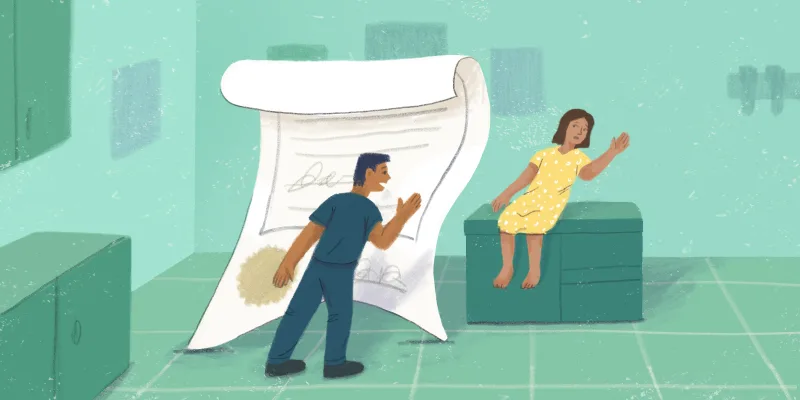

It’s 1:47 a.m. The hospital hallways are quiet except for the hum of fluorescent lights and the soft beeping of monitors down the corridor. I’m in the call room, typing my last note of the night, eyes heavy, fingers stiff. My shift technically ended an hour ago, but I’m still here. Not because of patient care, but because of documentation.
It’s a familiar scene for every resident: hours spent entering data instead of digesting it, charting instead of learning, clicking boxes instead of connecting.
I used to think this was just the price of training. But this past year, something shifted.
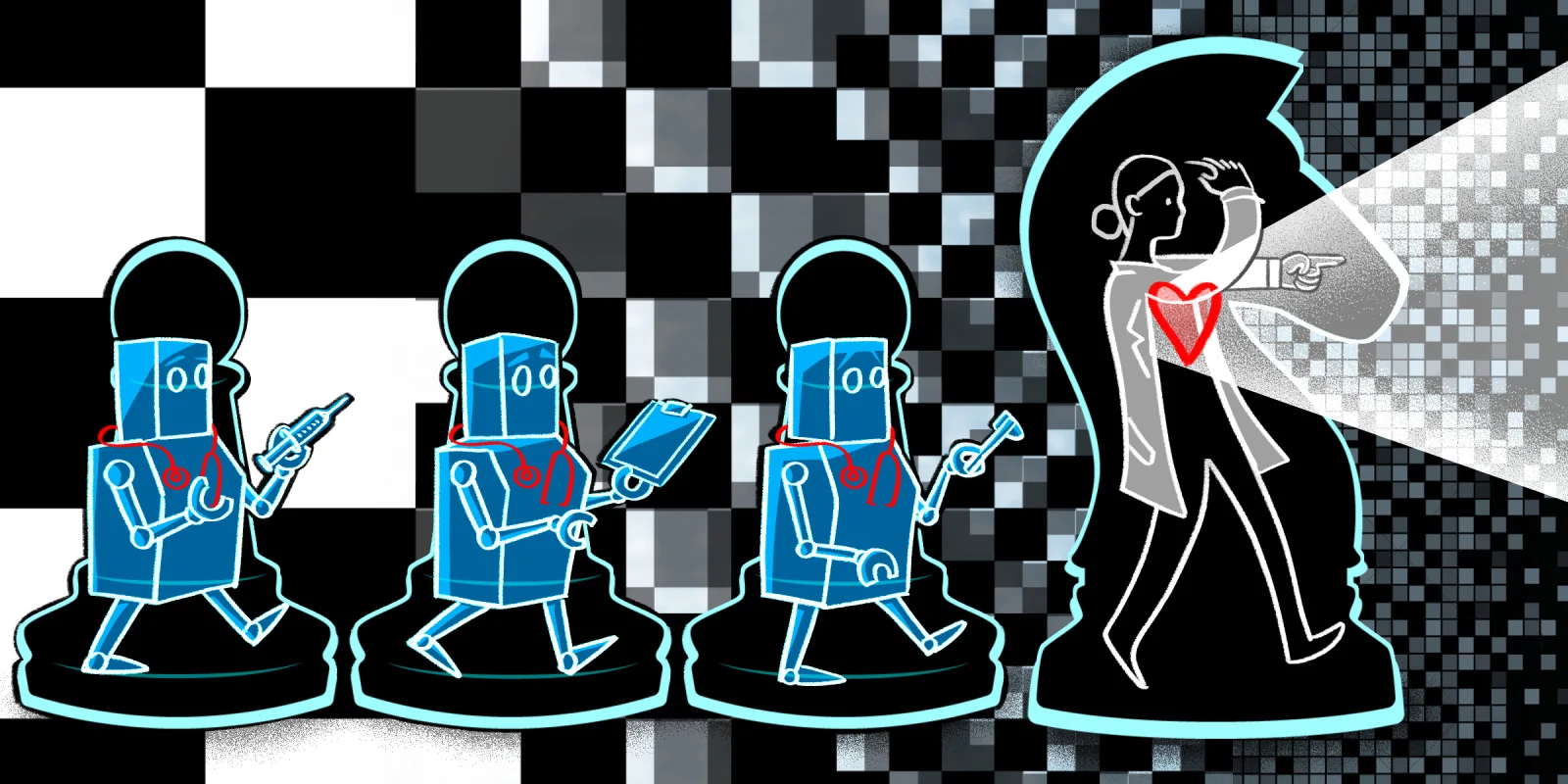
Artificial intelligence became my silent teammate, helping me weather the documentation storm and shortening the amount of time I spent on it (even if I was still up past midnight).
With tools like Doximity Scribe and others, documentation no longer felt like a nightly marathon. AI-generated drafts of patient notes allowed me to focus on refining the narrative instead of constructing it from scratch. Chart summarization and discharge summary generators streamlined what once took hours.
But saving me time wasn’t all AI was capable of. Between patient encounters, I would upload complex clinical cases into AI-driven platforms and ask them to explain the pathophysiology in simpler, more structured ways, which it was more than able to do. And when I reviewed board-style questions, AI helped me break down the reasoning behind each option, explaining why a certain answer was right and the others were wrong. It was like having an endlessly patient tutor who never tired of my “why” and “how.” And yes, accuracy mattered. I learned that AI was powerful, but not perfect, so I used it as a guide rather than a replacement for my own judgment. Along the way, it pushed me to ask better questions.
Further, during trauma call preparation, I used AI-based simulation prompts to walk through cases like managing a crashing polytrauma patient or an unexpected airway emergency. The AI challenged my decisions step by step, asking, “What’s your next move? What medication and dose? What would you do if the blood pressure drops?” Afterward, it generated detailed feedback that mirrored the kind of Socratic teaching I rarely have the opportunity to get in real life.
That real-time, adaptive coaching changed the way I approach medicine. It helped me slow down, reflect, and think through processes that residency often forces you to rush. It also gave me the courage to admit what I didn’t know, because AI, unlike a pre-rounding hierarchy, never made me feel small for asking basic questions.
And with this regained understanding, as well as all the time I’ve been given back, for myself, for rest, and for learning, I’ve found space to read about my patients’ conditions, to rest without guilt, and to be more present during morning rounds. AI hasn’t replaced my effort. It has redirected it toward what truly matters.
Still, I’m deeply aware of the ethical tension that comes with using AI in medicine. Patient data must remain sacred. Transparency, bias mitigation, and security are not optional; they are moral imperatives. The goal is not to let machines replace human discernment or empathy, but to use them to strengthen both.
For me, the introduction of AI has not made medicine more mechanical. It has made it more human. By taking away the busywork that clutters our days, AI has helped me return to the essence of why I entered this field: to think critically, learn continuously, and care deeply.
Residency will always be demanding. The long hours, the pressure, and the emotional toll are part of the crucible that shapes us. But if AI continues to evolve responsibly, it can restore balance to our training, allowing us to study medicine not as scribes lost behind screens, but as students of life, who are learning once again at the bedside, with clarity and presence.
And maybe one day, when that cursor blinks at 1:47 a.m., it won’t be a symbol of exhaustion, but a quiet reminder that help and hope can exist in unexpected forms.
How do you use AI in medicine? Share in the comments!
Dr. Onaola Adedeji is a family medicine resident and passionate leader who blends medical expertise with faith-driven purpose to inspire and empower others. Off the clock, she’s likely chasing a runner’s high, whipping up something delicious in the kitchen, or getting lost in a deep, soul-stirring conversation. She can be found on Instagram @onaolaadedejimd. Dr. Adedeji is a 2025–2026 Doximity Op-Med Fellow.
Illustration by April Brust