
My first several years of practice as a general surgeon were rocky to say the least. You might even say tumultuous. Clinically, I was good. My outcomes were safe, my schedule was always busy, and I exceeded my contractual RVU requirements within six months. However, I had a problem. At times, I was an emotional time bomb waiting to explode, and when I did, it came out through confrontations with anesthesia, nursing staff, and other colleagues.
In January of my fifth year of general surgery residency, my wife underwent a prophylactic double mastectomy with straight-to-implant reconstruction. Having four generations of breast cancer spanning both sides of her family, with the earliest case at age 30, my wife’s estimated risk of cancer was greater than 40%. That would turn out to be the first of seven surgeries over 2.5 years. This was all evolving as I was graduating and we were preparing to move to another state. After not matching for an endocrine fellowship, I joined a community hospital staff with three partners, two senior and nearing retirement, and one only a few years ahead of me.
By the time I started my new position, my wife was only partially reconstructed, missing an implant on one side and having an expander causing tissue damage on the other. Before settling into the position, we found ourselves in a fight with hospital administration over the insurance coverage for my wife’s reconstruction. Under their ERISA health plan, they argued they were not paying for the remainder of her reconstruction because it was prophylactic and not related to a cancer diagnosis. The battle for coverage was long and painful, and in the midst of it, she underwent emergency surgery to remove the remaining expander before it caused skin necrosis.
Ultimately, we were able to utilize COBRA benefits and found an excellent plastic surgeon closer to our new home. The process, however, significantly tainted our relationship with my employer and left us feeling betrayed and abandoned without a network of support. Admittedly, I was also carrying a boulder-sized chip on my shoulder. Being good at surgery, but not getting into a fellowship, I felt like I had something to prove. So, anytime I struggled, I found myself living with the extremely common impostor syndrome. Inside, I was crumbling. Frustrated and embarrassed, the anger I had learned to internalize began to surface.
After one incident, a senior partner spoke to me. He was kind yet firm, but he was not helpful. His advice was straightforward: “Stop it.” He could not understand why I was “so angry” and had such a short fuse. What was missed that day, and multiple times before, was an opportunity to see a surgeon in distress. There is a difference, I have learned, in speaking to someone versus speaking with them. If he had spoken with me instead of to me, he might have listened to me instead of me just listening to him. He might have learned about the stress I was experiencing in all areas of my life – a new position in a new city, our new older home requiring extensive renovations, multiple surgeries and medical procedures for my wife, and insurance issues with my employer.
In the same way that my young children may inexplicably fly off the handle because they are tired, hungry, or for any number of other reasons, I was crying out for help, and no one could hear me. My wife encouraged me to see a counselor, for which I am grateful – but I can’t help but wonder if another doctor had checked in with me during our transition, met with me for coffee now and then to see how my wife was doing, or just listened and offered support and mentorship through some of the ups and downs, what a difference it could have made. The best person to understand a surgeon’s life is indeed another surgeon.
Looking back, after 10 years in practice, I don’t even recognize the person I was during those stress-filled years. The situations I experienced are not universal, but the lessons learned may be more common than we realize. Just shy of being labeled a 'problem physician' myself, I am now wondering whether our field really has that many problem physicians, or if we simply fail to recognize that they are physicians with problems. I would bet that in most cases, the problem is not the person.
I can’t go back and undo my early years, but I have chosen instead to use them as inspiration to help and encourage others. I have found that young surgeons coming out of residency and fellowship need more than just five proctored cases, the common requirements for privileges. Mentoring is also vital to the success of a surgeon fresh out of training. In fact, surgeons at every stage of their careers need someone they can call for advice at midnight, especially in the first five years. That’s why my former residents know I am always available. It is a shame when a young surgeon fails to live up to their abilities after the time spent learning the craft of surgery.
In various forums, I have proposed that the ACS develop a mentorship program for this purpose. Can we come together as a community to support the next generation? Their success, or failure, is our responsibility. Through institutional change, we can better support surgeons early in their careers, so they never feel alone on an island.
How has mentorship helped you in your career as a physician? Share in the comments.
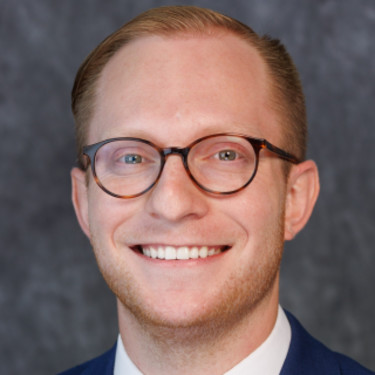
Jacob R. Hopping, MD, FACS, FASMBS, is a general and bariatric surgeon practicing in Peoria, Illinois. His primary clinical focus is robotic bariatric surgery. In addition to his practice, he is a singer/songwriter and releases music under the name Jacob Royle.
Image by woocat / Getty