

The average compensation for U.S. physicians was $438,269 in 2025, according to Doximity’s 2026 Physician Compensation Report. The report is based on surveys of more than 250,000 U.S. physicians who practice full-time, including about 23,000 in 2025 alone.
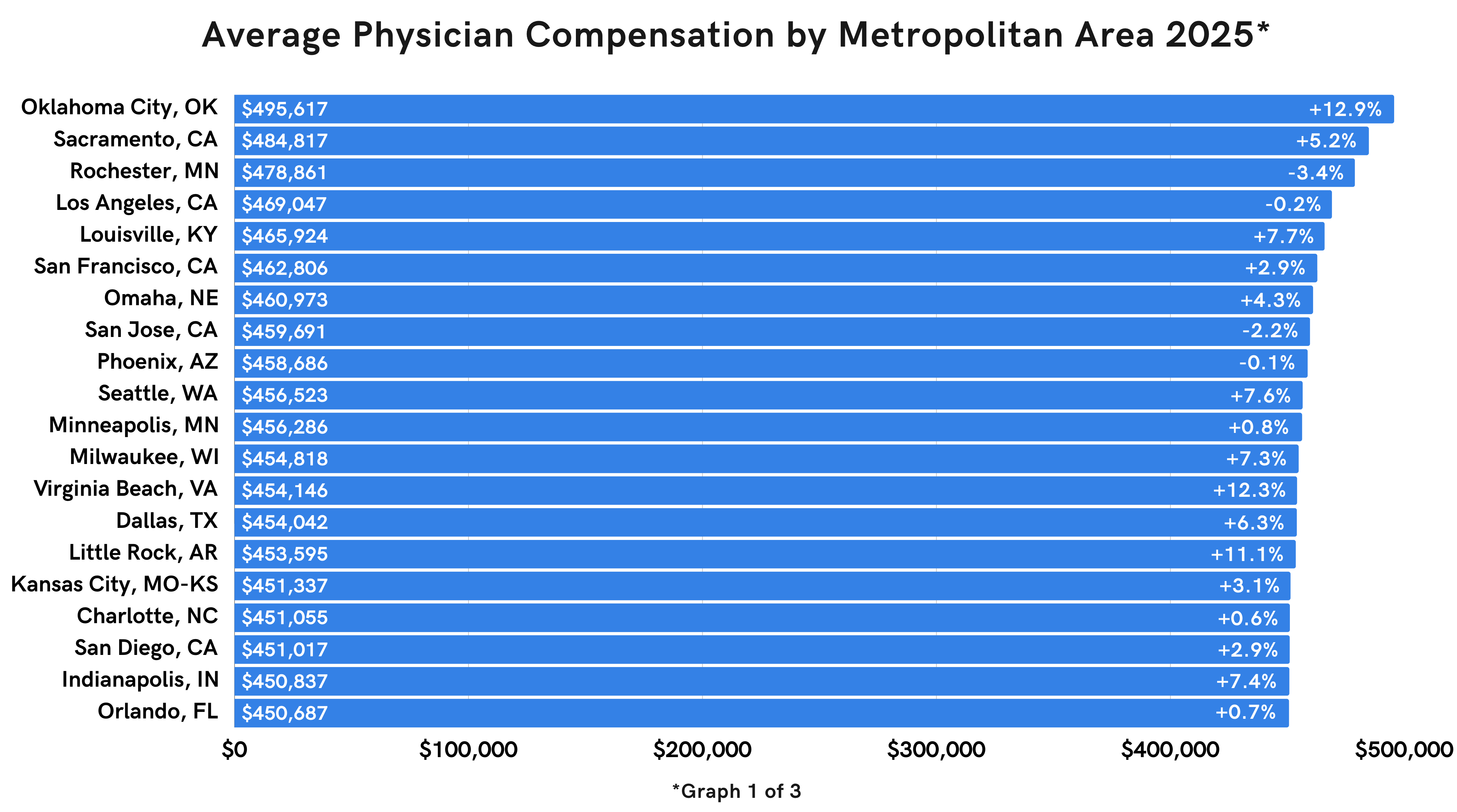
Across the 60 metropolitan areas examined, the area with the highest average compensation in 2025 was Oklahoma City, OK at $495,617.
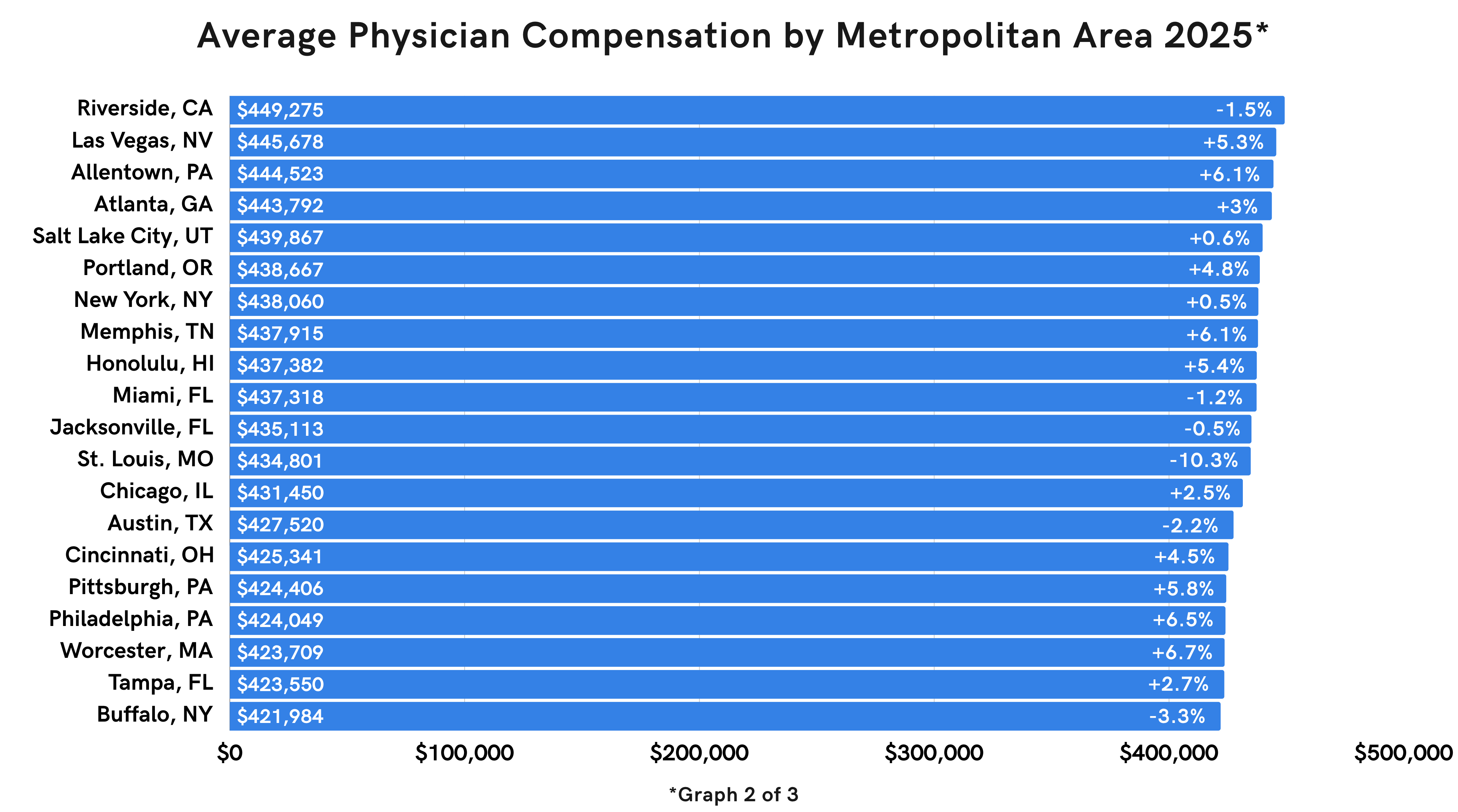
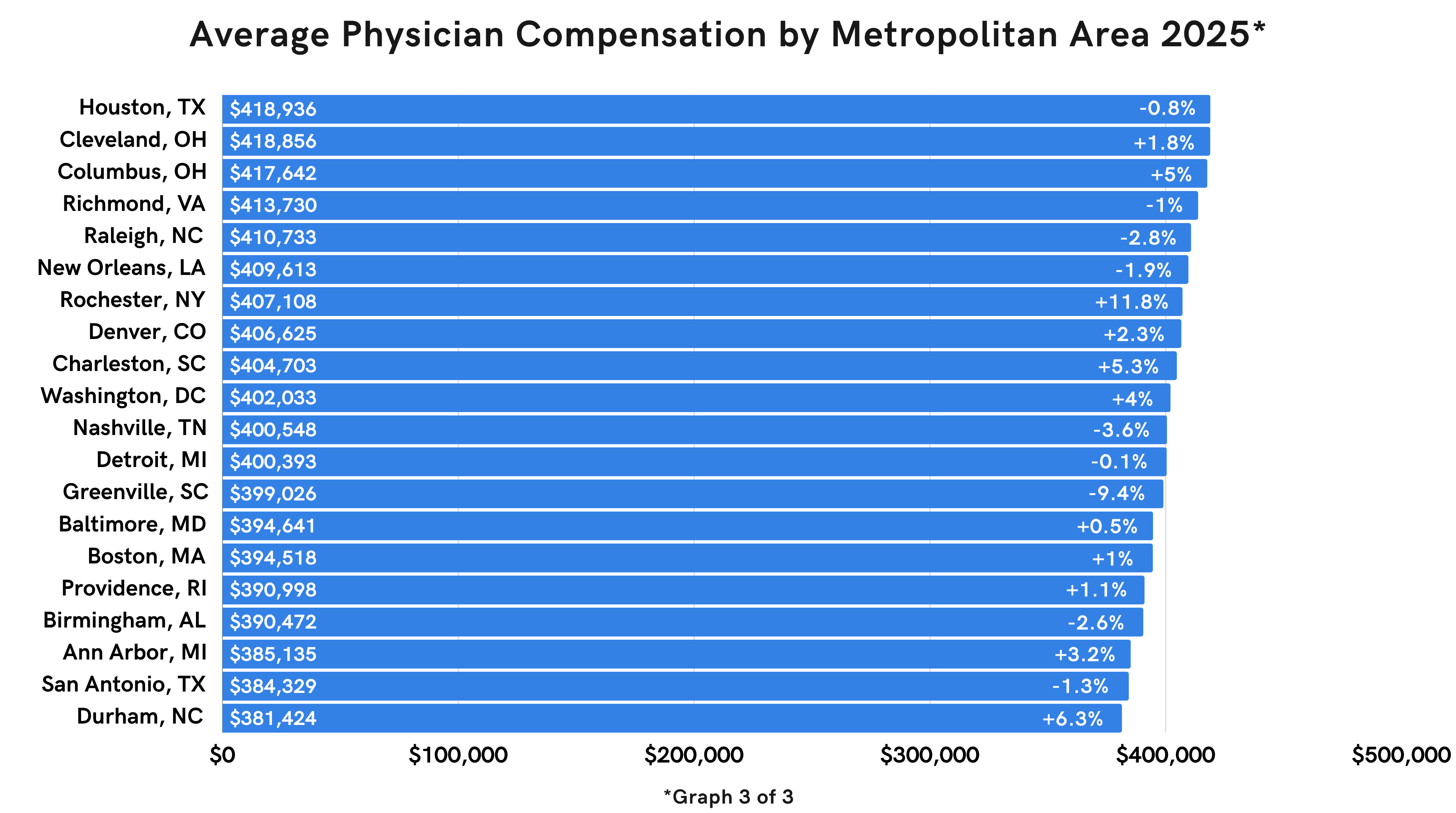
Most of the 10 metros with the highest average compensation were located on the West Coast and in the Midwest, including Rochester, MN ($478,861), Los Angeles ($469,047), and San Francisco ($462,806). In contrast, most of the 10 metros with the lowest average compensation were located on the East Coast and in the South, including Boston ($394,518) and San Antonio ($384,329).
A Growing Issue
The compensation report shows that overall physician pay rose for three years running. Average physician compensation went up in 41 out of the 60 metropolitan areas examined, with more than half seeing increases of at least 3%. At least one state in each of the four major U.S. regions was in the top 10 for highest growth compared with the prior year.
After factoring in inflation, however, physicians’ real compensation has actually decreased about 3% since 2017. Average real compensation was $332,976 in 2025, when adjusting for the U.S. Bureau of Labor Statistics’ Consumer Price Index (CPI) over the past eight years.
“There is an increasingly enlarging issue with physician payments all secondary to the inherent structure of healthcare,” said Nikhi Singh, MD, a plastic surgery resident at Indiana University. “Doctors find themselves in this unique circumstance because, for the most part, we no longer have a seat at the table.”
Yet even after adjusting for cost of living factors, Oklahoma City held the top spot for average compensation. Indianapolis, Milwaukee, Memphis, and Virginia Beach also landed in the top 10 this year due to a combination of relatively affordable living costs and increasing physician pay in those metros.
Metro areas with the lowest compensation adjusted for cost of living were predominantly concentrated along the East and West Coasts. Boston and Washington, DC topped this list for the third year in a row, joined by cities like Baltimore, Denver, and San Francisco, where higher living expenses weaken physician earning power despite nominal pay increases.
Looking for New Opportunities
In addition to low pay growth, broader pressures have compounded the strain on physicians.
About 82% of physicians said they are overworked and 85% said their clinical practice has felt the effects of a physician shortage. These factors, among others, have pushed close to half of the physicians surveyed (44%) to say they are “somewhat” or “very” likely to leave clinical practice within two years.
Even still, the vast majority of physicians (81%) said they would still pursue a career as a physician if they had a chance to restart their career, underscoring their dedication to the field despite these headwinds.
What’s more, the physician community remains optimistic overall about the potential for relatively newer technologies such as telehealth and AI in medicine. At least 66% of physicians reported using AI for their work on a weekly basis, and 67% believe staying current with AI tools will give them an earnings advantage over the next 12 months.
“In the short term, I’d expect AI to help physician earning through new consulting opportunities and the ability to manage workload more efficiently,” said Akhil Adla, DO, a gastroenterology fellow at the University of Tennessee Health Science Center. “Medium to longer term, though, it’s less clear cut.”
Furthermore, as telehealth and AI tools continue to develop and integrate into the practice of medicine — from enhancing physician communication to shifting their responsibilities — the changes may open the door to prospects for physicians in other locations. Indeed, three out of four physicians surveyed said they are open to relocating for the right opportunity.
“Doctors may be able to increase their pay and become more organized across the board as AI models unify physicians and allow for clear and instant communication,” Dr. Singh said. “It’s something that has never existed before.”