Somewhere between gaining more residency experience and developing my own clinical practice, I’ve crossed into the zone of teaching. Medical students and interns look to me for guidance and explanations, even as I still combat uncertainty and impostor syndrome in my own clinical decisions. Residents are close enough to the early trainee learning process to remember what that confusion feels like, but experienced enough to have begun building mental frameworks and heuristics to simplify it for themselves. When I think back on my own training, many of the concepts that have stuck with me were taught not by attendings but by residents, often during hurried moments on rounds or between patients. These lessons endured not because they were polished, but because they were practical, timely, and delivered in a language I could understand.
Residents are relatable to early learners in a way that attendings, through no fault of their own, sometimes cannot be. We residents more frequently admit when we don’t know something, have to look something up, or even make blatant mistakes. Teaching as a resident has challenged the idea that you must achieve complete mastery before you are “qualified” to teach. In reality, teaching while still learning sharpens one’s own knowledge. Anyone who has studied for board exams knows the phenomenon: you remember the content better when you get a question wrong. Teaching feels like a controlled version of this; an opportunity to discover gaps in real time, correct them, and encode your knowledge more deeply. Learners ask questions I wouldn’t think to ask myself, and force me to revise how I both explain and understand things.
I recently completed an elective tailored to residents and fellows about how to become an effective medical educator. We learned about Miller’s pyramid of clinical competence, a model for how we have developed traditional medical curricula. The foundation is “Knowing,” where one acquires knowledge, and “Knowing How,” where one applies the knowledge in exams or case presentations. This stage mostly takes place in the pre-clinical period of medical school. The next stage, “Showing How,” marks the transition between knowledge and practice, where one is able to translate medical knowledge into demonstrating clinical skills, such as observed clinical exams and simulations. This begins in the pre-clinical years and is refined in the clinical years. The final stage of the pyramid is “Doing,” where one puts all of these skills into daily practice; residency was created to hone this stage.
I would argue that there’s a hidden layer to the whole pyramid, which is “Teaching,” an ability integral to every former aspect of the pyramid. Teaching doesn’t bestow competence, but being able to teach what you are doing is a hallmark of moving through a stage. In this way, teaching is not something that happens after competence; it is part of how competence develops.
By teaching while we are still learning, residents practice staying up to date and reflecting on the status of our knowledge. And yet, teaching during residency is undeniably difficult. Residents often have the least bandwidth to teach. Our days are fragmented by the competing demands and cognitive load of patient care, administrative tasks, and decision-making. Resident teaching rarely has intentional, protected time, and instead is usually squeezed into the margins. I notice this challenge most acutely in my clinic, where I am figuring out my flow and pacing, and frequently run behind. A learner can feel, in those moments, like they are one more thing slowing down patient care. I remember being a medical student and sensing that my presence sometimes came at a cost to patients. That awareness can make learners hesitant to ask questions or take up space, even when they are eager to acquire knowledge. On the other hand, I am also familiar with being a stressed resident who is asked by a senior resident or attending to sit down for dedicated learning, while still responding to urgent clinical matters. Truthfully, I don’t remember much from those sessions because my attention was so fragmented.
The best resident teachers, in my experience, manage to hold multiple priorities at once. They make learners feel welcome rather than like a burden. They carve out moments — sometimes only a minute or two — to explain a decision or tackle a question. They set aside time to create a short, relevant chalk talk or scrub their clinic schedule beforehand to identify teaching points. They provide efficient, high-quality patient care while still centering education. Becoming a better resident teacher does not require grand lectures or perfect knowledge; rather, it’s often about small, deliberate practices.
So, how does one become a better resident teacher? There is no singular approach to teaching, but some effective and easy strategies that I’ve found include:
1) Thinking out loud.
This can turn routine clinical decisions into teachable moments. No need to ramble on, but it can be helpful to walk through your own framework for doing something without delving into all the nuances.
2) Making it targeted.
To help tailor teaching, ask learners what they hope to get out of the day. As a medical student, I often found this question difficult to answer; how am I supposed to know what I need to know? It can be helpful to have a menu of options you think are valuable pearls, and to prepare a couple of points for learners in advance.
3) Highlighting the unsung parts of medicine.
A lot of learning in medicine comes from “the hidden curriculum,” which can mean different things depending on the field. In general, it can still be educational to teach about the more mundane or challenging aspects of medicine that affect care, such as social determinants of health or how to navigate complex medical systems and insurance.
4) Showing passion.
Even if you’re not aiming to be a mentor to a learner, discussing your background or career journey provides a source of inspiration for learners and opens the door for them to be excited about learning, or even about your field. This strategy comes with the bonus benefit of potentially rekindling your own passion for why you chose this path. The teachers I have appreciated most were the ones who were passionate about the same things I was.
Even if you don’t go on to be involved in an academic or teaching environment, teaching is an integral component of our jobs. We will teach patients and their families, interdisciplinary professions and colleagues, and even our own loved ones. Residency is a great time to practice that skill and solicit feedback on how to be a better teacher.
Which lessons from residents have stuck with you the most? Share in the comments!
Dr. Brinda Sarathy is a family medicine resident at the University of Colorado in Denver, CO. She is passionate about social justice, medical education, and storytelling. In her free time, you can find her hiking, paddleboarding, or exploring a local bookstore. Dr. Sarathy was a 2024–2025 Doximity Op-Med Fellow, and continues as a 2025–2026 Doximity Op-Med Fellow.
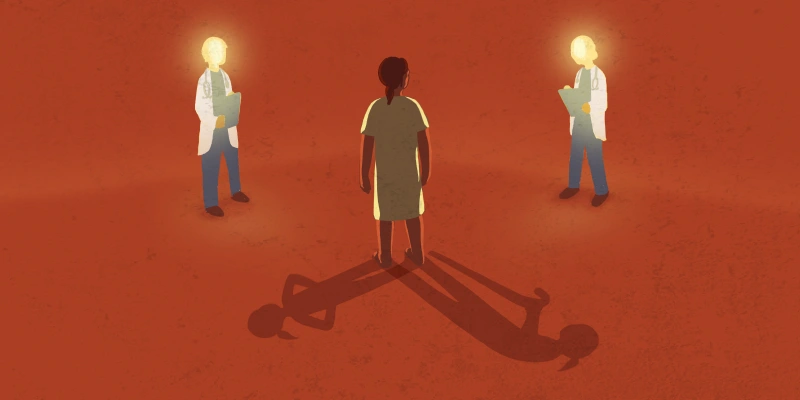
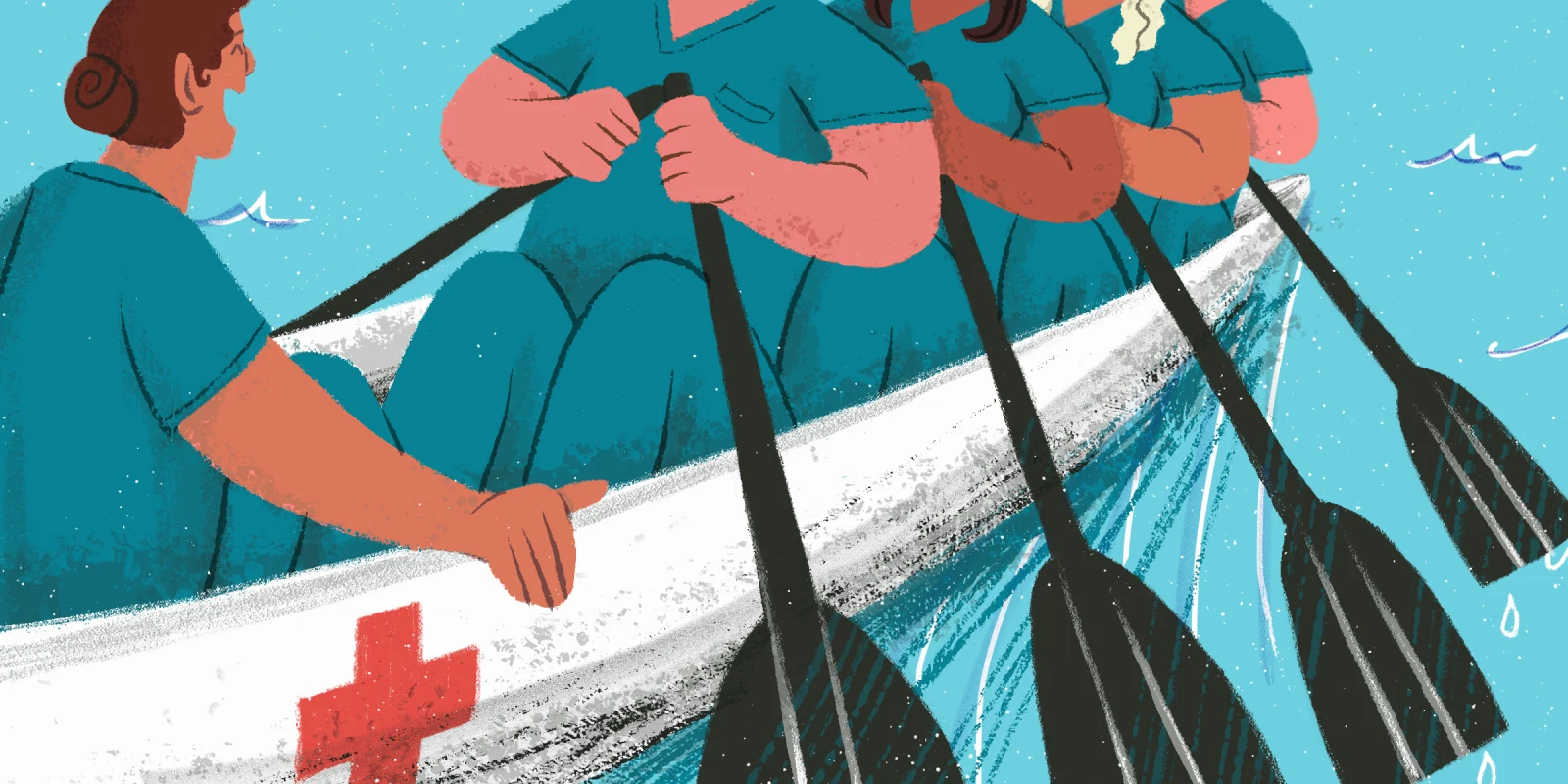
Illustration by Diana Connolly