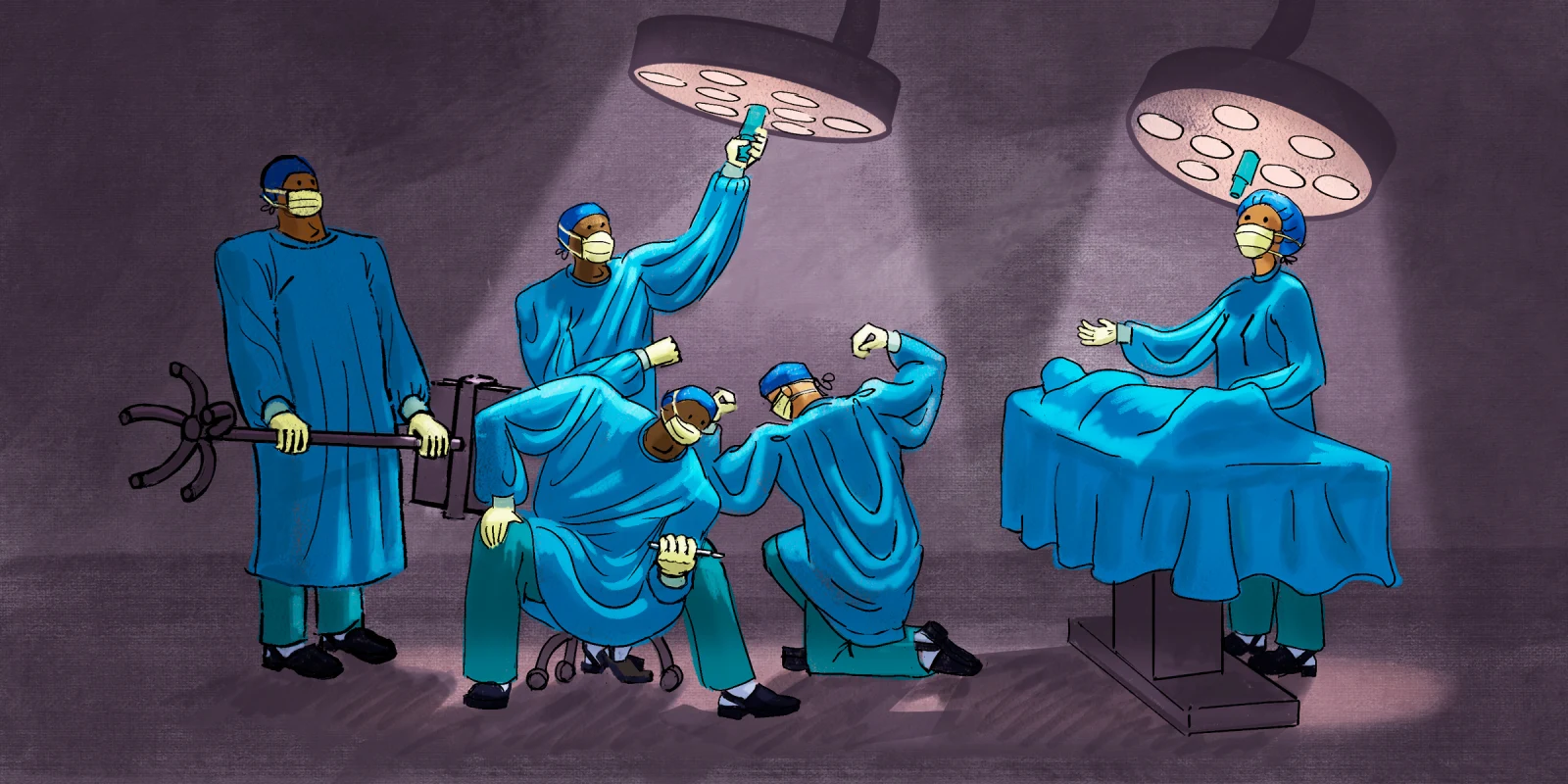

When I entered the world of neurosurgery in 2016, I was determined to become the best neurosurgical PA I could be. While I had some idea that I would encounter sexism in medicine, I thought, “It’s 2016, surely we’re beyond that backward thinking!”
By 2019, women, for the first time, accounted for a majority of students enrolled in medical school in the U.S. By 2022, women were increasing in number across 17 specialties, including emergency medicine, radiology, general surgery, pathology, orthopaedic surgery, and critical care. The gender inequality is extreme in my field of neurosurgery, where a mere 19% of practitioners are women. Not everyone received Beyoncé’s memo about who runs the world, and, upon entering the clinical workforce, I found that gender disparity was alive and well in the neurosurgical OR.
I quickly realized that if I ever wanted to be successful or competitive in this field, I would need to step up my game to “keep up with the boys.” As years passed, I focused my attention on assisting in the OR. Some surgeons were hesitant to work with me or even teach me. Yes, I was new, but I was eager to learn. One surgeon was blunt enough to tell me that I was not my male counterpart, with whom he was more comfortable operating beside. Maybe it was his years of experience ahead of mine, but there was still a large component of misogyny that went along with it.
At home, I practiced my suturing skills on towels, pigs’ feet, chicken, and bananas. I reviewed videos online of common neurosurgical procedures. I found any object I could tie a suture to, and I practiced two- and one-handed knots. I wanted to do everything within my power to prove myself, to put in the hours, and I figured that, in doing so and becoming undeniably excellent at my work, my colleagues would welcome me into a new setting.
My fears of being judged based on my gender are not unfounded. Studies have demonstrated that women are judged more harshly than men during training, even when both parties make the same error. Research shows that when a woman is assertive, it is perceived as “aggressive,” but if a man acts in a similar manner, he’s perceived as a leader.
In becoming the best possible PA, I realized, there is no room for tears, feelings of anger or disappointment, or any sign of weakness, as these may be misconstrued by some to explain why women are not suitable in this environment. Part of this job is accepting that just by being a woman, I will be at a disadvantage, regardless of how much I accomplish or how advanced my skills are.
There are stereotypes that exist around neurosurgery that attempt to explain why it remains a male-dominated field. One study of medical students identified that men were attracted to specialties that incorporated technical challenge, earning potential, and prestige. You only need to walk into an OR to feel the “boys club” attitude that can flood the air. There are certain instances where patriarchal, testosterone-fueled egos loom, and it takes a woman with thick skin, confidence, and clear communication skills to thrive in this environment.
Research has also shown that women in healthcare often prioritize residency conditions, part-time work, and the availability of parental leave. In India, female neurosurgeons reported that around 73% had been discouraged from entering the specialty due to familial responsibilities. A U.S. study of neurosurgery professionals found that one in four women would choose a different specialty that is more accommodating of parenthood and family, and 41% of those women said they would discourage others from entering the specialty. Another study highlighted the barriers that women considering neurosurgery face, including a lack of overall prior female neurosurgical role models, fear of gender discrimination, and problems in balancing their personal lives.
And yet eschewing "familial responsibility" does not seem to be enough as a woman in healthcare. I have dedicated a large portion of my life and time to my career, pursuing multiple master's degrees in public health and PA studies. And yet, when I walk into a hospital room, I am called “nurse.” Some of my male counterparts walk into a room and are called “doctor,” which is difficult to hear when I am the one who has earned my doctorate in medical science.
Women can do it all. Gender should not be a cause for discrimination in a surgical specialty. This represents not only a large societal bias toward males as physicians, but also a medical systemic issue that involves the professional advancement of women in addition to overall quality patient care. There appears to be one of the metaphorical glass ceilings in neurosurgery. In one study of 104 women medical students, almost 89% responded that they would not pursue a surgical specialty such as neurosurgery due to the inequality and adversity they would face from their male counterparts.
Of course, it should go without saying that not every man in medicine, or in neurosurgery, is preferential toward his male counterparts. I have learned from several male neurosurgeons who have mentored me and gone above and beyond to nurture my learning and enthusiasm. Several in my current group are kind, welcome questions, and push me to excel. I thank them for their open-mindedness, compassion, and guidance.
While some days may be tough, women across all specialties are ready and willing to face a hurdle head-on. While these challenges may sound discouraging, it is important that we discuss and recognize them to bring awareness, as this will allow us to enact change and strive to avoid the pitfalls of bias and stereotyping. Each of our experiences is unique, and together we create a team ready to care for patients, regardless of gender.
What challenges have you experienced due to gender bias in your field? Share in the comments!