
When I first heard about automating parts of the patient journey, I’ll admit — I hesitated. It felt clinical, distant, and even a little impersonal. Like many physicians, I was trained to value the human connection above all. So the idea that a system could take over parts of that felt … off.
But my perception changed during what I now call “The February Flare-Up.”
We had just rolled out a winter promotional campaign, and it worked (maybe too well). Phones rang off the hook. Consults filled up. My team was juggling calls, check-ins, new leads, and postop follow-ups like a high-stakes game of Tetris.
And that’s when it happened. A loyal patient, one we’ve treated for years, slipped through the cracks. She’d had a minor procedure and was waiting for her 72-hour follow-up. But in the chaos, no one called. By the time we realized it, she’d already voiced her frustration to our front desk.
That moment hurt. Not just professionally, but personally. This was a patient we’d built trust with over years, and one oversight threatened it.
It was the wake-up call I needed.
We sat down and mapped every touchpoint from consultation to recovery. Then we layered in automation, not to replace anyone, but to support everyone. Follow-up texts. No-show reminders. Postop check-in emails. Even birthday messages.
What surprised me was how warm automation could feel when done right. We didn’t just blast generic messages. We personalized them with patient names, procedure info, and physician tags. We included links to reschedule or ask questions. And we gave patients options for how they wanted to communicate: text, email, or phone.
Here’s what happened next:
- Our no-show rate dropped by 38%.
- Postop satisfaction scores improved by 21%.
- Our team started finishing their days on time.
But most importantly, that patient we disappointed? She came back. And she actually thanked us for the “new system” that checked in on her so consistently.
Here’s what I learned: Automation isn’t cold, but it’s consistent. And consistency builds trust.
In fact, automation freed up our staff to focus on what mattered. Instead of playing phone tag, they could spend time in meaningful conversations. Our medical assistant, who used to dread the 4 p.m. “catch-up hour,” now uses that time to connect with patients who need extra reassurance. That shift in energy was palpable.
We also started applying automation to our lead flow. When a potential patient submits a form, they get a text in under 30 seconds. Not a robotic “thank you” … a real, helpful message asking when they’d like to come in. It feels personal because we made it personal.
And let me be clear: This doesn’t replace our relationships. It enhances them. Patients still get our full attention during consults. They still hear our voices on important calls. But automation ensures they never feel forgotten, even on our busiest days.
There was one moment that cemented this for me. A new patient who had gone through a six-week treatment cycle sent a handwritten thank-you card. She mentioned how “someone always checked in at the right time,” and how that made her feel seen. That “someone” was automation. But to her, it felt human, and that’s the point.
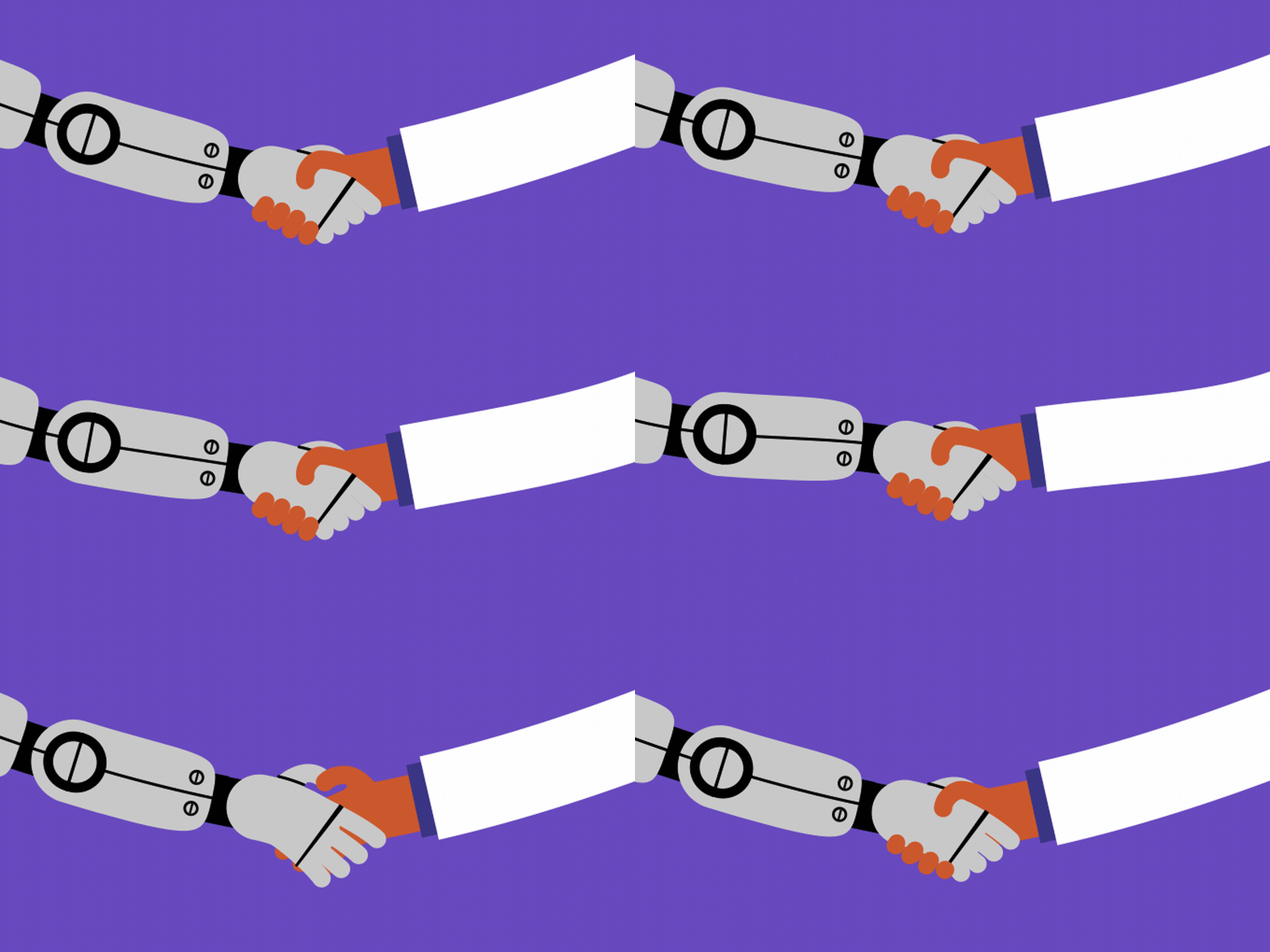
So, to my fellow clinicians wondering if automation will strip away the soul of your practice: It won’t. When used with intention, it delivers compassion at scale.
We now view automation as our practice’s secret superpower. It fills the gaps. It relieves the team. And it reinforces every promise we make to patients.
As one of my staff put it: “It’s like having an extra set of hands, and a very kind one at that.”
How have you used technology to strengthen your connection with patients? Share in the comments.
Dr. Shitel Patel is a renowned plastic surgeon at Lift Plastic Surgery and the visionary CEO of Ad Vital Software, a company revolutionizing the delivery of health care with technology. His passion for improving patient outcomes and streamlining health care processes is evident in his professional accomplishments, which can be explored further on his LinkedIn and Instagram profiles and podcast.
Animation by Diana Connolly