
Years ago, I was sitting in the conference room of a medical professional organization as we awaited the demonstration of a new website. On a large screen, the physician-leader entered her password, after which a sudden pop-up warned that her membership was about to lapse. She blushed, explaining that she must have just forgotten to renew. The committee chuckled in good-hearted recognition of our own busy lives.
These first months of a new year are when memberships often expire. But membership, right now, is of historic importance as medicine faces multifarious headwinds from insurers, payers, federal agencies, and a growing corpus of misinformation. Our organizations are combating vaccination hesitancy, cuts in research funding, and assaults to reproductive freedom. So are you, right now, a member of your professional organizations?
Practicing medicine doesn’t typically require membership in any particular group, only licensure. And even when electing to join, there are many organizations from which to choose: those that are national or statewide, medicine broadly, or specialties or even subspecialties. Thus, not everyone in field “X” living in state “Y” belongs to the American Association of “X” or the State “Y” Medical Society. It’s a free choice, with nurses, doctors, and other clinicians deciding to join or not join, even in these perilous times.
What are membership’s benefits? If asked about professional societies when early in my training, I would have likely pointed to their numerous products made from paper: pamphlets, précis, compendiums of clinical bulletins. Pregnancies in my nascent obstetrics career were tracked through specialized, branded paper records. For any new patient, the doctor grabbed a fresh sheet atop of which you wrote their name then moved about systemically filling in deliveries, medications, allergies, and health problems. As a child of the ‘80s, they always reminded me of Dungeons and Dragons character sheets.
Now paper has gone the way of Dunder Mifflin, though membership still holds bountiful, direct benefits of which members are often unaware, all in addition to education, networking, advocacy, and mentorship. Many states and insurers now rely on the vaccination guidelines from our professional organizations rather than the CDC. Organizations host contraceptive information purged from federal websites and advocate against Medicaid cuts. In a way, our various societies are now both more critical and less physically tangible; bulwarks in a struggle rather than tchotchke in offices.
Imagine this: Two surgeons work in the same office in the same town performing the same procedure for the same patient mix. One maintains their professional society membership, the other does not. Then some national or state legislation threatens their field, later rectified by their specialty’s organization. Both then benefit equally, though only one contributed, even if that contribution was membership alone.
An economist could describe this as a “non-excludable good” in which not only does everyone benefit regardless of effort but an individual couldn’t be excluded from the benefit even if desired by either party. A classic example is air pollution. After new emission standards, an opponent of the standard breathes the same cleaner air as the supporter sitting across from them. Likewise, when medical organizations help filter the maelstrom of misinformation, a more educated populace inevitably walks into everyone’s offices.
Doctors have responded to our modern crises through a spectrum of engagement. I, like others in concert with their organizations, have written essays and opinion pieces, have been interviewed by reporters and have testified in legislative committees. These are fulfilling endeavors for myself, as well as for many of my colleagues. I appreciate my opportunities to advocate for patients and find that active engagement is my best antidote to the darkening phantasmagoria.
However, there are my experiences that need not be yours. None of us are required to do any of these things, especially when also facing our vast backdrops of clinical care. You don’t have to testify or litigate or run a microphone wire through your clothing in front of cameras. But non-excludable goods become unfair if only some individuals contribute, and scores of people doing something is always outweighed by scores doing nothing, regardless of how small that something may be. Right now, that minimum is membership.
So, the hypothetical surgeon could present their colleague with a fairness-based argument for membership in their professional organizations. But simple assertions of what someone “should” do tend to be weak drivers of true change, as evidenced by the many daily things I “should” do but do not. I should sort my recycling better. I should volunteer more for my kids’ sports teams.
Doctors, in particular, are often subpar at doing the simple things we should. Take, for example, hand hygiene. Physicians know, intellectually, that consistent hygiene reduces morbidity. Like handwashing, supporting our professional organizations through membership also staves off morbidity. Patients awash with misinformation contract vaccine-preventable illnesses. People suffer if they lose Medicaid coverage or reproductive freedoms. But in hospitals right now, most of us successfully engage in hand hygiene, the primary drivers being systems of feedback and accountability rather than simple appeals.
As I exit a patient’s room with my team, everyone decontaminates their hands and, more importantly, everyone watches everyone else decontaminating their hands. If I, as the senior attending, forget, I hope that everyone from the most junior student upward would feel empowered to ask: “Dr. Hackney, did you decontaminate your hands?” Together we form a circuit of feedback and accountability.
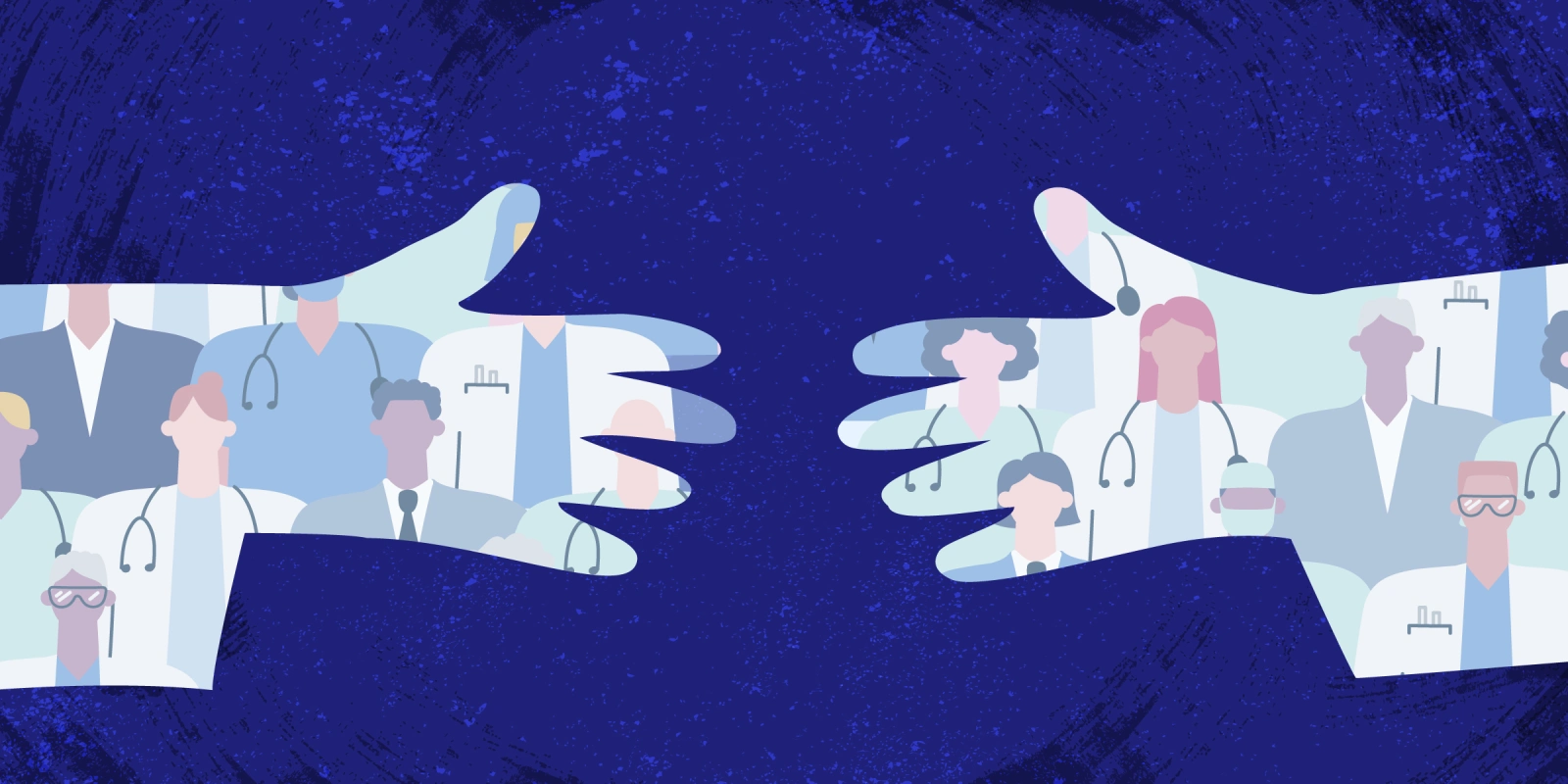
Likewise, given the non-excludable benefits, and gravity of our modern times, applying a similar accountability to professional membership is reasonable, if not morally rational. Double check that you have renewed all your relevant memberships and then, like a clinical team exiting a patient’s room, turn to your friends and colleagues and ask: “Are you, right now, a member of your professional organizations?”
Dr. Hackney is a maternal-fetal medicine specialist in Cleveland Ohio and Professor of Reproductive Biology at Case Western Reserve University. The views expressed are his own and do not reflect any organization.
Illustration by Diana Connolly