
“I’m sorry. I’m so sorry.”
These words, spoken by my obstetrician on the other end of the phone call, hung in the air. Yes, I also felt sorry – and scared – for myself, for my husband, for our 3-year-old daughter, and for the 13-week unborn baby for whom I had just received a diagnosis of Trisomy 21.
Two weeks earlier, my ob/gyn ordered Non-Invasive Prenatal Testing (NIPT) as standard first trimester screening. I chuckled at the time, recognizing this was a “geriatric pregnancy,” a term that my friends and I often joked about as women physicians going through the childbirth journey over the age of 35. I agreed to the NIPT because, as a primary care pediatrician and academic, I felt that having more information during pregnancy could only be helpful. If nothing else, we could find out the sex of the baby early, right? Even knowing my risks of genetic conditions based on maternal age, I did not expect that the 1 pregnancy in about 200 that resulted in Trisomy 21 would be mine.
So, when my doctor called to give me the results and the conversation shifted from light banter to the weighty “The results were not normal,” I knew my life was about to change in a dramatic and unexpected way.
“The result is consistent with Trisomy 21, Down Syndrome,” she explained. I don’t recall if I paused in shock, gasped, or cried immediately, but my ob/gyn responded with, “I’m sorry. I’m so sorry.” Her words were spoken with genuine kindness and empathy. At the time, I felt this was what I needed, for someone to share in the grief that was beginning to simmer as the conversation continued. I do not remember many of the details of the call after those initial words, as my mind tried desperately to make sense of what I had heard.
But I was transformed at 36 weeks when my daughter was born. The multiple specialty appointments and weekly weigh-ins of the previous months melted away as I held a 4-pound, 1-ounce wonder. Finally, she was here, and the overwhelming emotions were not grief and pity, but love and hope. Now, six years later, she embodies for me the inherent worth of every child, pushing me to see my patients in the complex and nuanced way that their parents see them, rather than solely through the deficit-focused lens that is modern medicine. To be clear, navigating this world as both parent and physician can be quite challenging at times, but we are fortunate to have many moments of deep joy and gratitude. My daughter is now in first grade, and walking into a recent school event with her felt like I was accompanying a celebrity. Older students adored her sassiness, and the teachers and administrators accepted her hugs with the openness that I yearn the world will bring to her and other children with special needs.
However, it has been well documented that medical training and the health care system in general are steeped in ableism rather than acceptance and stigmatizing, rather than uplifting, language. When I was a pediatric resident 20 years ago, terminology such as “mental retardation” and “unfortunate child” were commonplace – and, thankfully, these terms are now considered antiquated and even derogatory. Still, I recognize that I am raising a Black girl with disabilities in systems that may not immediately see her value. This has inspired me to join other faculty members to teach about the importance of avoiding biased language, using person-first language, and considering how our words impact patient care. We partner with families to give us feedback on improving our care. I see myself, our residents, and other pediatricians recognizing the joy that a child can bring to a family, even if the child has technology dependence or behavior challenges or an extra chromosome.
But there are still remnants of the assumption that any level of medical complexity is a burden without a silver lining. This is less about my ob/gyn expressing that she was sorry, as she was an incredibly compassionate physician reacting to a patient who just received unexpected news; I harbor no judgement over her response. More so, this is a comment on my own mindset as a pediatrician evolving over the past six years to a personal understanding that children with disabilities and medical complexity must be celebrated as all children should be. An understanding that I did not need to sit with “sorry” for the duration of my pregnancy, just because I had been trained to think of Down Syndrome as a list of devastating comorbidities. An understanding that the day would come when I would look at my daughter and see her grit and 4-extremity hugs and love of learning and mischievous grin before I saw her “Down syndrome facies.”
This transformation in my care of patients has been simple yet profound. Where I once may have moved too quickly to the clinical checklist, I spend much of the time during a visit talking with parents about their coping and support, recognizing that grief and joy, difficulty and delight, can coexist in the same story. And now, when I meet a family with a newborn, the word that I emphasize – no matter the diagnoses they have already been given or the unknown journey to come – is not “Sorry” but “Congratulations!” Because I now understand in a deeper, more personal way that every child who enters this world brings their own unique light, their own capacity for joy, their own power to transform those around them. My daughter didn't just change how I practice medicine; she revealed what medicine at its best can be – a celebration of human resilience, potential, and worth that transcends any diagnosis.
Olanrewaju "Lanre" Falusi, MD, MEd, FAAP is a primary care pediatrician, associate professor of pediatrics, and mom of three girls. Her work centers on developing community-based curricula for trainees, leading faculty development initiatives in advocacy, and supporting the development of policies to promote health equity.
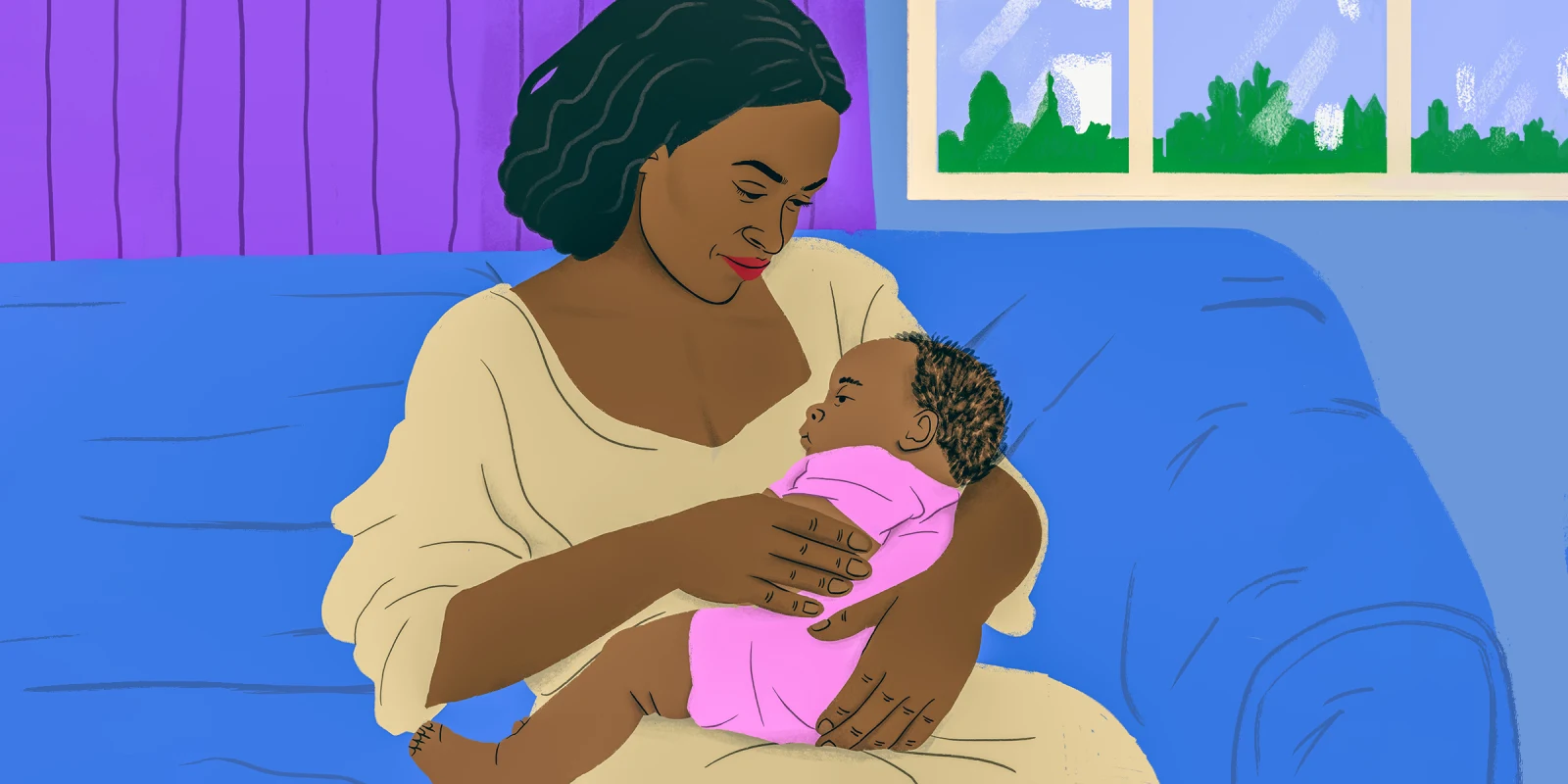
Image by Amr Bo Shanab / Getty