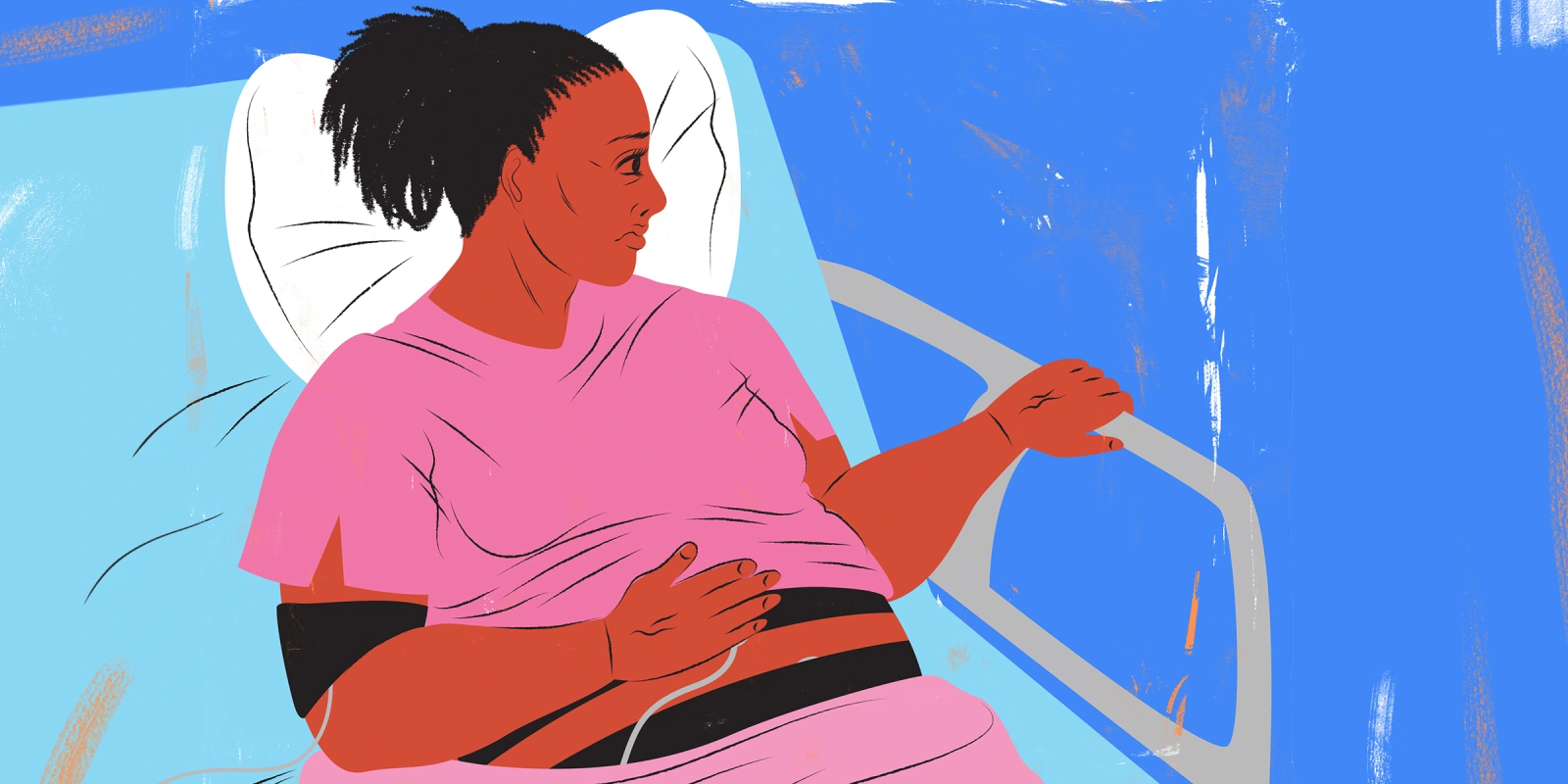

I’ve always wanted to have a baby. I was the stereotypical first-born daughter with enough baby dolls to fill a living room. My father videotaped me, an only child at the time, just 2 1/2 years old, describing my life with my nine children all named Vanessa, after my mother. I explained how I’d feed them Chef Boyardee and how they would fight to sit on my lap at dinnertime. Even then, I imagined life through a lens of motherhood before I could even tie my shoelaces or ride a bike. But as I grew older, that vision began to change. Not because I don’t want to have children, but because I’m scared. I hadn’t admitted it until now. I am afraid of dying in childbirth.
Some may deem this dramatic, but the fear isn’t abstract. It’s inherited.
My maternal grandmother died from complications of eclampsia at the tender age of 32 ⎯ the age I will be this year. While pregnant with her fifth child, my grandma lost her life, and my mother lost her mother.
For years, I told myself this was a different time and place. My grandmother died in the 1970s in Guyana, where access to care was limited. Surely, I thought, things would be different for me — a Black woman in the U.S. decades later, training to become a physician.
But the data tell a different story.
According to the CDC, the maternal mortality rate for Black women in 2024 was 44.8 deaths per 100,000 live births, compared to 14.2 for white women — more than three times higher. This disparity persists across income and education levels and has remained largely unchanged despite growing awareness.
Black Maternal Health Week, the second week of April, is meant to raise awareness of this crisis. But for many of us in medicine, awareness is not the issue. The issue is that the numbers have not meaningfully changed.
And increasingly, the faces behind those numbers look like ours.
The death of Dr. Janell Green Smith, a midwife and maternal health advocate who died from childbirth complications, drew national attention to the reality that even those who dedicate their lives to this work are not immune.
Similarly, the loss of Dr. Chaniece Wallace, who died shortly after childbirth in 2020, shook the medical community and highlighted the vulnerability of Black women — even physicians — within our own healthcare system.
These were women who understood the system. Women who had access. Women who spent their lives caring for others.
And still, they were not protected.
Their deaths forced me to confront something I had long tried to rationalize away: White coats do not protect Black mothers.
They won’t protect me.
What they can offer is knowledge — the ability to recognize warning signs, to advocate, to question. But knowledge alone is not a safeguard in a system where delayed recognition, implicit bias, and structural inequities continue to cost lives.
For much of my life, I comforted myself with a hypothetical: If my grandmother had been in the U.S., she would have lived. Now, I’m no longer sure that’s true. Instead, I find myself asking a more unsettling question: Would she simply have become another statistic?
Her death, while devastating, set into motion a chain of events — my mother being raised by her grandparents, immigrating to the U.S., and ultimately becoming the first physician in our family. Now, as I follow in her footsteps as a second-generation Black woman in medicine, I am forced to reckon with a painful paradox: My education and proximity to the healthcare system do not lower my risk. If anything, they underscore it.
This is not just a story about access. It is about accountability.
As a new generation of physicians, many of us are committed to changing this reality. I see it in the growing number of Black women entering ob/gyn. I see it in the conversations happening more openly during Black Maternal Health Week — conversations about bias, delayed diagnoses, and whose pain is believed.
But we must ask ourselves: Should the responsibility of fixing this crisis fall on the shoulders of the very group most affected by it?
The answer is no.
Addressing Black maternal mortality requires systemic change — starting with how we educate future physicians and how we practice medicine today. It means moving beyond acknowledging disparities to actively interrogating them. It means standardizing responses to obstetric emergencies, improving postpartum follow-up, and listening — truly listening — to our patients.
Because this is not a niche issue. It is happening in our hospitals. To our patients. To our colleagues. And until that changes, Black Maternal Health Week will remain not just a call to awareness, but a reminder of how much work we still must do.
How can physicians move from awareness to accountability in maternal care? Share your thoughts in the comments.
Liza Sukra is a fourth-year medical student at St. George’s University SOM. She earned her BA in cultural anthropology from Duke University. She is an aspiring pediatric allergist/immunologist with a passion for caring for underserved populations, advancing health equity, and mentoring future physicians.
Image by Ken Tackett / Shutterstock