
I recently met an 82-year-old man from rural Kentucky.
He was sun-weathered and clearly someone who had spent much of his life outdoors. He came to see me because a mass on his arm had grown rapidly and became painful. The biopsy came back as carcinosarcoma, a rare type of skin cancer that can follow an aggressive course. I recognized the seriousness of that diagnosis right away, but he did not yet have that context. He only knew a dermatologist had told him it was cancer.
His EMR was remarkably empty. Usually that means a patient has spent as little time as possible in doctors’ offices over the course of his life. It also suggested that he had stayed active, lived simply, avoided smoking and alcohol, and at 82 was still pretty healthy.
Before we could make a plan, we needed more information: PET imaging to see whether the cancer was confined to the arm or had spread, evaluation of the lymph nodes, and then a decision about surgery, possibly radiation, or something systemic depending on what we found.
In oncology, we call this a “workup,” as if it is a neat sequence of reasonable steps. But for the person going through it, every step can feel like overkill. Another imaging test, another appointment, another trip, another blood draw, another waiting period.
I felt his trepidation, and at some point I stopped laying out the plan and asked him honestly whether all of this seemed like too much. He was 82. He had been healthy his whole life. He had clearly kept his distance from medicine. I told him this cancer could be aggressive, that going after it was going to mean a real commitment of time and energy, and that I wanted to understand whether pursuing a cure was truly what he wanted.
For a moment, he struggled to find words.
“Doc, you’re the doctor,” he said. “Do what you’ve got to do. That’s why I came to you.”
The implication was clear. This was not an area where he felt comfortable weighing in.
To me, that sentence summed up one of the biggest challenges in modern cancer care.
We talk a great deal about patient autonomy, and rightly so. People deserve honesty. They deserve clarity about their options, their risks, and the uncertainty in much of what we do. The older paternalistic model, where the physician simply decided and the patient was expected to comply, needed to change.
Sometimes it feels like we’ve gone too far in the opposite direction, and the results can end up making things even harder for the patient. Most people do not walk around with a fully formed philosophy of cancer care ready to call on. They are scared. They are trying to absorb something their minds were never built to absorb quickly. They are trying to figure out whether they will be OK. And now someone is asking them to weigh scans, biopsies, surgery, radiation, and quality of life all at once, against the backdrop of a diagnosis that is very hard to understand.
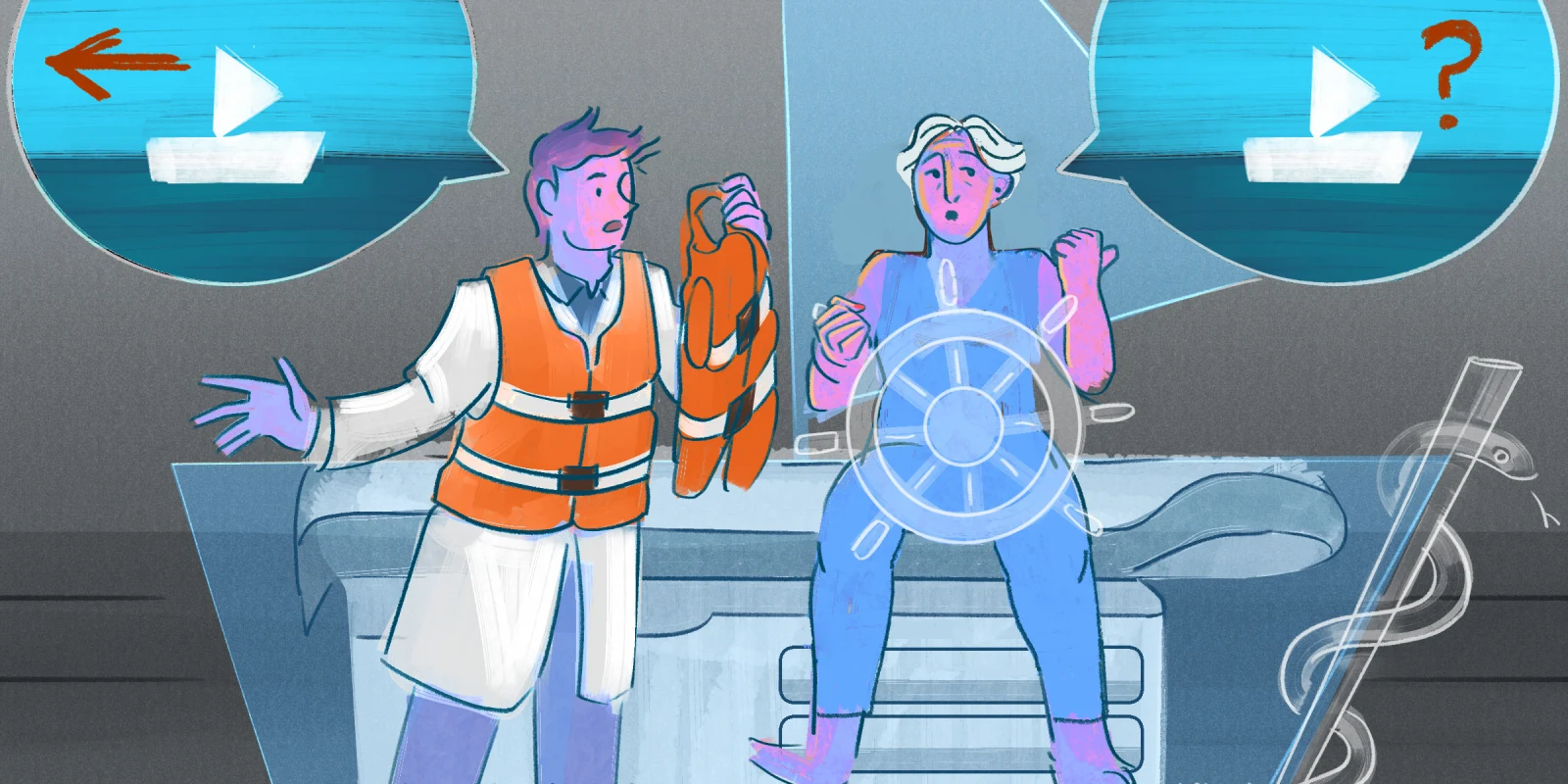
In the name of autonomy, we can inadvertently hand people an impossible burden. We lay out every option, describe every trade-off, present every possible outcome, and then leave the patient feeling as though the entire weight of the decision now belongs to them. That may look like shared decision-making from the outside. But to the patient, it can feel more like the responsibility is being transferred rather than shared.
True shared decision-making happens when medical expertise and personal values come together. The patient offers their story: their fears, priorities, family, and their sense of what’s worth facing or avoiding. The doctor brings an understanding of the illness, experience from similar cases, and a clear, honest view of what the data reveals and where its limits lie.
In cancer care, that space is complicated.
Some patients want every statistic; others want a broader orientation. Some want to make the final call themselves; others want a clear recommendation. Some say they want everything done, and what they mean is that they are afraid of not doing enough. Others say they want to avoid aggressive treatment, and what they mean is that they want to protect their independence, stay out of hospitals, and spend whatever time they have doing things they care about.
I’ve learned over time to try to listen for the meaning underneath what people are saying.
When someone says, “Do everything,” I try to understand what everything actually means to them. Does it mean everything that might help? Everything that prolongs life, regardless of how that life is lived? Everything that gives them a chance to see a grandchild born, make it to a reunion, or have one more Christmas with their family?
And when someone says they want to avoid all of that, I try to understand that too. Are they declining treatment, or are they declining hospitals? Are they saying no to weakness, dependence, or treatments whose benefit is small and whose burden is real?
One of the most useful adjustments I have made over the years is to stop leading with the question many doctors reach for first: What do you want to do?
For many patients, that question is way too broad. They have not yet worked out what they want, because they have not worked out what any of it really means. They have not learned how to weigh a PET scan against a lymph node biopsy, or surgery against radiation, or a small absolute benefit against a real chance of harm. They came because they need help thinking through a decision.
So I try to ask smaller, more human questions.
What are you hoping this process will allow you to keep doing? What are you most worried about losing? If treatments were hard on you, what would feel unacceptable? Are you someone who wants all the options laid out, or would you rather I give you my best recommendation?
When a patient asks for guidance, they’re really asking for care. Responding in a way that respects that request means keeping them involved while fully embracing the responsibility of being their doctor.
My response to this patient, as I recall, was something like this: “I hear you. I know you are asking me to guide you through this, and I’m comfortable doing that. I just want to make sure we keep making these decisions together. Based on what I know medically, and based on what I’m hearing from you, here is what I would recommend.”
It’s OK for patients to feel that we have an opinion and are genuinely engaged with them as individuals, not just presenting a list of medical options. They should sense that if it were one of our loved ones, we’d share the same perspective. This means being honest about uncertainty while still providing guidance.
Shared decision-making sounds easy in policy language. In the clinic, it is much more complicated and more human than that. It requires giving conversations more time to unfold. It means watching a patient’s face as carefully as we read their scan. It requires knowing when more explanation helps and when the better thing is to just stop talking and let someone process things for a minute. It requires understanding that some patients feel empowered by options, while others feel paralyzed by them, and that both responses are OK.
The best goals-of-care conversations don’t depend on perfectly worded questions to uncover everything. Instead, they’re a process that might unfold over several visits, guided by what the patient discovers and what we come to understand about them.
Most patients are not asking us to take over. They are asking us to stay engaged, offer our best judgment, and help them find a path that feels like theirs.
What are some questions you ask to figure out shared decision-making? Share your approach in the comments.