
It is not every day that nurses sit on the hospital floor.
Yet on a frigid Saturday morning in January, that is exactly what happened when I walked through my hospital’s front doors — no stethoscope around my neck, no white coat on my back. Just me and my 9-year-old mini goldendoodle, Mango, a certified therapy dog whose arrival had an almost magnetic effect on the hospital floor.
We had come to spread some cheer to hospital staff and patients on an otherwise bleary winter day.
I had taken Mango to many facilities before — nursing homes, memory care centers, elementary schools. But this was our first visit to my place of work, and it felt different.
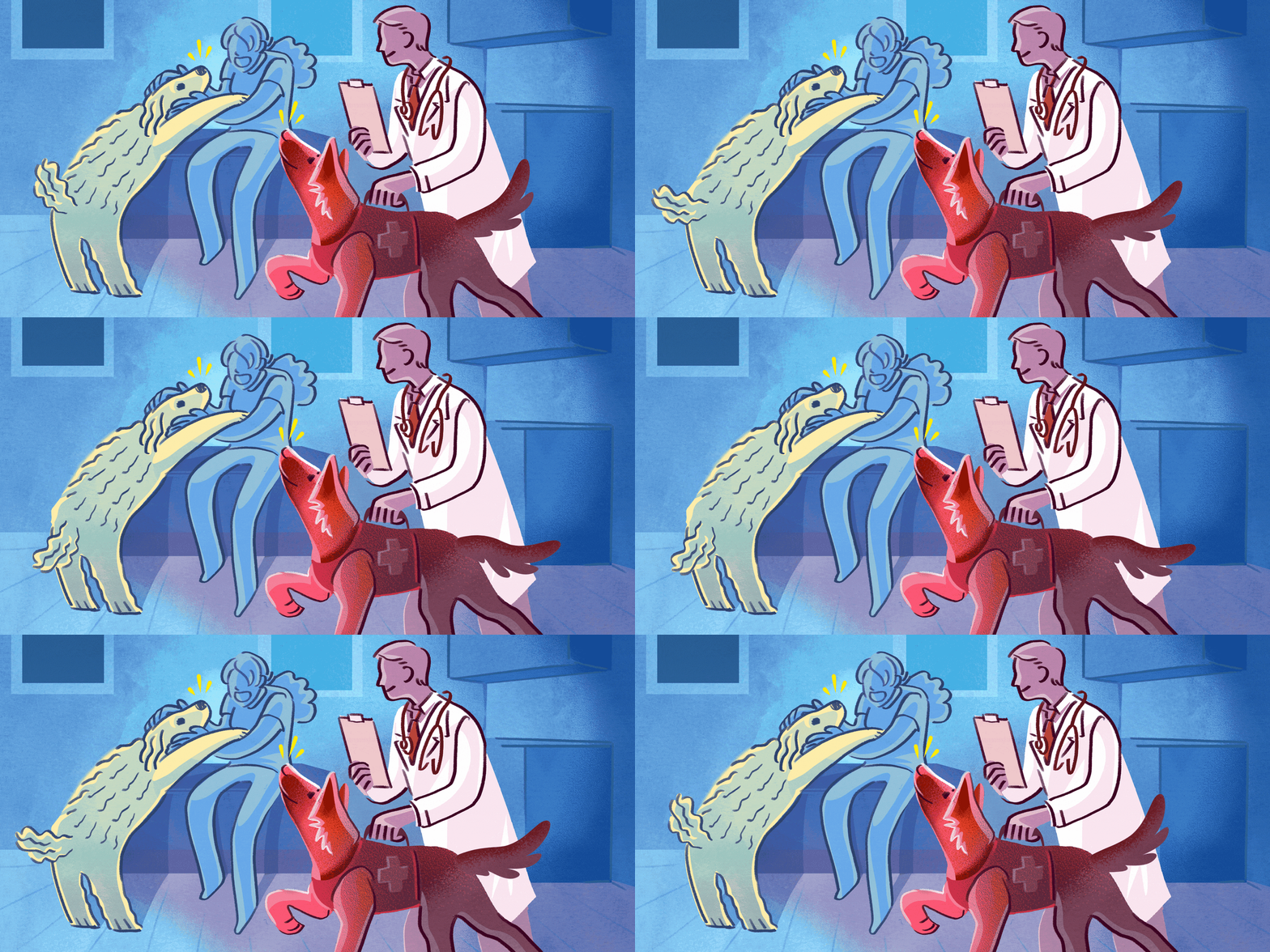
A nurse on the geriatric unit did a double take as she saw me walking down the hall in civilian clothes, wearing my blue hospital volunteer jacket. Her look of confusion quickly gave way to an enormous smile when she noticed Mango at my side, tail wagging in anticipation of meeting someone new. Nurses stopped what they were doing, seemingly pulled by an invisible force toward this tiny dog. As word spread, others spilled out of patient rooms into the hallway to soak up a moment of positive energy. One nurse even got down on the floor — yes, the hospital floor — to play with Mango. If only for a few minutes, the staff were able to set aside their responsibilities and simply have some fun.
The reaction from patients was even more striking. Ill, bedridden patients seemed to animate as we entered the room. One patient was brought to tears while holding Mango in her lap, reminiscing about a beloved dog who had passed away years ago. Others hurriedly scrolled through their phones, eager to share photos of the pets waiting for them at home. I sensed that the desire to reunite with those pets might be one of the strongest motivations to get better.
As physicians, we like to think that by curing disease and relieving pain we are bringing happiness to our patients — and I believe that we are. But this experience felt different. There was something special about the immediate joy I saw on the faces of staff and patients when I walked into a room with my dog. Nurses sitting on the hospital floor, patients shedding tears of joy — yes, this was different.
It was clear that I had done nothing medically, at least in the traditional sense, to help them feel better. I didn’t take a history or perform a physical exam. I didn’t acknowledge their diagnoses or offer treatment advice. In fact, I often left the room without even knowing why they were hospitalized. Yet in just a few minutes, I felt as if I had made a difference. I like to believe the positive energy we created in each room, at each nurse’s station, reverberated long after we left.
I, too, was buoyed by that energy, eagerly anticipating the next patient room. When was the last time I had that feeling? It made me wonder how I might capture even a small part of this positivity and bring it into my everyday patient interactions. As physicians, how can we intentionally create moments like this in the midst of serious work? How can we build human connections that lift spirits even while treating illness?
Some might argue that our job as physicians is simply to treat disease and relieve suffering. While managing medical conditions certainly contributes to well-being, it is increasingly clear that patients benefit from “softer” interventions as well, such as pet therapy. Studies have demonstrated benefits of animal-assisted therapy in reducing postoperative pain, helping manage chronic conditions like fibromyalgia, and improving symptoms of depression and anxiety.
As AI continues to reshape medicine — handling routine diagnoses and monitoring patients remotely — the ability to create positive, human therapeutic environments may become one of the defining aspects of the care we provide. It is not just about getting the right answer. It is about delivering a healing experience.
It may be unrealistic to imagine doctors’ offices filled with puppies anytime soon. But we should begin thinking more intentionally about evidence-based complements to traditional medical care that promote healing and well-being. In gastroenterology, for example, we now routinely recommend cognitive behavioral therapy to help patients manage symptoms once treated purely with medication.
As I walked out of the hospital that brisk Saturday morning, I felt fulfilled knowing that Mango and I had brought a bit of joy to dozens of patients and staff members. The experience stirred something fundamental that first drew me to medicine — the desire to heal and to relieve suffering.
I am still not entirely sure how to bring the spirit of pet therapy into my daily practice. What I do know is this: For a few hours that morning, Mango reminded me that healing does not always begin with a prescription or a procedure. Sometimes it begins with a wagging tail.
How do you create alternative moments of healing? Share in the comments.
Anish A. Sheth, MD, is chief of gastroenterology at Penn Medicine Princeton Health and is the author of several books on gut health including the bestseller, "What'’s Your Poo Telling You?" He is a mid-career physician who loves practicing medicine and is looking for ways to keep the fire burning! Dr. Sheth is a 2025–2026 Doximity Op-Med Fellow.
Animation by April Brust