
Pretty much every grant application asks for a sustainability plan. It is the question we all dread. How will your program continue after the funding ends?
The irony is painful. We are expected to build sustainable programs from unstable funding streams. In many small or rural states, including Mississippi, public health efforts exist only because a grant exists. When the funding stops, the work stops too.
The email arrived in late September, a Notice of Award for a new federal grant. My team was so excited and ready to get started with the work. We had spent months planning, budgeting, writing narratives, and building partnerships to reach this moment. Three days later, the federal grant managers who issued that award were furloughed. In just 72 hours, the celebration turned into uncertainty. A government shutdown may be temporary, but its impact is not. Programs are paused. Payments are delayed. Work plans and partnerships sit in limbo. And while the furlough will end, the instability will not.
This also was not the first stop-and-go of 2025. Earlier in the year, several funding freezes left state and community programs scrambling. Some projects were eventually reinstated. Others quietly disappeared. I’ve even watched some of my colleagues lose their positions, not because of performance or purpose, but because funding priorities shifted again.
The system rewards innovation and short-term deliverables, but not continuity. We plan, we launch, we evaluate, and just as momentum starts to build, a new round of uncertainty begins. We are told to plan for the long term in an environment where the short term is unclear. Public health is supposed to focus on prevention, but prevention requires consistency. You cannot build trust or achieve behavior change when everything hinges on a 12-month budget cycle.
Every funding freeze sets off a chain reaction. That means budget revisions, shifting timelines, growing anxiety, and sometimes a growing sense of loss. Staff begin to wonder if their positions are secure. Managers spend hours rewriting budgets instead of mentoring their teams. Partners lose confidence when communication slows or when deliverables suddenly shift.
It creates a kind of moral injury that feels specific to public health. We are called to serve, yet we constantly have to justify our own survival. The emotional labor that goes into holding everything together, reassuring staff, preserving relationships, and writing contingency plans is exhausting. People are not leaving this field because they do not care. They are leaving because they cannot build a stable career on unstable ground. And every time someone leaves, the field loses institutional memory, relationships, and trust that took years to build.
Public health does not just lose staff when the money stops. It loses momentum.
Earlier this year, our team was expanding a telehealth and peer-support initiative for domestic violence shelters. After a lot of planning, training, and relationship building, the program was finally gaining traction. Then a federal funding freeze stopped everything. Meetings halted. Contracts paused. Shelters that had begun offering telehealth visits to survivors were suddenly unsure if the program could continue. One shelter director told me, "We finally got women comfortable with using the telehealth service. Now we have to tell them it is paused."
This is what instability looks like in real life. It is not a line in a budget spreadsheet. It is a survivor losing a safe connection to counseling. It is a rural county waiting months for services to restart. It is trust slowly eroding in places where trust was already difficult to build.
In rural Mississippi, a single grant can serve as the entire infrastructure for behavioral health, telehealth, or domestic violence services. When that grant pauses, there is no backup plan. There is no second agency or local funder waiting to fill the gap. This is why funding instability hits rural and underserved areas the hardest. The stakes are not theoretical. They are immediate and human. A pause does not just delay services. It can eliminate services entirely.
I have spent my career trying to bridge systems across pharmacy, public health, domestic violence services, and telehealth. I have seen what happens when programs work well together and what happens when they collapse. The hardest part has never been the funding itself. The hardest part is losing the trust that comes with continuity.
That is what keeps me up at night. Not the paperwork. The people.
If sustainability is the standard for our programs, it should also be the standard for the systems that fund them. Policymakers need to create mechanisms for bridge funding, multi-year renewals, and emergency reserves so programs can survive temporary shutdowns without collapsing.
We cannot keep treating public health like a series of startups. Communities deserve permanence. They deserve systems that allow trust, data, and healing to grow over time.
It has now been months since that September award. We are still waiting for guidance. In the meantime, the needs have not paused. Survivors still need safe spaces. Families still need support. Communities still need us to show up.
We will. But it is time for the system to show up, too.
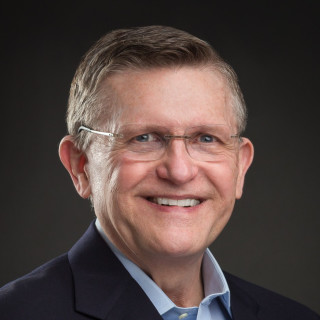
Dr. April Miller is a public health pharmacist and program manager in Jackson, MS. She is passionate about educating health care professionals on substance use prevention and domestic violence awareness. In her free time, she enjoys cheering on the Ole Miss Rebels with her son and attending high school band events to support her daughter. She is a 2025-2026 Doximity Op-Med Fellow.
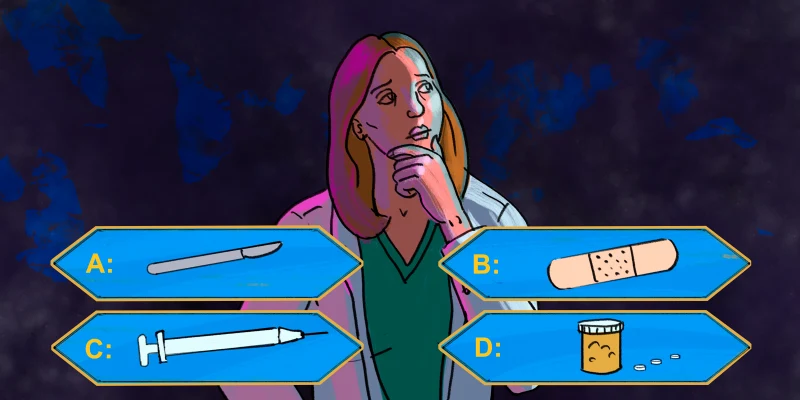
Image by invincible_bulldog / Getty