
Surgeons are trained to carry weight.
Not metaphorical weight — real, immediate responsibility. The kind where a millimeter matters, where hesitation has consequences, where a single decision can permanently alter another person’s life. We accept this early in training. We internalize it. For many of us, it becomes inseparable from our professional identity.
What we talk about far less is what that weight does to the systems in which we practice — and, ultimately, to patient safety.
In the OR, there is no room for error. Outside of it, there is endless room for scrutiny. A thousand successful cases pass quietly. One complication can follow you for years — a phenomenon well described in the literature as the “second victim” effect, in which clinicians experience lasting psychological distress after adverse events. When outcomes are good, the system moves on. When they are not, attention narrows, often intensely, and often late.
This imbalance shapes surgical practice in ways we rarely acknowledge.
We train our hands to perform with precision, but we give far less attention to the cognitive and emotional load required to do so repeatedly, under time pressure, in complex environments. Meals are skipped between cases. Hydration is optional. Sleep is compressed. Fatigue becomes normalized — despite extensive evidence that sleep deprivation and sustained cognitive load impair physician performance and increase the risk of error. None of this is accidental; it is embedded in how surgical work is structured.
I see this across specialties: surgeons who are technically excellent, deeply conscientious, and operate with very little margin for error — in environments that quietly erode those margins.
When alarms sound in the OR and tension rises, composure is not optional. Surgeons are expected to absorb uncertainty, manage fear in others, and continue performing with precision. That discipline is essential. It saves lives. But over time, sustained exposure to this level of cognitive load without adequate recovery or institutional support has consequences. Surgeon burnout has been consistently associated with increased medical errors, reduced professionalism, and diminished well-being.
Perfection, we learn quickly, is largely invisible. Complications are not. Success is expected; deviation is scrutinized. Case volume, throughput, and outcome metrics are tracked carefully, while the conditions required to sustain safe performance are rarely measured with the same rigor.
This is not a failure of individual resilience. It is a systems design problem — one increasingly described as moral injury rather than burnout.
Modern health care is increasingly efficient at measuring what is easiest to count: RVUs, block utilization, turnaround times, complication rates. What remains poorly captured is the cumulative cognitive strain of high-stakes decision-making, the psychological impact of adverse events, and the long tail of responsibility surgeons carry well beyond the OR.
As a result, surgeons often become the final common pathway for failures that originate upstream — rushed schedules, staffing gaps, administrative pressure, documentation burden, and patient expectations shaped by nonclinical influences. When outcomes fall short, accountability contracts quickly to the individual, even when contributing factors are clearly systemic. We know what happens in systems that respond this way. Learning becomes defensive. Reporting becomes selective. Risk is managed quietly rather than addressed openly. None of this improves safety.
If health care organizations are serious about patient outcomes, they must take the conditions of surgical work as seriously as the technical outcomes themselves. That means creating environments where complication review emphasizes learning rather than punishment; where known procedural risk is distinguished from negligence; where surgeons are supported — not isolated — after adverse events; and where operational efficiency does not come at the expense of human limits.
Most surgeons would still choose this profession again. I would. Not because it is easy, but because it is meaningful. The opportunity to restore function, relieve suffering, and change the trajectory of a life is a privilege few careers offer. But meaning should not depend on silent attrition.
Carrying responsibility well does not mean it is weightless. Acknowledging that reality does not weaken surgical culture — it strengthens it. Because systems that account for human limits are safer systems. And patient safety depends on nothing less.
Amir Marvasti, MD, is a board-certified ophthalmologist specializing in cataract, cornea, and refractive surgery in Southern California. He writes about surgical practice, patient care, and the cognitive and systemic pressures facing today’s clinicians. He can be found on Instagram at @amirmarvastimd.
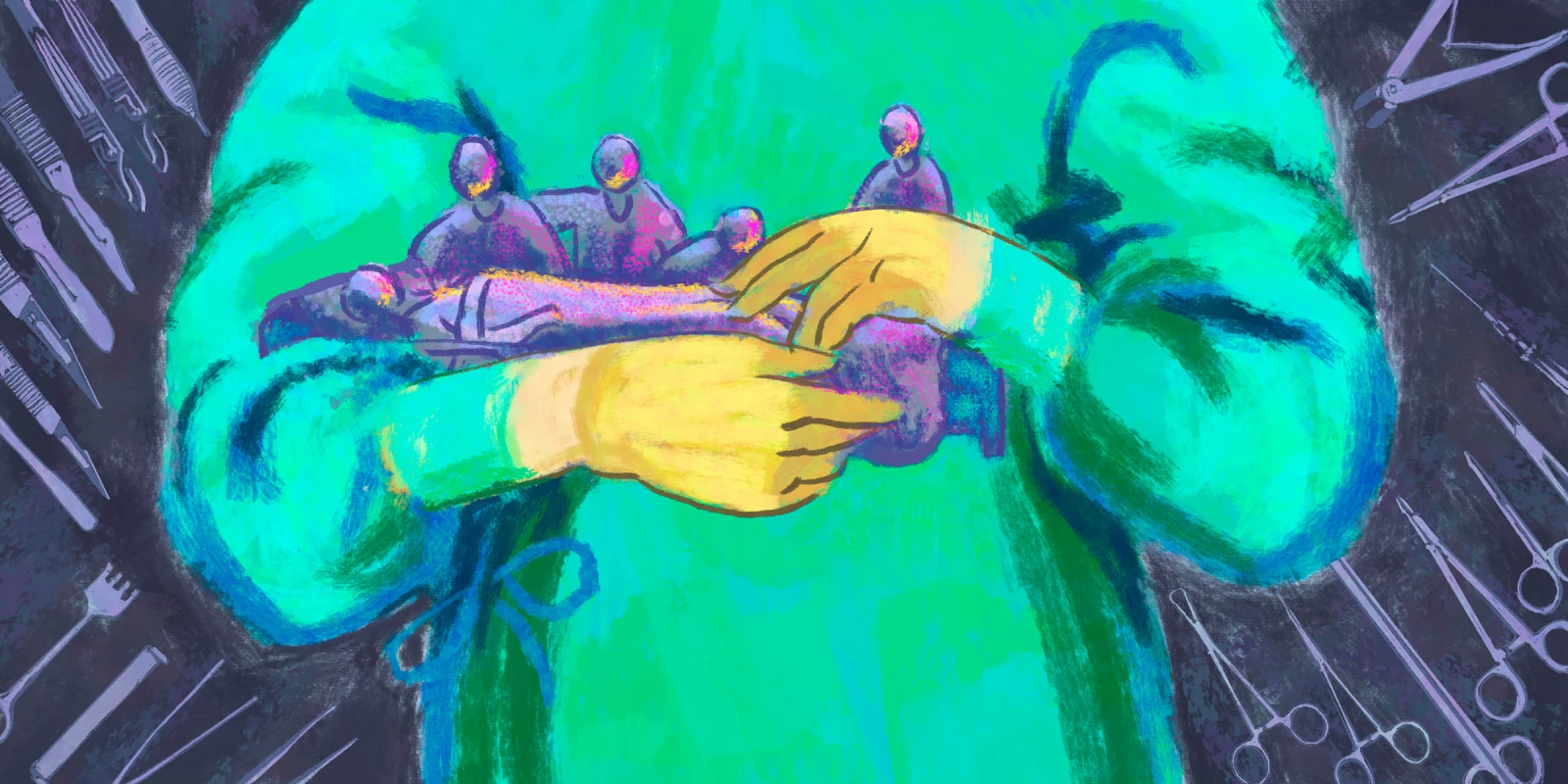
Illustration by Jennifer Bogartz