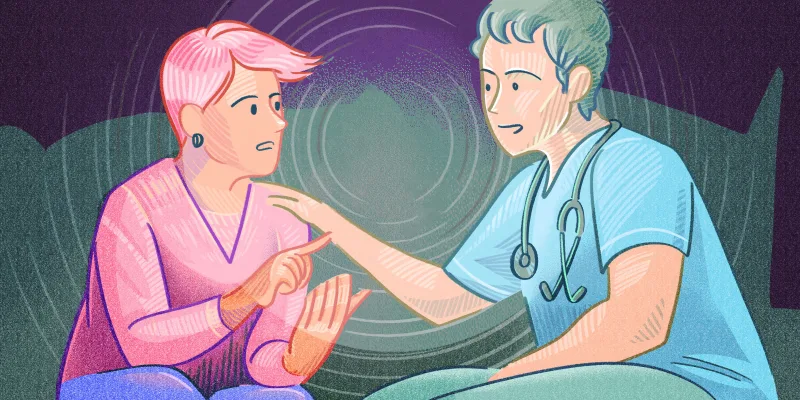

Elena was unusually respectful. She stood up to shake my hand as I entered the room. Her professional attire was impeccable, yet the smile felt forced and the handshake trembled, atypical for a 43-year-old.
Years of practice had made anxiety recognizable to me long before it was spoken aloud.
She had recently lost her cousin to colon cancer, and headlines about rising cases in younger adults had transformed vague symptoms into quiet terror. She carried a long inventory of symptoms, some unsettlingly compatible with a cancer diagnosis.
I ordered blood work, a colonoscopy, and — at her urging — a CT scan of the abdomen and pelvis. All returned reassuringly unremarkable.
At follow-up, I walked her carefully through the findings, explaining that her symptoms were functional rather than malignant. I expected the reassurance to calm her worries. Instead, it made her angry and doubtful.
She wanted another opinion. An MRI. A capsule endoscopy. Anything that might explain symptoms she could not reconcile with negative tests.
“Tests have limitations,” she said.
I began to wonder whether my reassurance carried limitations of its own.
The encounter stayed with me long after clinic ended.
I later tried to articulate the experience in a poem.
The Unwritten Language of Fear
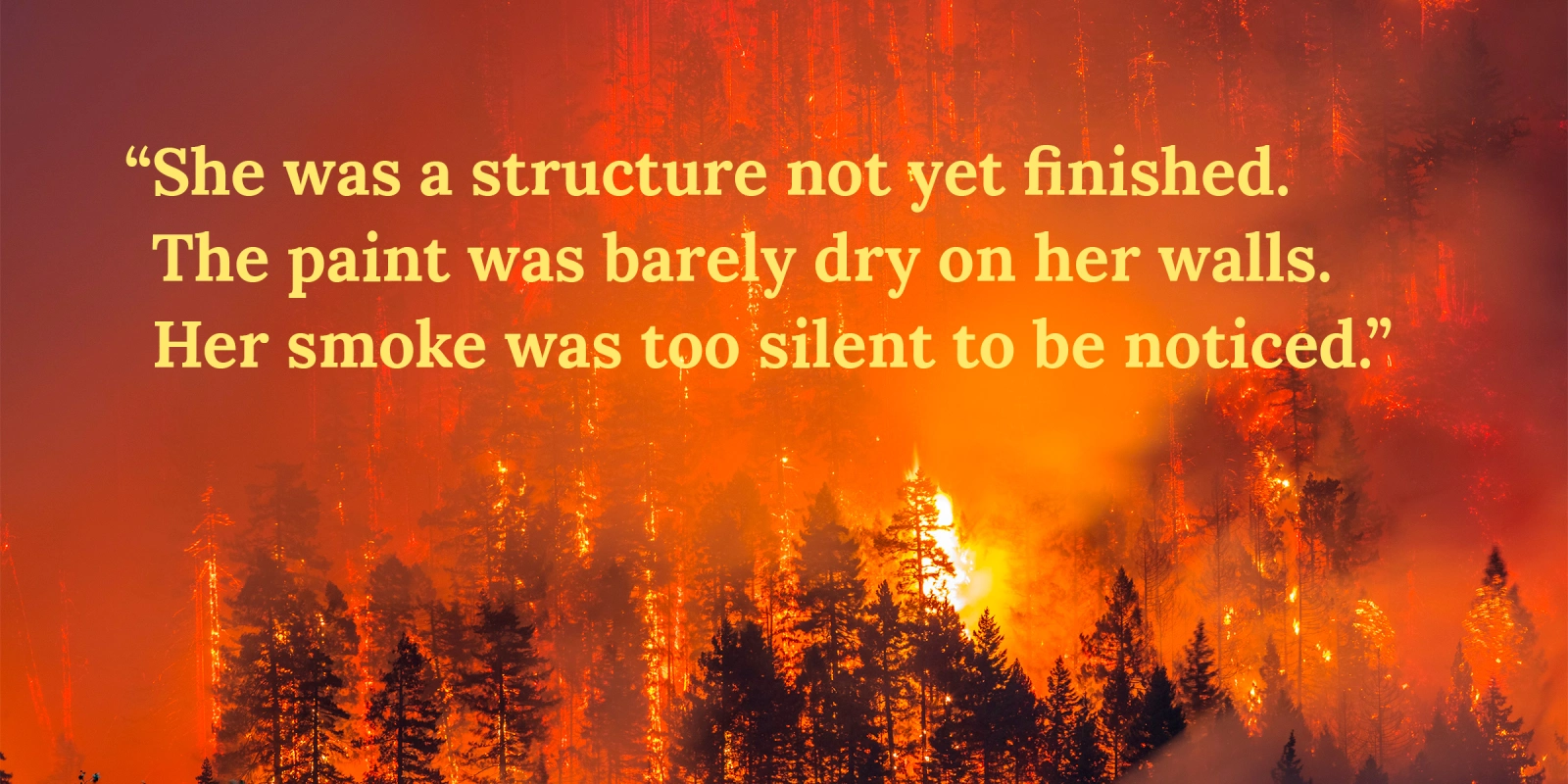
She was a structure not yet finished.
The paint was barely dry on her walls.
Her smoke was too silent to be noticed.
The fire of colon cancer climbed the stairwells too fast.
Hoses arrived too late for the blaze.
She was claimed, ashes left behind,
the grief still lingering in the halls.
Now, heat rises in your chest —
a flame in the abdomen that mirrors hers,
smoke threading through your veins.
Your mind, from the top floor, yells for help.
The cacophony of your smoke detector
deafens you with fright.
I smell your panic.
I see your suffocation.
I hear your story
and search carefully beneath the abdomen.
Cameras peek into every turn
of your lengthy colon.
Scans preserve the scene
in ash-colored light.
Investigations run deep,
frustratingly long.
I declare the results in your favor.
I call it a drill,
offering a practiced smile.
Yet, you inhale the smoke,
and the data is consumed in the blaze.
My words drown in sirens.
You look past my stethoscope
as if it were a toy
from a distant country.
I sit there like an evaporated shadow —
unseen, unfelt.
My cold hands hold
the precision of my stethoscope,
yet despite 25 years,
I remain an amateur
in the unwritten language of fear.
An Interview with the Author
How did this piece come about?
This piece is a result of ambiguity, humility, and the art of practicing medicine.
What was your inspiration for this piece?
I write with my young daughters, teaching them the art and joy of creative expression. The idea for this piece sprouted during those endeavors.