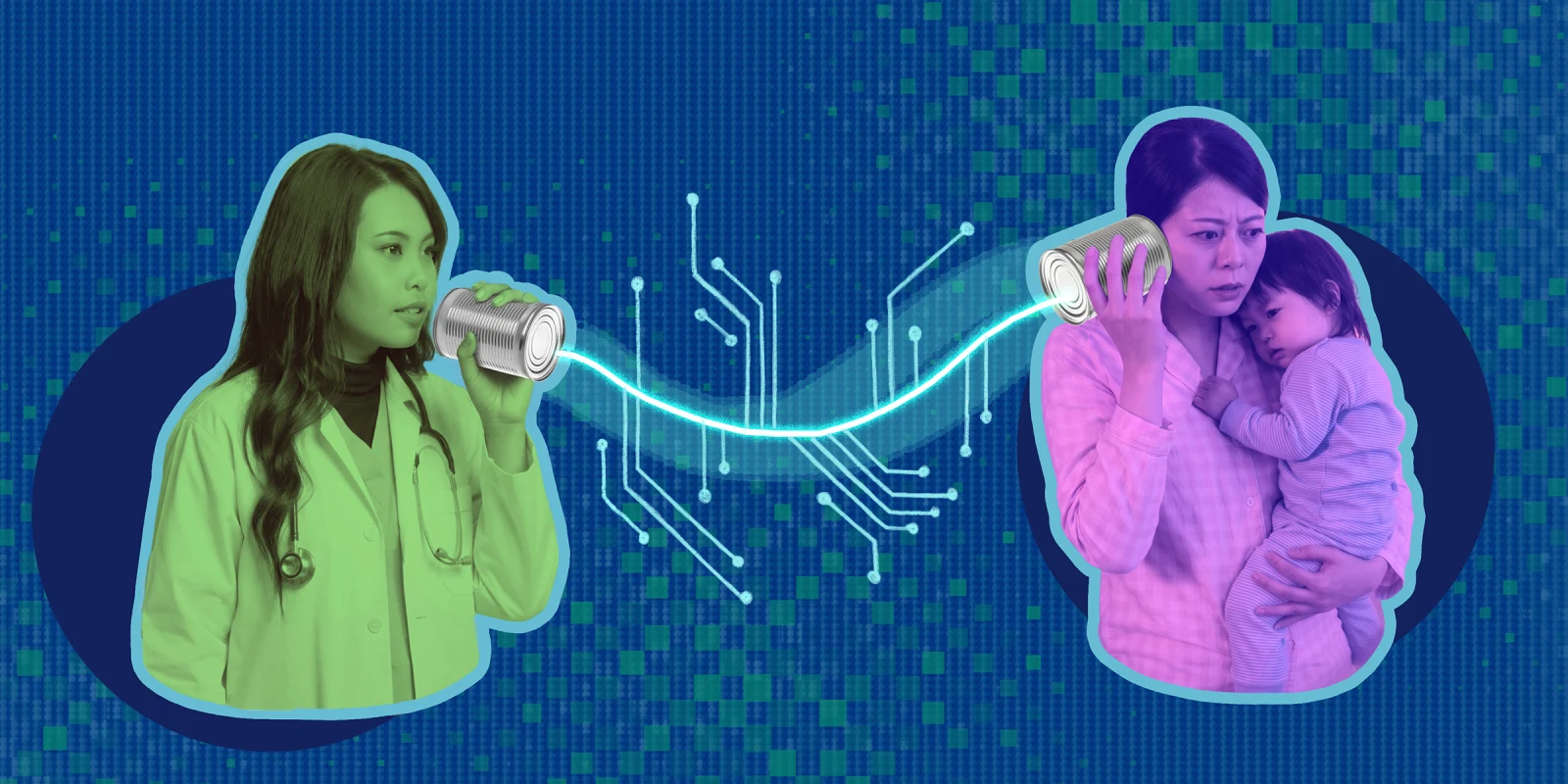

“Hi, I’m sorry, I don’t even know if I’m doing the right thing by calling you. My son has asthma and he’s having trouble breathing. He keeps coughing. I hear a whistling sound when he breathes. And his stomach is moving up and down with his breath. Is that normal for a child with asthma? Can I wait and see how he's doing in the morning, or do I need to figure out a way to get him to the ER now?”
As a pediatrician and CMO of a national pediatric telehealth company, I recently hit a career milestone. I have now led a clinical team responsible for more than one million pediatric consultations. That milestone has me reflecting on years of lessons learned, and has me holding one insight above the others: Empathy is not peripheral to medicine. It is part of the care itself.
Nothing feels normal when it is 2 a.m. and your child is struggling to breathe. The first line of care in moments like these is helping a frightened parent feel heard and supported. Often that begins with a few simple words: “I’m really glad you called. This can feel very scary. The way you described your son’s symptoms gives us a really good start.”
In practice, our patients come from different backgrounds, regions, and levels of healthcare literacy. But one thing remains remarkably consistent: the anxiety parents feel when they believe something may be wrong with their child, and the fear of making the wrong decision. Empathy in those moments means listening carefully, acknowledging fear, and helping families regain enough calm to think clearly again.
Time constraints in medicine are real. Most physicians feel they do not have enough time with patients. But empathy is often much faster, and more clinically effective, than many assume. One study found that a 40-second compassionate statement from a physician reduced patient anxiety and strengthened the physician-patient connection. Research has also shown that higher quality physician-patient communication increases the likelihood that patients follow recommended treatment plans. I have directly seen that empathy can improve care efficiency. A genuine moment of human connection often helps conversations move more productively toward clinical decision-making.
Many of my colleagues have read and discussed recent studies comparing physician performance with AI with a mix of fascination and discomfort. One widely publicized recent study in Science reported AI systems outperformed physicians in certain diagnostic reasoning tasks. Another study published in JAMA Internal Medicine found AI-generated answers were rated higher for both quality and empathy. To me, these studies reveal less about AI’s strengths and more about the realities physicians face each day.
Physicians are practicing under extraordinary pressures. With the continuing rise of chronic conditions, clinical complexity has increased dramatically. Administrative burdens continue to consume significant portions of physicians’ time. Increasing financial pressures to reduce healthcare costs may mean that appointment schedules further tighten. According to a 2025 American Medical Association survey, more than 40% of physicians report symptoms of burnout, which in turn can drive down quality of patient interaction. Research has linked physician burnout to declines in communication quality and patient experience, with a systematic review finding that higher levels of burnout among healthcare professionals were consistently associated with lower levels of empathetic care.
None of these structural drivers mean physicians care less about their patients. But they likely mean that under these conditions, cognitive and emotional bandwidth becomes increasingly strained. The prevailing system of physician training may also play a role. Research suggests physician empathy often declines during the course of medical education and residency, paralleling the years physicians are learning to manage complexity, uncertainty, risk, and relentless workload demands.
Ironically, our most promising opportunity to increase humanity in medicine may be technology. Physicians have historically spent up to half their time on administrative and documentation tasks rather than direct care. In the last several years, technology has been increasingly adopted to expedite documentation, prescription processing, referral coordination, and patient follow-up messaging, opening greater opportunity for meaningful patient interaction. Going beyond operational efficiency, AI tools such as Doximity Ask are becoming meaningful partners in evidence-based clinical decision support, assisting physicians with complex tasks like symptom assessment, triage, and care planning.
Used responsibly, technology-based tools may help create something medicine desperately needs: more space for physicians to focus fully on their patients. For the frightened mother calling in the middle of the night about her son’s breathing, technology helped support rapid assessment and high-quality care delivery. But what she likely remembered most was the reassurance of a calm, confident physician helping her through a frightening moment.
I am encouraged that our profession is on a promising path toward more consistent delivery of empathetic patient care: technology supporting physicians, creating more space for personalized and attentive patient care, improving outcomes for our patients, and, also for our clinicians. Research consistently associates higher empathy among healthcare professionals with lower levels of burnout and emotional exhaustion.
This is the type of future I hope for in our next million pediatric consultations, and for healthcare more broadly: compassionate care for patients and healthier care clinicians at the helm.