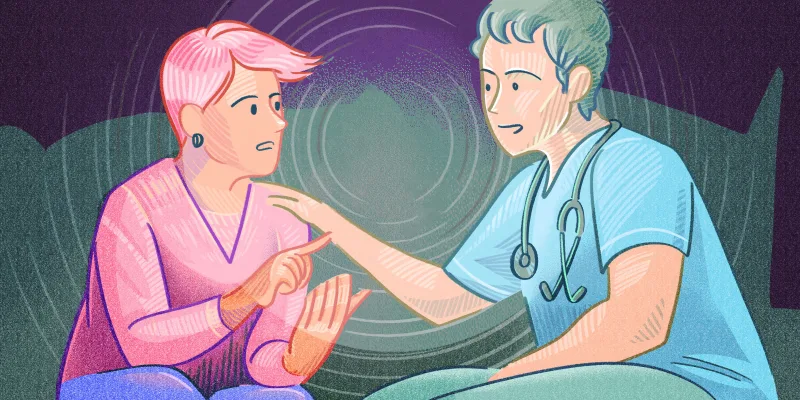

“You need surgery on your brain.” These are six words I say far too often in a daily shift. Patients most of the time view us as vultures in teal green scrubs and funny caps ready to pounce and cut. The fear instantly takes over and while we try our best to comfort and support, the words “surgery,” “incision,” and “tumor” block all efforts. The patient and supportive friends or family thank us for the honesty and plan, but we are still strangers with knives.
As a neurosurgical physician assistant, I am all too familiar with the conversation around what to expect medically. Years in the field have taught me how to accurately and precisely explain a neurosurgical procedure, reviewing and carefully describing step by step from incision to closure.
However, when it comes to brain surgery, I quickly learned how the patient’s thoughts often drift away from the procedure itself — toward concerns about appearance.
“But what about my hair?” or “Will I look like Frankenstein?” These are the real questions on the mind of the patient beyond risks and benefits. A recent patient, a young woman, born the same year as me, asked me if she really needed the surgery. How would her fiancé look at her after? The tumor didn’t scare her, but how she would be seen after did. I felt her distress as she looked directly into my eyes and questioned. How much hair would be gone? I considered my own long hair. As a clinician, we are often encouraged to compartmentalize, but I was able to empathize from having my own hair shaved for ear surgery. I understood it was not “just hair.”
Ernest Hemingway wrote, “The world breaks everyone and afterward many are strong at the broken places.” I like to think this applies to the strength or empowerment rather than grief a patient feels even once the hair is shaved. But a patient’s concern for hair is not vanity. Hair is a way of expression, a shield from the world, a literal piece of who we are. Of course, there is concern.
Brain surgery is not completed without a bit of mess. First, we sketch out a line along the scalp and shave the hair to gain access to the necessary region. The idea of hair shaving in and of itself is enough to send pangs of distress through women and men alike. After the incision is made, despite best efforts to keep hair clean, it inevitably becomes saturated with a muddy mix of blood and bone dust from the craniotomy with the scalp tinged a bright neon orange from prep solution. The incision is closed, typically with staples or an assortment of nylon sutures, which does in fact provide a slight “Frankenstein” appearance.
As the last clinician in the OR responsible for cleaning and dressing the wound before returning the patient to their loved one, I feel a responsibility for the psyche of my patient and the family. No one wants to see their mom arrive back to the ICU with matted hair strewn across her head and a bandage on her locks. Or see their daughter or son with a large, patchy, shaved area with bloody staples and saturated dressing. The stress of having to undergo cranial surgery is enough; we do not need to add an additional layer of anxiety to an already complex situation through presenting a loved one’s disheveled head on a clean white pillowcase.
In the past, I would try to be reassuring, explaining how incisions heal and when a shower would be possible, but words of encouragement were not enough. It was time to make a change.
I proposed an idea. Seemed simple enough to me but one that would still require buy-in from my team. Why not simply wash the hair of patients in the OR before they’re even awake?
A new process was born. After the surgery was completed, but before the patient was extubated and awake, the hair salon opened, right there in the OR. At first, staff questioned this new method but after witnessing the process once or twice, they understood the importance and many even came to request it for their patients. A list of supplies was gathered — at least six bottles of warm sterile water, a basin and drape with suction to contain the watery mess, individual shampoo and conditioner bottles, and a hair brush.
The method requires multiple hands to carefully comb away debris, pour the warm water to wet the hair, and massage the shampoo into the hair and scalp, and even to hold the head. Unlike a traditional salon, there is no washing basin tucked into the corner. It’s methodical, similar to the surgery itself; however, it brings a new sense of beginnings and calm to the OR. We all just spent the last several hours together, standing and dancing around this patient’s head to carefully, precisely remove a hematoma or tumor, all while holding our breath with concentration during those critical moments. Our own nerves and senses were on high alert as the procedure was delicately performed. Now it is our turn to breathe again. Our moods brighten as the scent of rosemary or mint fills the large cold room, and spirits lighten as the hair is freed of grime and gore. We may still be wearing masks, but you can feel the smiles exchanged between colleagues. An informal type of debriefing about everything that happened in the past few hours occurs during these unseen moments, allowing for emotions to be released.
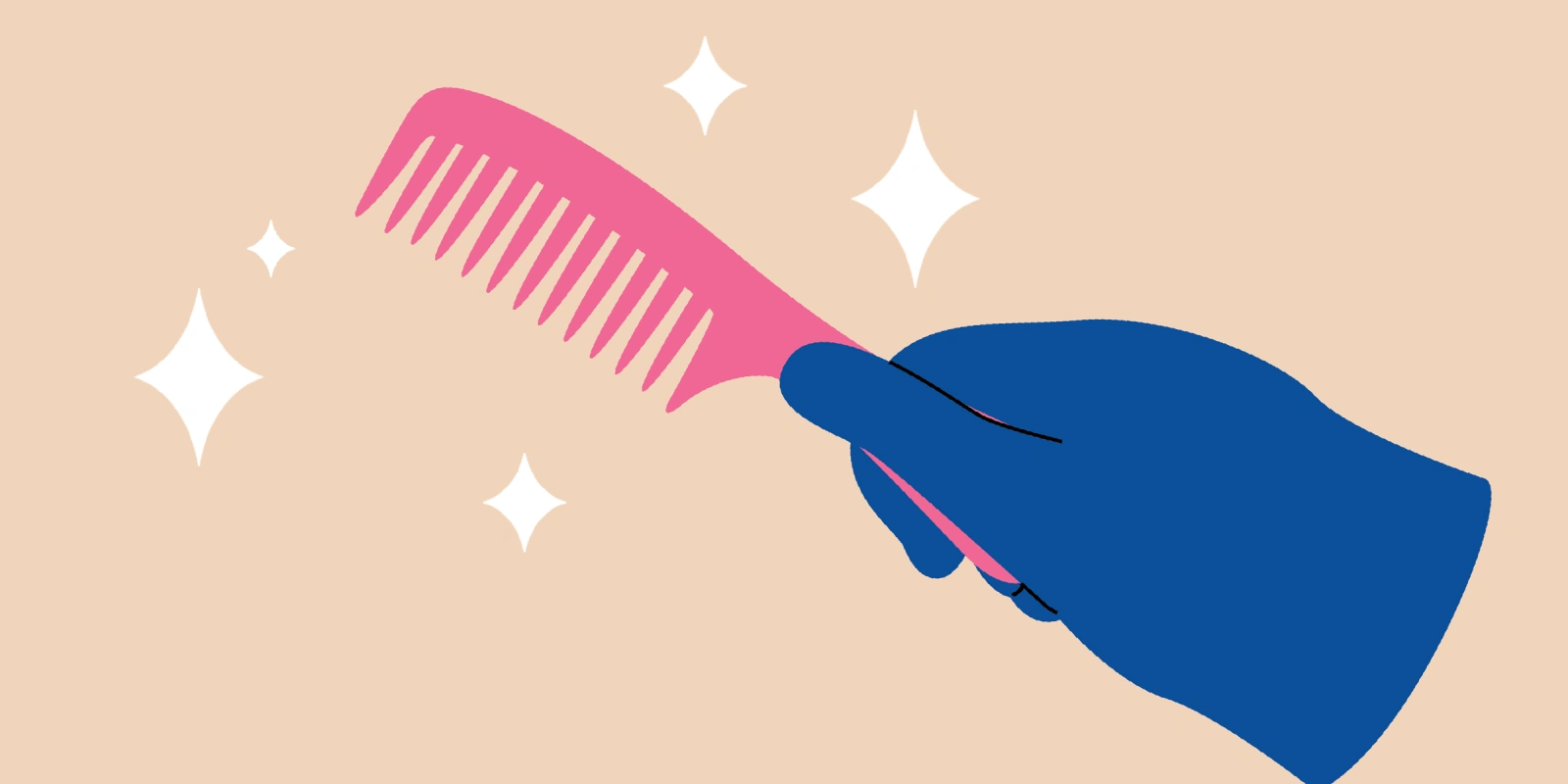
Once the hair is fully cleansed, we finish with the conditioner and crucial brushing prior to dressing placement. Short hair receives the classic towel dry and is brushed into a suitable combover look. For long hair, we use a disposable brush ($30 for 100 individually wrapped!) to remove all the knots and snarls, followed by a ponytail, or more typically, a braid.
Only 10 minutes of additional time spent in the OR; however these extra moments truly make a world of difference.
Next, we move the patient onto their ICU bed, with two braids draped carefully on the crisp white linens. There is a slight look of peace even before they are awake, and the staff feels rejuvenated by the sense of tranquility in the air. Of course, removing the tumor made a difference, but so did this.
When I come to a patient’s hospital bedside with my computer in tow to review images of their lesion or hematoma to explain why they need brain surgery, most assume we just want to slice and dice. This could not be further from the truth. At the base of it all, we want to help, to change someone’s life for the better, to make a difference. The incision and cutting may be a portion of what we do, but it does not define us. What defines us are the other actions: the empathy we show through careful deliberation and planning, through handing you a box of tissues for the tears we can feel coming, and through showing a small piece of kindness to relieve your stress and anxiety after a procedure via a visit to the hair salon in the OR.
I may joke that one of my roles as a woman in neurosurgery is to “protect the hair,” but I do this proudly. This is what people remember — not the hospital food, or the pain, or the medications after surgery. They remember waking up with a fresh, clean scalp smelling of spring morning and a braid. I hope they remember the kindness.
What simple “procedures” does your team do to help patients feel their best? Share in the comments!
Kristen Cellary is a senior neurosurgical physician assistant in Camden, NJ. She has worked in the field of neurosurgery since graduating from the University of the Sciences in 2016. Prior to becoming a PA, she earned her MPH degree with a focus in health literacy from Thomas Jefferson University and in 2022, she graduated with her doctorate of medical science from the University of Lynchburg. She spends her days in the OR, seeing consults, and caring for patients perioperatively. Outside of work she enjoys running, reading, and her dog Bailey, and is a classic “Disney adult.” She is a 2025–2026 Doximity Op-Med Fellow.
Image by Stranger Man / Shutterstock