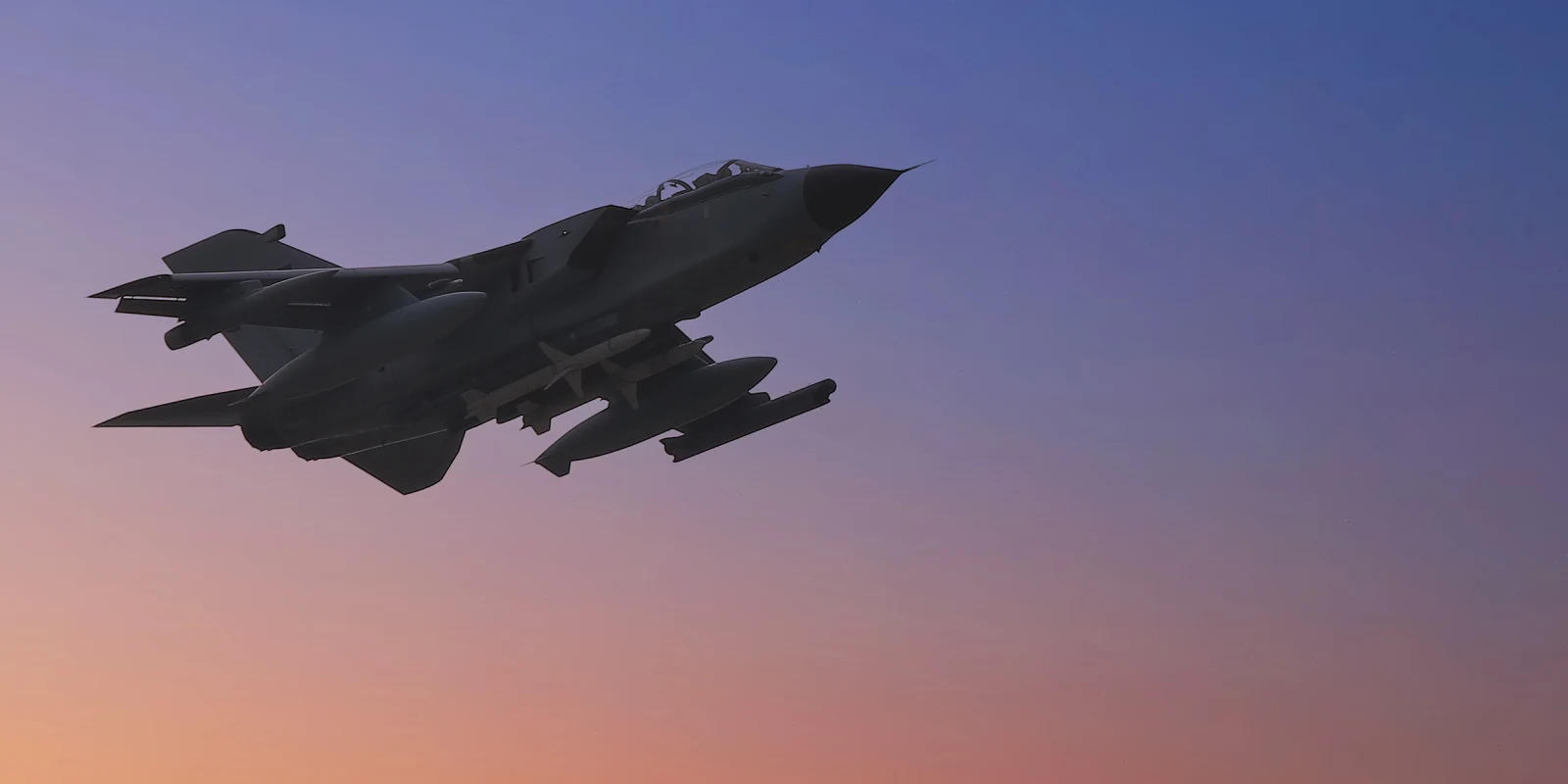

At nine times the force of gravity, blood does not behave politely. It abandons the brain, floods the legs, and reminds you — quickly — that consciousness is, in fact, conditional. I learned this over the Philippine Sea, strapped into the back seat of an F-15 Eagle flying out of Kadena Air Base in Okinawa, Japan.
I was early in my Air Force Reserve career then — not living some glamorous “fighter jet every drill weekend” life, but on a short deployment where most days looked like every flight surgeon’s reality: paperwork, safety briefings, pilot physicals, and PT tests. Outside that deployment, I was something entirely different: a newly graduated hematologist/oncologist from northern New Jersey, living in Corona, California, far more comfortable reading bone marrow cytology than approaching Mach speeds.
The pilot that day was also from New Jersey, which became our icebreaker as we taxied — jokes about diners, jughandles, and Turnpike exits. But once he advanced the throttles, conversation dissolved into vibration. Within minutes, it was clear the Eagle intended to teach me about G forces in a way no physiology lecture ever could.
Somewhere around the second or third hard turn, my vision began to gray. It followed the exact arc of pre-G-force induced loss of consciousness (G-LOC) that I had lectured pilots about but had never personally experienced: the narrowing visual field, the curtain drawing inward from the edges, the heartbeat that felt like it was dropping through the floor. When the jet finally landed, I realized my thighs were burning. Later, peeling off my flight suit, I found the “geasles” — petechiae scattered across my legs from capillaries pushed past their limits.
I thought back to fellowship in Baltimore not long earlier, examining 3 a.m. “rule-out thrombotic thrombocytopenic purpura” smears under fluorescent call-room lights. Standing in the Kadena locker room, I wondered what my own smear might have shown after that flight. Subtle hemolysis? A few schistocytes rattled loose by gravitational stress? It was the first time aviation physiology and hematology overlapped as lived experience rather than parallel disciplines.
After that sortie, I promised myself I’d improve: not out of bravado, but because flight surgeons owe their aircrews more than checklists. We must understand their operating environment not just academically, but viscerally.
So I trained. Hard.
The Anti-G Straining Maneuver — AGSM — became muscle memory: calves locked, quads ironclad, glutes firing, core braced, breathing reduced to ugly, pressure-building bursts. The anti-G suit helped by squeezing the legs and abdomen, but the body was still the primary pump. I relearned how to “gangload” oxygen, slamming the regulator to 100% O2 during heavy maneuvering to buy a few extra seconds of awareness.
A year after returning from Kadena, it was time for centrifuge requalification — mandatory for flight surgeons assigned to fighter units. Nine Gs. Sustained. This time, I stayed fully awake.
Two years later, I strapped into a T-38 Talon II over Sheppard AFB for basic fighter maneuvers (BFM) — the most aggressive flight profile we put humans through. My pilot’s callsign was NUKE, which should have been an omen. He flew the jet like it owed him rent: high-G nose-high climbs, nose-low dives, rolling scissors, break turns, all maneuvers far more demanding than anything I’d seen at Kadena.
But this time, I didn’t gray out. My vision held. My breathing stayed harsh but controlled. My thighs remained free of geasles.
After landing, NUKE admitted he’d flown harder than usual “just to see if you’d hang on.” I took that as the quiet victory every flight surgeon secretly wants — not to impress pilots, but to prove we can operate in their world without becoming a physiological liability.
And for physicians who will never strap into a high-performance jet, the takeaway isn’t truly about G forces. It’s about noticing the moments in our own medical lives when the world begins to gray out: when schedules compress, inboxes overflow, family meetings multiply, or decision fatigue narrows our cognitive field just as gravity narrows a pilot’s visual one. In the cockpit, the only way to stay conscious is deliberate, practiced physiology; in medicine, it is deliberate, practiced awareness. The same skills that kept me awake at nine Gs — preparation, controlled breathing, focusing on what matters, acknowledging human limits — are the same skills that keep any clinician clear-headed under pressure. Fighter pilots train to fight gravity. Physicians train to fight cognitive overload. Both require humility, repetition, and the discipline to sense when our limits are approaching.
These days, when I sit on an airliner cruising at 36,000 feet, with someone in 12C complaining about slow Wi-Fi while I fly to Miami for drill, I think about how fragile humans truly are at altitude. Without pressure cabins, oxygen systems, anti-G research, and a century of flight surgeon innovation, we would freeze or pass out in minutes. We did not evolve for the sky; we engineered our way into it.
And every time I walk down the jet bridge, I remember those two flights: the humbling near-G-LOC over the Philippine Sea and the crisp, clear-headed BFM ride with NUKE years later. Both showed me how the body behaves when pushed to its limits. But more importantly, they taught me something all physicians share, no matter the specialty: staying conscious — physically or cognitively — is a skill you must train, a discipline you must practice, and a responsibility you carry for the people depending on you.
Dr. Avishek Kumar is a private practice hematologist/oncologist in the NYC suburbs and an Air Force Reserve flight surgeon who has flown in high-performance aircraft around the world. He writes about the physiology, psychology, and human stories that live at the edge of aviation and medicine.
Image by fhm / Getty Images