
Last month I caught myself stalling on a diagnosis I’d already made in my head, and I’ve been bothered by it since.
The patient had a picture I’d seen a hundred times. Twenty minutes in, I knew what it was. But I also knew what saying it out loud would cost me — the follow-ups with no end date, the portal messages, the quiet way a “consult” turns into “the doctor who handles all of this now.” And I noticed myself drifting toward the softer options. Order another study. Use the careful phrasing. Leave it open. Send them back around for one more loop. None of that was because I was unsure. I was completely sure. I just didn’t want what came stapled to the diagnosis.
That hesitation is what I want to talk about. Not the workload — we complain about workload constantly, out loud, in every meeting. The thing we don’t say is that somewhere along the way the job started rewarding us for not being the one who names it.
There’s an unwritten rule in medicine nobody puts on a slide: Whoever figures it out gets stuck with it. Name the diagnosis and you own it — not the workup, not until things are clarified, but forever, even when you’re the one who recognized it and the actual treatment lives in some other specialty’s hands. Whoever names the cause inherits the patient. Feel that land on you a few times and something shifts. You start protecting yourself, and you don’t always notice you’re doing it.
And that’s the part that actually scares me. Workload is a labor problem; labor problems have labor answers. This is different. This is the fear of ownership reaching back and changing the diagnosis itself.
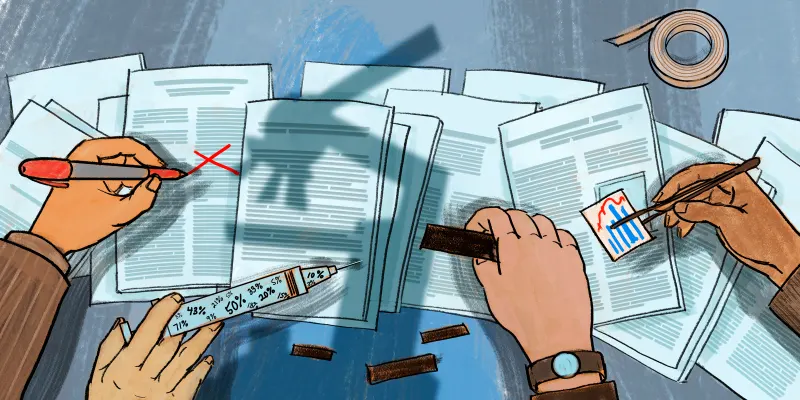
It hides well, because every form it takes can pass for good medicine. “Features suggestive of” instead of the name. An extra referral that spreads the liability around before you’ve committed to anything. “Let’s recheck in three months” when there’s nothing left to recheck — you already know. A diagnosis delivered so wrapped in qualifiers that the patient walks out still not sure what they have, which, conveniently, means nobody has to own it yet. Half the time this really is caution. The other half it’s a clinician deciding not to plant a flag they’ll be standing next to for the next decade. The two look identical in the chart. That’s the problem.
I don’t think many of us do this on purpose. That’s exactly why it’s worth dragging into the open — a deliberate choice you can argue with, but a reflex dressed up as thoroughness just quietly becomes your practice. And it eats away at the one thing we’re actually here to do. A patient who waited four months for the appointment does not need me to be artfully vague to keep my panel manageable. They need the name. As clear and as early and as honest as I can make it.
There’s a cost to hesitating, too — it’s just billed to somebody who isn’t in the room when I decide. The patient who leaves with “possible connective tissue disease, we’ll keep an eye on it” instead of an answer goes home and stays scared for another year. The next specialist runs the same tests I already ran. The system eats the duplicated cost and files it under diligence. We’ve managed to build a world where the careful move and the cowardly move produce the same note, and only the patient can tell them apart — usually much too late.
I don’t want to be unfair to the instinct, because it isn’t stupid. It grows out of a real trap: You can be exactly the right person to recognize a condition and the wrong person to manage it — and name it anyway, only to inherit its long-term care for years because nobody ever built a better place to send it. That trap is real. I’ve argued before that the fix is honest handoffs and actual referral pathways, not one decent specialist silently swallowing the overflow. But you don’t answer a bad incentive by letting it edit your judgment. If the system punishes naming things clearly, then fix the system. Don’t start naming things less clearly so the punishment lands on the next physician instead.
So this is really for colleagues in every specialty, because nobody’s exempt. Cardiology, neurology, GI, primary care — anywhere a clean diagnosis creates a standing obligation, the same temptation is sitting there. The tell, when I’ve caught it in myself, is almost embarrassingly consistent: My certainty goes up and my documentation gets vaguer at the same moment. When that happens, the extra test usually isn’t for the patient. It’s for me.
What I’m trying to do now is dull to describe and genuinely hard to pull off. Say it when I know it, as early as I know it, in words a frightened person can actually understand. Then deal with the ownership mess separately — out loud, with a real handoff and a clear way back to me if things change. The diagnosis can’t be the thing that gets sacrificed to my scheduling problem. It’s the one thing the patient came for, and the one thing only I can hand them.
I almost didn’t make that diagnosis last month. I did make it. Then I made the awkward phone calls about who was going to help carry it. I used to think those two things were one decision. They aren’t, and getting the order right turns out to matter more than I realized.
How do you deal with ownership after diagnosis? Share in the comments.
Olga Goodman, MD, FACR, FAAP, FACP, is a practicing rheumatologist in Illinois with five board certifications, including internal medicine, rheumatology, and pediatrics. She writes about professional self-regulation, physician time burdens, and real-world quality improvement.
Image by dane_mark / Getty