
The U.S. is facing a profound primary care crisis, especially in California. Nearly 7 million residents struggle to access routine care, not because they lack insurance or motivation, but because there are not enough clinicians. As a result, EDs, designed for trauma and acute emergencies, are increasingly managing ear infections, colds, UTIs, and chronic conditions that should be addressed in outpatient settings.
This is not a short-term problem. By 2030, California will need thousands more primary care clinicians to meet demand. Yet fewer medical students are choosing primary care careers, favoring higher-paying subspecialties instead. As the population ages and chronic disease becomes more prevalent, the gap between need and capacity continues to widen.
One solution has been in front of us for years: NPs.
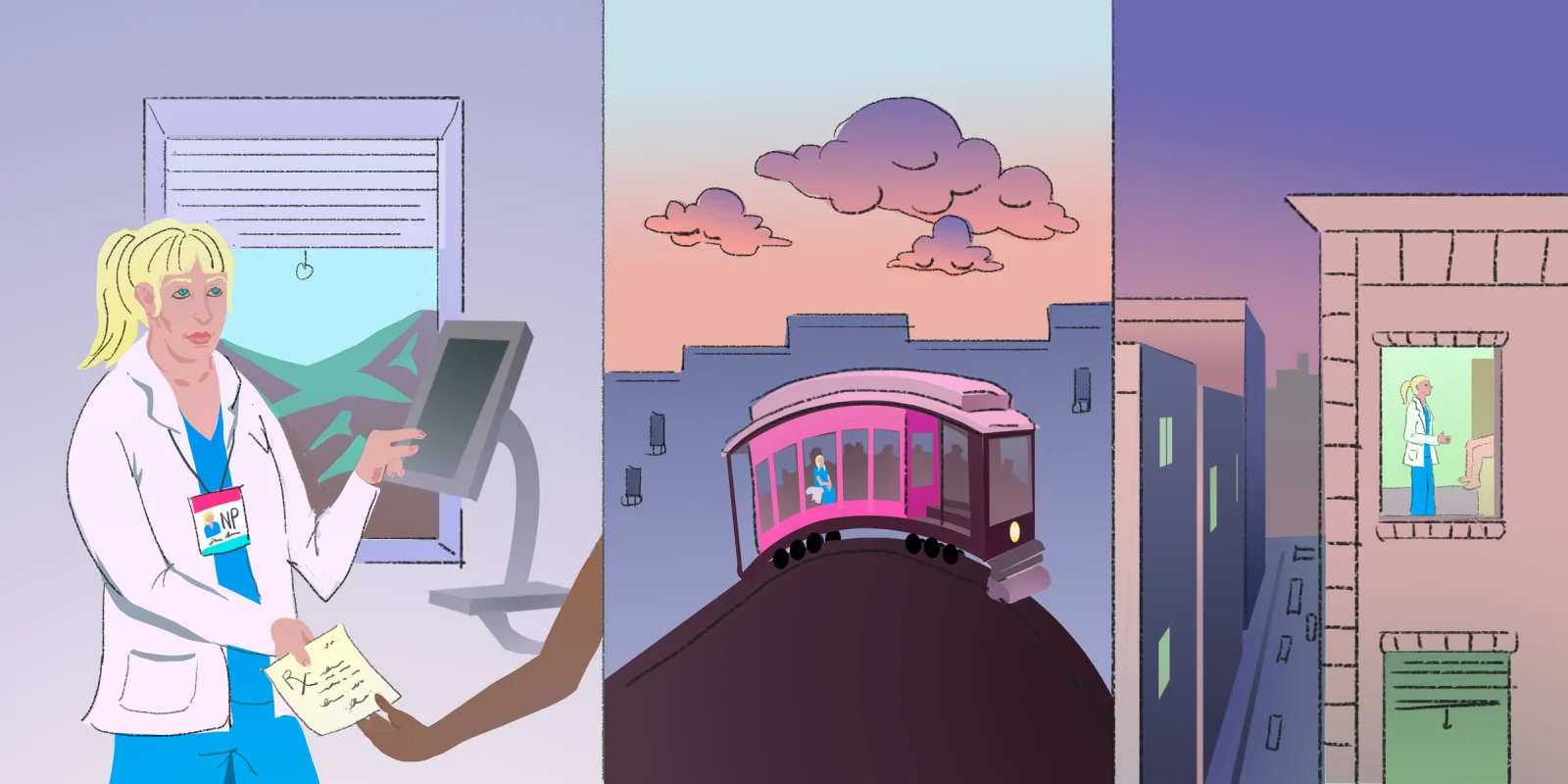
I see this daily in my own clinical practice. Patients routinely tell me some version of the same thing, “I feel like you actually listen to me.” More than once, a patient who previously waited weeks or even months to see a physician has said they chose an NP appointment because it was available sooner and then asked to stay with an NP afterward because the visit felt more personal, more thorough, and less rushed.
That pattern is supported by data. In a recent Bay Area-based exploratory study I helped lead, examining patients who had been seen by both an NP and a physician within the previous year, NPs were rated more favorably overall across measures of care quality, bedside manner, and satisfaction. Importantly, these preferences were consistent across age, gender, education level, race, ethnicity, and health status.
Despite these favorable perceptions, access continues to lag behind demand. Although the number of primary care clinicians in California increased by 46% between 2004 and 2016, forecasts still project the need for thousands more clinicians to meet future demand. Historically, restrictive supervision requirements have limited NPs’ ability to practice independently, creating a bottleneck at precisely the moment when access is most constrained.
NPs are well positioned to help close this gap. Trained at the graduate level, NPs diagnose illness, manage chronic disease, prescribe medications, and emphasize patient education and prevention. National workforce projections identify NPs as one of the fastest-growing health professions.
In California, policy has begun to catch up. Assembly Bill 890, implemented in 2023, created a tiered pathway for NPs to practice independently after meeting defined experience requirements.
Policy change alone, however, does not ensure public understanding.
That same study revealed significant gaps in patient knowledge. Only 19% of participants were aware of Assembly Bill 890, and nearly one in four could not distinguish between an NP and an RN.
NPs are not a temporary workaround for physician shortages. They are a core part of the primary care workforce.
Naomi Hemp, DNP, APRN, FNP-C, RN, PHN is a family nurse practitioner in California and a clinical faculty member in nursing. Her research focuses on patient perceptions of care, primary care access, and nurse practitioner scope of practice.
Illustration by Jennifer Bogartz