
I run a solo cataract practice with zero employees. I expect you will want to see just how that works.
It’s not that I am unacquainted with a staff model practice. I started a full staff practice in 2011, ran it to a 30-cataract-a-day level, and sold it to private equity in 2023, but I didn’t stay long. After some time I knew I wanted something different. At 52 years old, I had only one question to answer: What, in my career of medical practice, made me happiest? The answer was strange but true: The happiest I had ever been was at the beginning of my 2011 practice, when I did it all myself. I really took care of tasks A through Z for the patient, while in no rush, and spent the day chatting, joking, and having fun with them.
My practice is small on purpose. I wanted a practice I could run alone, not because I couldn’t afford help, but because this is the way I like to practice — small, simple, and stress-free. I think of it as a surgical micro-practice. I aim for five new patients a week. That’s one new patient every morning, hopefully with two eyes that need cataract surgery. That is 10 cataracts a week and one physician doing everything: the phone calls, the insurance verifications, the claims, the QuickBooks entries, and the surgery. And did I mention? — mine alone.
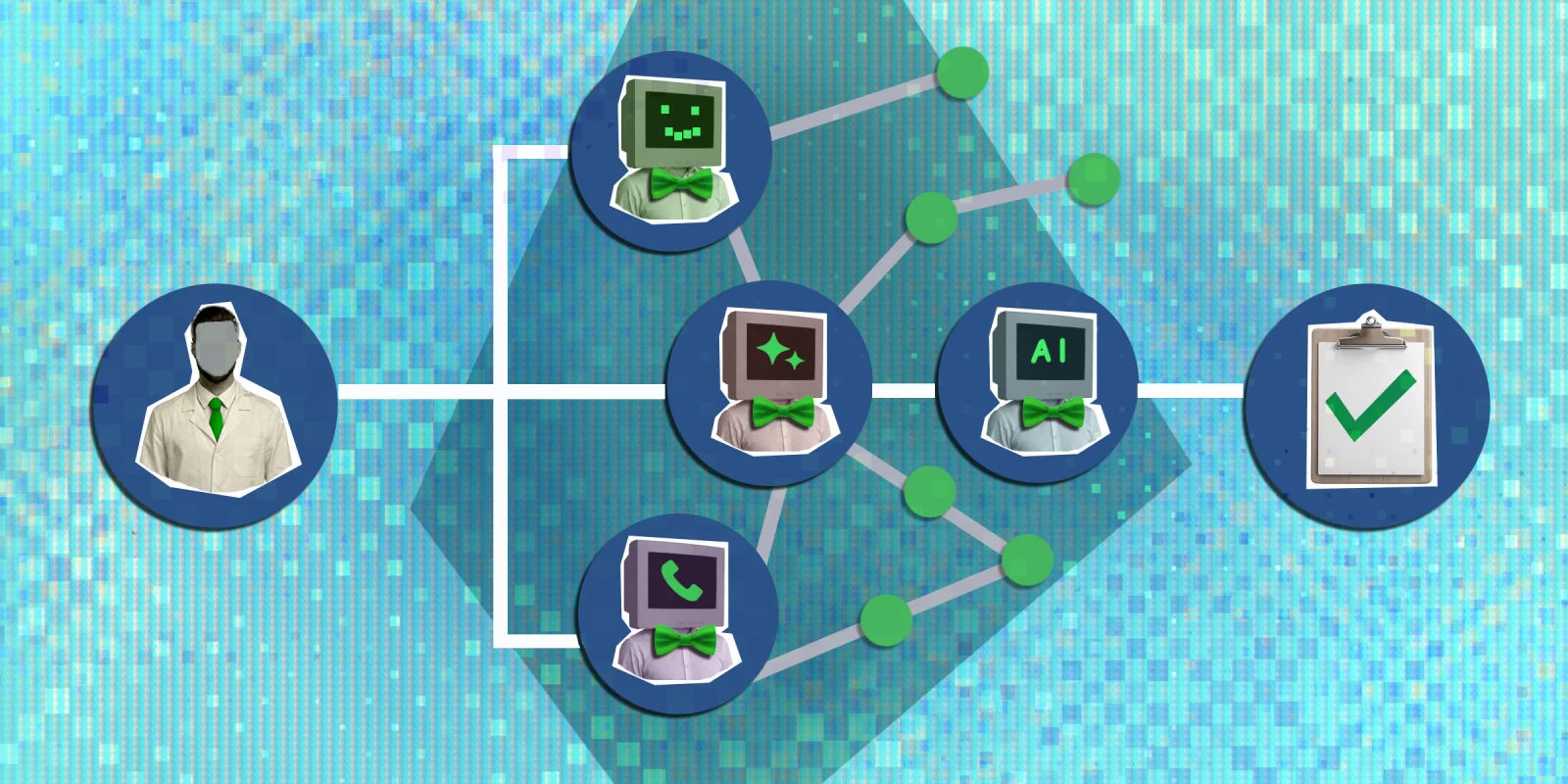
But the part that’s really worth talking about is how somewhere around early 2025, the AI tools that I had been experimenting with crossed a line from novelty to utility. I don’t mean the chatbot-gives-you-a-recipe kind of AI. I mean the kind that can receive an incoming fax, read it, determine what it is, extract the relevant clinical data, and route it to the correct place in my EMR — without me touching it. The kind that can take my “patients to be scheduled or rescheduled” list and crunch it into browser code so each patient receives a text with a link to self-schedule, without buying new software or lifting a finger. Nothing beats watching your work magically take care of itself on your monitor.
I am writing this in April of 2026. My incoming faxes route themselves in complete HIPAA compliance via a program called Keragon. My surgical scheduling is automated, my patient recalls are automated, and every morning I wake up with a to-do list that gets shorter and shorter. On the weekends I like to ponder what task I can automate next.
My most recent win was insurance verification, deductible, and determination of balance due. Every week before I begin seeing patients, I am faced with a billing dilemma: How much will each patient owe, based on the procedure, or visit, or testing we agree on, and based on their insurance and deductible? How do you figure it all out before the workweek arrives? Well, most physicians don’t worry about these things, and a competent staff member handles it, but if a physician ever did learn the steps they would begin to understand that the information about these details is contained on Availity and similar verification portals, that one must navigate until the relevant information is found and then interpret it. That is what I do … or what I did, until I automated it.
Artificial intelligence can create scripts that mimic your actions on a screen. So if your workflow is clicking a few times per patient to get a birthday and insurance ID, those specific actions can be automated, and you are left with a list of everything you need to mass cut and paste into the more popular insurance verification websites.
Now, the great misfortune in using most AI is that it is not HIPAA-compliant and you are obligated to create “pretend” patient days, with practice patients that are not real, so that the AI can write a script that mimics your actions with no exposure to actual patient data. In my most recent automation, I used Anthropic’s Claude to create the programming that gathered all the data for the insurance website, using exactly this type of “fictional” day. And that is as far as the majority of AI can bring you.
To actually process the output data from the insurance website, I cut and paste to Doximity Ask with my fee schedule, my insurance allowables, and every code I am likely to use in my prompt. The prompt, the extraction script, and the templates are all free to copy. What comes out the other side is a concise interpretation of the patient’s insurance obligations applied to my procedures. When I show the results to my consultant biller, she is consistently surprised at the accuracy. It is a unique opportunity to access high-level intelligence in a HIPAA-compliant environment.
One more task, shortened from several hours, to perhaps one.
To be clear, there are still things I do myself. I answer the medical questions when patients call. I fill out the medication refills and fax them back to the pharmacy. And yet every day there is less and less, and after most weekends I return with another new strategy to slay the latest busywork and take it permanently out of my hands.
I didn’t plan it to be this way. I really had made my peace with doing about an hour or two of administrative work a day. To me, that was worth the price of a truly autonomous life and practice. Instead, the practice is almost autonomous in and of itself.
Not everything in my practice is automated. I did all the billing myself (and I mean manual entry for many insurers) until I got big enough to hire a billing company. I have a part-time employee to build my practice. I have a consultant biller and manager that I bring difficult billing scenarios to, and I will eventually hire a part-time optometric physician to work with me to see postoperative patients. However, the clinic runs on its own, with just me. It does not require anything else to be successful.
I’m not writing this to suggest every physician should do what I’ve done. The regulatory landscape around AI in healthcare is just beginning. And there is a real learning curve; each implementation takes forethought and time.
In any case, I am happy in my practice. I wake up happy to go to work and try new things, chat with my patients as if we have all day (because we do), and enjoy knowing and controlling my own business from every conceivable angle.
The tools exist today. They are not perfect. But they are good enough that I am running a functioning, profitable, solo surgical practice with no full-time employees, and the quality of my clinical care has not suffered. If anything, it has improved; each patient is shocked to have spent a full hour with the doctor. If you had told me this was possible when I started my first practice in 2011, I would not have believed you. I’m not sure I would have believed it in 2024. But here I am, and it works. I, like many of you, spent many years returning from work in complete exhaustion, after tending to 40 patients, with only a shadow of myself to offer to my family, and many years dreading the coming morning. To my fellow physicians: It doesn’t have to be that way.
I’m not just writing this to mention to other doctors that this has been a fun experiment. I am writing this because I think the conversation about physician burnout and happiness is missing a variable. We talk about wellness programs, schedule flexibility, and peer support — all important. But we rarely talk about the possibility that the administrative burden crushing physicians could simply be removed. Not delegated to cheaper labor. Not outsourced to a call center in another state. Removed.
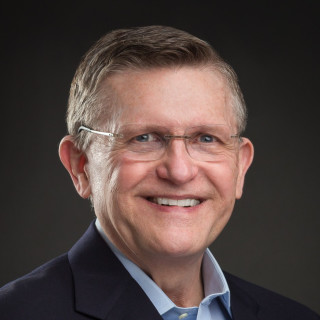
Oren Fass, MD is a board-certified ophthalmologist and cataract surgeon, and the sole owner of Denton Eye Consultants PLLC in Denton, Texas. He is the author of “The Autonomous Physician: How I Built a Practice, Sold It, and Built a Second One That Runs Itself,” available on Amazon. Reach him at @concierge_ophtho or conciergeophthalmologydoc@gmail.com.
Collage by Diana Connolly
Want more information about clinical care? Use Doximity Ask to quickly review literature, explore differential diagnoses, and access credible citations.