
For months, I felt off. Exhausted. Freezing. Distracted. I was in my third year of medical school and just finishing an intense rotation in general surgery. I had gone to multiple appointments over the past several weeks with countless clinicians, all of whom told me that these symptoms were due to stress or perfectionism. I tried yoga, meditation, journaling, and more, but my symptoms only worsened. Then, after finally meeting with a particularly understanding endocrinologist, I was diagnosed with Hashimoto’s thyroiditis.
Part of me felt relieved because now I finally had an explanation for how I had been feeling. Part of me felt scared because now I had to manage a chronic condition for the rest of my life. And part of me felt ashamed, but I wasn’t sure why.
Months later, after being well-managed on 50 micrograms of levothyroxine, I’ve finally gained some clarity as to how this diagnosis has affected my perspective on medicine. Millions of Americans live with chronic conditions marked by vague, frustrating symptoms. Fatigue. Brain fog. Trouble concentrating. Feeling “off.” These complaints are common, nonspecific, and easy to dismiss, especially if numerical data do not provide a quick explanation.
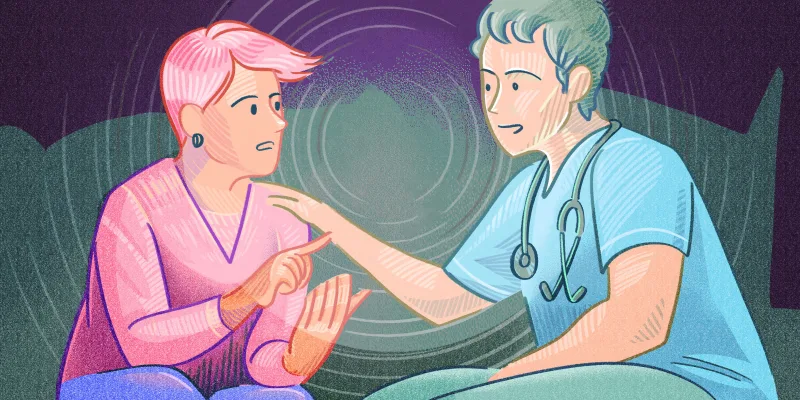
Most people try to push through these symptoms on their own, just like I had. We all have busy lives, with families, jobs, and responsibilities that don’t stop when you’re not feeling well. By the time someone finally sits across from a clinician to describe how they’re feeling, these symptoms are likely already significantly interfering with their daily life. Speaking them aloud requires immense vulnerability, yet it is an act that too often is met by overt skepticism, dismissive reassurance, or even an eye roll.
Medicine subtly cultivates a kind of “invincibility” complex. We are trained to fix problems, not to experience them. This mentality is embedded deep into the culture of Western medicine: diagnose, treat, and move on. I had fully internalized this mindset during my time in medical school, telling myself to simply push through the fatigue, downplay the brain fog, and just keep going. I knew that something was wrong even before my thyroid labs became overtly abnormal, but I refused to give myself permission to slow down because I lacked an “excuse” to be patient with myself. Measurable data, whether it’s in the form of blood work, imaging, or vital signs, becomes the gold standard of truth. What cannot be objectively quantified is often minimized.
When my thyroid-stimulating hormone skyrocketed, I felt validated. But why had I not given myself grace earlier? Why did I need a number on a page to justify my own experience? While reflecting on these questions, I realized that I had been holding myself to the same standard that medicine often holds patients to: that suffering only “counts” when it can be measured. This led me to recognize a painful truth: When a patient shares vague symptoms with their clinician, they are not simply reciting words for a chart. They are asking us for help. They are entrusting us with their fears and frustrations. They are trusting us to believe them, and that trust is sacred and fragile.
Only after months of living with a chronic condition did I finally understand the source of the shame I had felt after I had received my diagnosis. I was ashamed because, in my training, I had already encountered dozens of patients describing symptoms just like mine, and I had not always taken them seriously. I was ashamed that it took becoming a patient myself to recognize how invalidating it can feel to have your suffering minimized.
That realization has permanently changed the way I want to practice medicine. I no longer see vague symptoms as background noise to be brushed aside. I see them as an invitation to listen more closely, to sit with uncertainty, and to walk alongside the patient even when the answers are not immediately clear. My own experience taught me that sometimes the most powerful intervention the simple act of saying: I hear you. I believe you. Let’s figure this out together.
I am grateful that Hashimoto’s thyroiditis is a manageable condition, and that my endocrinologist had the strength to take me seriously when other clinicians did not. It reminded me that behind every vague complaint is a person who has chosen to trust me with their story. It reminded me that behind every symptom is a person, and the greatest mistake we can make is failing to truly see them.
Sophia Valerino is a fourth-year medical student at Lake Erie College of Osteopathic Medicine.
Image by Alphavector / Shutterstock