
The findings in Doximity’s 2026 Physician Compensation Report are clear: AI is coming for the work of doctors, and I couldn’t be more excited.
Count me among the initially AI-skeptical. My first clinical brush with AI came in the form of an ambient listening scribe. While I was cautiously optimistic about the applications for note-taking, I’ll admit it was only with apprehension that I first started to ask my patients if it was OK to record for the scribe. After a week or so of working out the kinks in my workflow, I noticed something odd: I was consistently “done” with my “work after work” (documentation and charting), which had formerly bled into evenings and weekends. My “pajama time” had disappeared. My late-night charting was replaced by more time around the dinner table with family and reconnecting with old friends after the kids went to bed. To say the reclamation of that extra two hours every night was life-changing would be an understatement.
It would seem I’m not the only one who has discovered this transformational aspect of AI. A full two-thirds of doctors are now using it; of younger physicians under 30, 26% have already seen a decrease in their workload. Coupled with this is perhaps one of the most shocking findings I have seen in medicine in recent history — a decline in feelings of overwork or burnout due to the physician shortage: 67% in 2024, 63% in 2025, and 52% this year. All this despite the fact that, paradoxically, 66% of physicians believe AI will have no meaningful impact on physician demand in their specialty. It may be that the kind of work, not the amount, is what’s changing — about 50% of physicians surveyed indicated that AI was changing the way work is done in their specialty.
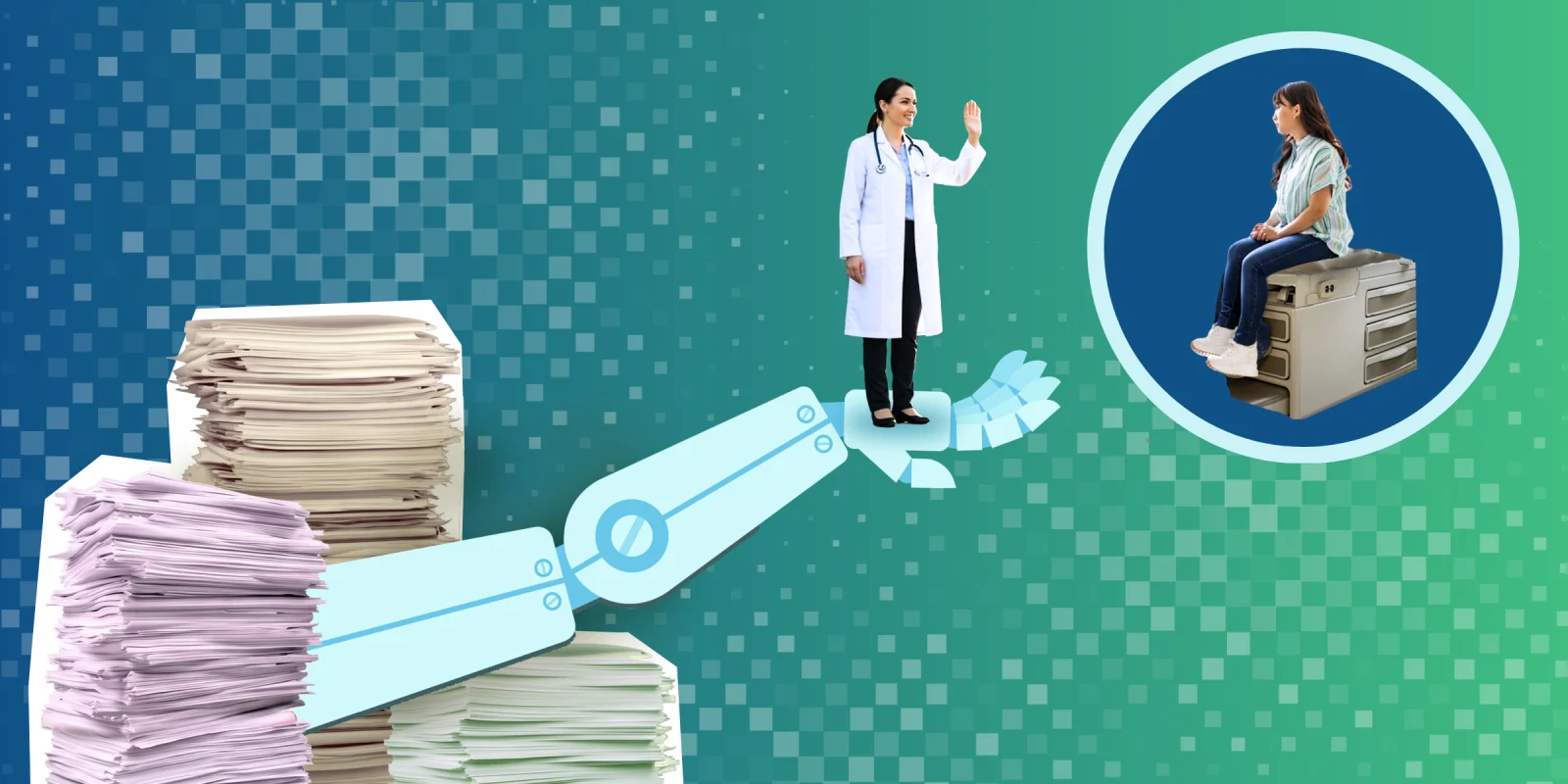
Altogether, we have some interesting findings: AI reduces workload for younger physicians, increases job security for most physicians (regardless of specialty), appears not to be harming physician demand, and is already starting to influence hiring and promotion. If AI is changing medicine so much, why don’t I see it as an existential threat to the profession? In my view, AI is finally starting to remove the layers of work that have suffocated the physician profession for too long. AI has in its crosshairs most of the things doctors hate about their jobs: charting, documentation, lengthy chart review across multiple systems, matching insurance formularies to prescriptions, prior authorizations, and ever-expanding demands from patients, insurers, and employers for paperwork, paperwork, paperwork, and more paperwork. AI is poised to eliminate these soul-sucking tasks, or at least diminish them to the point where they become tolerable.
For the first time in a long time, AI is a technology that actually moves the needle when it comes to the things that get in the way of being a physician. Fewer clicks, inbox messages, redundant tasks, and administrative burdens mean more time for clinical judgment and the human connection that sits at the heart of the patient-doctor relationship. A physician’s work is fundamentally human, and anything that restores that humanity is not a threat, but a welcome addition.
At its best, the proper application of AI promises to lift the weight that keeps the doctor from their essential work, and allows them to focus on the human rather than the computer.
My practice certainly looks different now with AI in the mix. Sometimes I completely leave the laptop behind when I enter the exam room with a patient: a formerly panic-inducing mistake, now an afterthought. I can let a recorder run and practice medicine in a way that I haven’t for years, confident that the essence of the work will be captured. I look patients in the eye when speaking to them slowly and deliberately and address their concerns without worrying about how far behind my charting will put me that evening.
AI has “replaced” me as the doctor I never wanted to become: buried under documentation, fighting an inbox, and performing tasks that never required a medical degree. It has replaced the version of me that medicine distorted, and shown me how a career in medicine can look different. The version of me that remains — the one who listens, reasons, examines, interprets, and carries the weight of another human being’s fear — is now more essential than ever. And as AI redefines what we consider physician work, it may also redefine how physicians advance in their careers. Hiring, promotion, and compensation will be increasingly influenced by AI mastery, and physicians see an opportunity for those who can pair clinical expertise with AI-enabled efficiency. The future physician workforce won’t likely be replaced entirely by AI so much as elevated by it.
AI isn’t coming for us. It’s coming for the parts of medicine we never wanted. Those who embrace it to serve that end will have an opportunity to experience the best that a career in medicine has to offer. And that’s why I’m optimistic.