
The shingles vaccine may significantly reduce the risk of developing dementia. In addition, the vaccine may also have a protective effect for those already diagnosed with dementia and slow the progress of the disease.
“There was a 20% reduction in new dementia diagnoses over seven years,” said study author Pascal Geldsetzer MD, PhD, MPH, assistant professor of medicine at Stanford University and a Biohub Investigator. “We also have a new paper, where we saw large reductions in the risk of dying from dementia. So we see that the vaccine may not just have preventive potential but therapeutic potential as well.”
Both studies were published last year, but Geldsetzer discussed the findings along with recent analyses from three other datasets. He presented the data during a Plenary Session held at the 2026 American Academy of Neurology (AAN) annual meeting.
Geldsetzer explained that this was a “natural experiment,” rather than a true clinical trial. A link between the shingles vaccine and dementia risk has been suggested in observational studies, but they could not be completely adjusted for confounders.
“People look at observational data as hypothesis generating, but they can’t get at cause and effect because we never know if we have fully adjusted in this myriad of confounders,” he said. “But the main limitation is that many of these confounders are not recorded anywhere – for example, do we have perfect measures of physical activity in these data records? Showing type, duration and intensity? No we never do.”
However, in this study, Geldsetzer and colleagues looked at the rollout of the shingles vaccine in Wales, which seemed to completely bypass any bias or confounders. The vaccination program began September 1, 2013, and anyone who was 79 on that date was eligible for the vaccine for one year. In other words, individuals before September 2, 1933 were not eligible and remained ineligible for life. But those born on or after September 2, 1933 remained eligible for at least one year.
The researchers were then able to isolate the effects of the vaccine by comparing people who turned 80 just before September 1, 2013, with people who turned 80 just afterwards. “We were comparing people born a little earlier and those born a little later, so we have a control group and an intervention group,” said Geldsetzer. “We can look at it as a randomized placebo controlled trial where there is imperfect adherence.”
Using a large-scale electronic health record data set, they found that vaccine use increased from 0.01% among patients who were 1 week too old to be eligible, to 47.2% for those who were just 1 week younger. A regression discontinuity design showed that the vaccine reduced the probability of a new dementia diagnosis over a 7 year period by 3.5 percentage points (P = 0.019), corresponding to a 20.0% relative reduction. This protective effect was stronger among women than men.
Further analysis of the data suggested that the vaccine had other benefits. Of the 7,049 participants who developed dementia, almost half subsequently died from it. In contrast, only about 30% of those who received the vaccine died from dementia. There was also a reduction in mild cognitive impairment among those who received the vaccine.
Geldsetzer and his team have gone on to replicate these findings in other datasets. Australia, New Zealand and Canada had similar vaccine rollouts, and findings also show a decrease in dementia among the vaccinated population.
A large, randomized controlled trial is really needed, he emphasized, which would provide the strongest proof of cause and effect.
“It would be a very simple trial because we have a one-off intervention that we know is safe,” he said. “It would have important implications into the pathogenesis of dementia and other degenerative diseases as well.”
PL2 - Hot Topics Plenary Session
Preventing Dementia with Shingles Vaccination? Evidence from Quasi-Randomized Vaccine Rollouts
The study received funding from The Phil & Penny Knight Initiative for Brain Resilience, the Stanford Center for Digital Health, the National Institute on Aging (grant R01AG084535), the National Institute of Allergy and Infectious Diseases (grant DP2AI171011) and the Biohub, San Francisco.
Geldsetzer received research support as PI from the National Institute of Allergy and Infectious Diseases (New InnovatorAward; DP2AI171011; 2022-2027) National Institute on Aging (R01AG084535, 2023-2028), National Heart, Lung, and Blood Institute (R01HL166509; 2023-2027), National Institute of Child Health and Human Development(R01HD111547; 2024-2029), Biohub, San Francisco (Biohub Investigator Award, 2022-2027), Pershing Square Foundation (MIND Prize, 2026-2029)
Eyting M, Xie M, Michalik F, Heß S, Chung S, Geldsetzer P. A natural experiment on the effect of herpes zoster vaccination on dementia. Nature. 2025;641(8062):438- 446. doi:10.1038/s41586-025-08800-x
Xie M, Eyting M, Bommer C, Ahmed H, Geldsetzer P, et al. The effect of shingles vaccination at different stages of the dementia disease course. Cell. 2025 Dec 11;188(25):7049–7064.e20. doi:10.1016/j.cell.2025.11.007
Pomirchy M, Bommer C, Pradella F, Michalik F, Peters R, Geldsetzer P. Herpes Zoster Vaccination and Dementia Occurrence. JAMA. 2025;333(23):2083-2092. doi:10.1001/jama.2025.5013
Pomirchy M, Chung S, Bommer C, Strobel S, Geldsetzer P. Herpes zoster vaccination and incident dementia in Canada: an analysis of natural experiments. Lancet Neurol. 2026;25(2):P170–180. doi:10.1016/S1474-4422(25)00455-7
The New Zealand data is still in press.
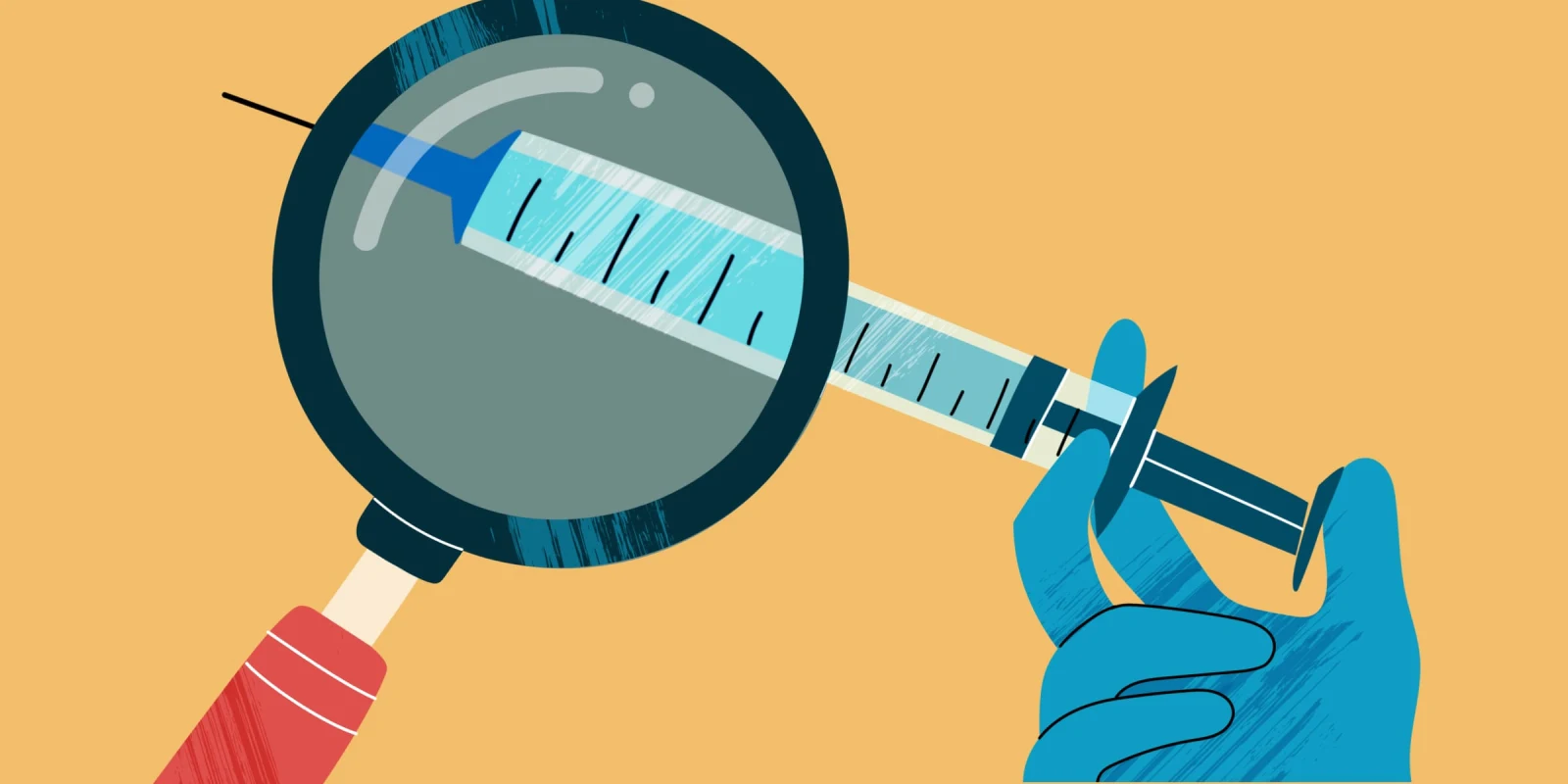
Illustration by Diana Connolly