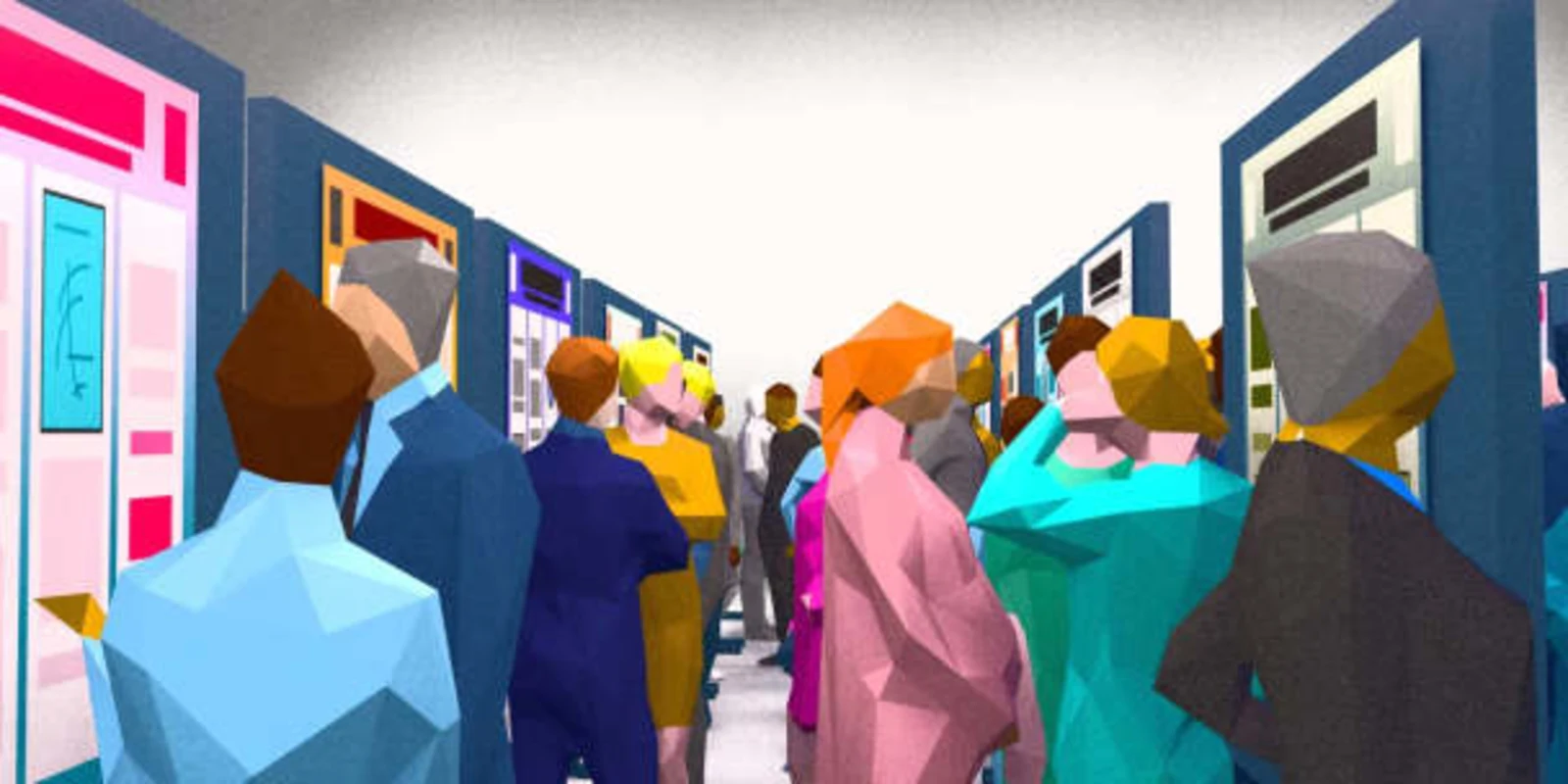

Walking into the McCormick Place Convention Center in Chicago for the 2025 Radiological Society of North America (RSNA) annual meeting, I was immediately struck by the sheer scale of it all. Around 40,000 attendees, hundreds of exhibitors, and countless learning opportunities stretched before me. As a fourth-year medical student entering the field of radiology, I came with an open mind, hoping to find clarity in my chosen specialty.
The AI Revolution: Beyond the Hype
Every radiologist and aspiring radiologist knows that if there has been a single dominant topic in radiology these past few years, it’s artificial intelligence. RSNA did not disappoint in exploring this topic, but not in the dystopian “radiologists will be replaced” narrative that dominated conversations just a few years ago. Rather, the discussions centered on integration, collaboration, and augmentation. AI has long since moved from theoretical promise to practical implementation, and the implications are profound. Many sessions focused on the positive impact AI has and can have on imaging, diagnosis, treatment, and even education. The key insight wasn’t that AI was replacing human expertise, but that it was functioning as a sophisticated safety net, catching subtle findings that might otherwise be missed in the thousands of images radiologists interpret daily. AI was also a useful tool in minimizing volume in the ever-expanding number of reads placed on radiologists.
Yet the experts continued to be refreshingly honest about AI’s limitations. Multiple speakers emphasized that these tools still struggle with unusual presentations, rare pathologies, and the kind of contextual reasoning that experienced radiologists excel at. The future, they argued, belongs not to AI or radiologists alone, but to radiologists who know how to leverage AI effectively. For medical students like me, this means we need to understand both the capabilities and limitations of these tools as they become standard in our workflow. I came away from these discussions curious to see how AI will impact the next five years of my training as a resident.
Personalized Medicine Meets Imaging
Another revelation came from sessions on radiogenomics and personalized imaging protocols. We’re moving beyond one-size-fits-all approaches to scanning. Presentations on adaptive imaging protocols demonstrated how patient-specific factors such as genetic markers, body habitus, and prior imaging history can be integrated to optimize diagnostic accuracy and precision imaging.
For patients, this means more targeted care with potentially better outcomes and reduced risk. For radiologists, it means an expanding role in personalized medicine, working more closely with oncologists, geneticists, and other specialists to tailor diagnostic approaches to individual patients. The challenge will be managing the increased complexity while maintaining efficiency in an already demanding specialty.
Making the Most of Conference Time
Before arriving, I wasn’t sure how to approach networking at such a massive event. A few medical student networking events hosted by the conference provided invaluable advice: quality over quantity. Rather than trying to attend every session and meet everyone, I focused on identifying my areas of interest such as breast imaging, mentorship, and medical education, and sought out experts and sessions in those domains.
This strategy paid dividends. I spent time in the exhibit hall not just collecting vendor swag, but listening to company representatives talk about how their technologies were being implemented in real clinical settings. I attended smaller breakout sessions where audience interaction was encouraged, which led to exchanges with attending radiologists who were generous with their time and insights.
The most valuable networking happened with fellow medical students and current residents. These informal interactions provided honest perspectives on training programs, work-life balance, and the realities of different training settings that you simply can’t get from official presentations. These interactions and medical student opportunities at the conference were especially helpful for early medical students interested in radiology.
Personal Growth and Career Clarity
Perhaps the most significant outcome of attending RSNA 2025 was the clarity it provided about my career path. Immersing myself in the field for several days, engaging with practitioners at all career stages, and witnessing the intellectual challenges and innovations firsthand confirmed my genuine excitement for the field.
I was particularly moved by a panel discussion on radiologist burnout and wellness. The speakers’ vulnerability in discussing the specialty’s challenges, including heavy workloads, after-hours responsibilities, the pressure of high-stakes interpretations, was balanced by their evident passion for the work and commitment to improving the field. It reminded me that every specialty has its difficulties, but finding one where the challenges feel meaningful makes all the difference.
Looking Ahead
For medical students considering conference attendance, my advice is simple: go with intent. The investment in registration, travel, and time away from rotations is significant, but it can pay off in connections and professional development opportunities that are impossible to quantify. Networking at such large conferences can be difficult, yes, but researching presentations and reaching out to fellow medical students and others at your institution who may be attending can help you make the most of it.
As I continue residency interviews, RSNA 2025 gave me far more than technical knowledge. It provided a glimpse into a specialty that is actively shaping its future rather than passively accepting technological disruption. The radiologists I met were engaged, innovative, and optimistic about their field's trajectory. RSNA 2025 energized my vision of what medicine can become when technology and humanity work in concert.
This conference attendance was made possible by the generous RSNA Medical Student Travel Scholarship.
Sidhvi Reddy is a fourth-year medical student in Birmingham, AL. She enjoys reading, traveling, cooking, and trying out new restaurants. Sidhvi is a 2025–2026 Doximity Op-Med Fellow.
Illustration by Jennifer Bogartz